Advertisement
Advertisement
Advertisement
Advertisement
ZTE Corp., a global provider of telecommunications equipment and network solutions, has selected the KeyStone multicore System-on-Chips (SoCs) from Texas Instruments Inc. (TI) for its small cell base station products. TI's KeyStone SoCs are programmable multicore processors which enable ZTE to develop wireless base stations capable of concurrently supporting multiple 3G and 4G air interface standards.
Maxim Integrated Inc. and Freescale Semiconductor® have collaborated to showcase a comprehensive LTE/3G picocell base station at the 2013 Mobile World Congress. This innovative small cell base station platform design is field deployable by mobile operators and also serves as a production-ready reference design to accelerate time to market for equipment manufacturers.
Base station expenditures in Q3 2012 in the Asia-Pacific region at $7.6 billion, or more than half of the total market, continued to be more than 4 times higher than in Western Europe or North America, and grew 50 percent compared to the year ago quarter, while North America spending grew 27 percent year-on-year in Q3 2012.
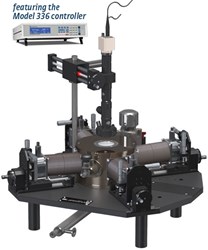
Lake Shore Cryotronics Inc., a manufacturer of scientific sensors, instruments, and systems for precise measurement and control, introduces updated specifications for the Model CRX-VF Cryogenic Probe Station, which features increased maximum magnetic field, improved magnetic field at elevated sample temperatures, and improved vacuum performance.
ABI Research expects sales of base station processors to grow at 17 percent annually and reach $1.1 billion in 2017 driven by the growth in compact format femto-, pico-, and microcell small cell basestations, which will account for the majority of the processor market in 2017. With macrocells declining at 13 percent per year over the next 5 years, and microcells growing at a modest 7 percent the large growth in picocells and outdoor femtocells will consume the majority of next generation base station processors.
The demands of cost reduction and greater efficiency in cellular base station design are leading to a rapidly growing market for remote radio heads. According to a new study from ABI Research, this market is on track to exceed a value of $1 billion in 2017. Cellular base stations are now undergoing a design revolution. A base station was traditionally a rack of equipment inside a shelter. That design is now becoming anachronistic because it is expensive, and because the required coaxial cable running up the tower to the antennas often results in significant losses of power.
As the mobile network struggles to cope with the growing level of traffic and pressures on CAPEX, the RF electronics of a typical base station design are subject to great innovation namely in the form of tower mounted amplifiers, remote radio heads, and active antennas.
Mobile Experts released a report that predicts a new future for base station semiconductors. In particular, the number of base station transceivers will grow to more than 17 million per year by 2017. Increasing bandwidth requirements, MIMO, and carrier aggregation will drive growth in key semiconductor components. The new report, "Semiconductors for Macro Transceivers and RRH," gives a detailed analysis of these trends.
Tower mounted amplifiers have now become a common addition to most macro base station systems. They increase overall system performance and are now easily mounted and monitored. Tower mounted amplifiers can provide significant BTS performance improvement for a moderate investment. Lance Wilson, research director, mobile networks, notes, “The use of tower mounted amplifiers in wireless infrastructure base station systems represents one of the most cost effective ways of improving overall system performance.”
Get access to premium content and e-newsletters by registering on the web site. You can also subscribe to Microwave Journal magazine.