

 RSS
RSS
This article explores the transformative potential of 5G communications across society and national security. Beginning with traditional use cases—smartphones, Internet of Things (IoT), and media streaming—this article highlights how 5G has already proven its technical capabilities across multiple user communities. The discussion then shifts to next-generation applications such as autonomous drone swarms, counter-drone systems, remote emergency response, and global tactical communications. These demonstrate how 5G, when integrated with AI and the cloud, reshape what’s possible. Key enabling technologies like Open Radio Access Networks (RAN), 5G Standalone non-terrestrial networks (NTN), and Integrated Sensing and Communications (ISaC) are identified, along with their role in scaling secure, resilient networks. Application domains across enterprises, governments, and first responders are summarized with a focus on unique operational challenges and 5G-enabled solutions. The article concludes with a call to action—emphasizing cross-sector collaboration and urging immediate implementation of high-impact use cases. As 5G matures, it is not just a faster network, but also a strategic platform for societal advancement and national defense preparedness.
Introduction
In today’s hyperconnected world, the ability to communicate seamlessly and reliably is no longer a luxury, but a necessity that supports society, economic growth, government operation and natural security. A wide variety of communications infrastructure enables this communication, forming the nervous system of the modern age. This infrastructure includes advanced Fifth Generation of wireless cellular technology, helping to transform daily activities, by delivering dependable, low-latency, high-throughput connectivity to users worldwide.
Yet, 5G technology has only just started to reach its true potential, working in conjunction with two other powerful technologies. Cloud computing and artificial intelligence (AI) create a “trident” for dynamic innovation, enabling real-time decision-making, edge analytics, and intelligent automation across every sector of society. Open Radio Access Network (ORAN), available to more than 80 percent of the U.S. population, jumpstarts additional innovative applications and much-needed multi-vendor interoperability so critical users will have uninterrupted communications.
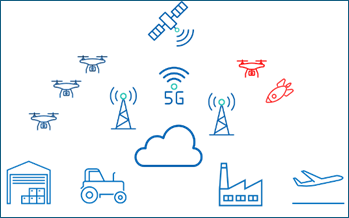 5G has already proven its value in mobile broadband and IoT connectivity. The next step for 5G will reshape common as well as critical activities that everyone needs. By combining ubiquitous connectivity with cloud and AI, 5G is poised to power a new generation of applications—from autonomous drones and smart factories to resilient national defense systems. This article explores how these capabilities converge to create profound societal and security benefits, and what steps are needed to realize their full potential.
Traditional 5G Applications
The initial wave of 5G deployments has focused on applications central to expanding digital life—smartphones, video streaming, social networking, and media sharing. These early consumer-driven use cases have laid the groundwork for more advanced and transformative applications by proving 5G’s core capabilities in real-world conditions.
Smartphones remain the most common entry point into 5G networks. Users benefit from faster download and upload speeds, lower latency, improved responsiveness and security especially in dense urban environments or crowded venues. These enhancements elevate all applications from mobile gaming to real-time navigation.
Internet of Things (IoT) devices are another major beneficiary of wireless network capabilities. From smart thermostats and wearables to connected cars and industrial sensors, 5G can better enable more devices to operate simultaneously on the network with minimal interference, higher security, and greater energy efficiency. This creates a robust foundation for smart homes, logistics, and manufacturing.
Video streaming, already a dominant form of media consumption, has seen significant improvements by using 5G, enabling seamless playback of 4K and even 8K video content without buffering. This boosts the user experience across platforms like Netflix, YouTube, and live sports streaming.
Social networking apps have become more immersive, with higher-quality video calls, real-time filters, and instant sharing of high-resolution content. These experiences are made smoother and more accessible through 5G’s consistent connectivity.
Finally, media uploads, such as videos, stories, and livestreams, now happen nearly instantaneously. This empowers content creators and users alike to contribute content on the fly, from anywhere and at any time. Journalists, influencers, and everyday users benefit immensely from this real-time publishing capability, so they can reach more users and expand their visibility.
These traditional applications serve as proof points for 5G’s promise. They establish an essential baseline of high performance and reliability for consumers, laying the groundwork for the next wave of mission-critical and secure services for use by enterprises and governments.
Innovative 5G Technology Enablers
Delivering the full potential of 5G requires more than just radio upgrades. This effort demands a rethinking of how integrated computing and communications infrastructure is designed, deployed, and managed. Several emerging technologies are converging with 5G to create an adaptable, resilient, and far-reaching information infrastructure fabric.
Open Radio Access Network (ORAN): ORAN is redefining the way cellular networks are built and operated. This open systems architecture promotes vendor interoperability, software-defined networking, and cost efficiency by separating 5G hardware and software components. This modular approach, enhanced with agile RAN Intelligent Controller (RIC) software-defined elements, fosters innovation, enables localized optimization, and accelerates deployment. With lower cost and flexible configuration, ORAN-based 5G networks can better support enterprises, government agencies, and rural communities. ORAN allows better utilization of software-defined, cloud-based functions and, thus it minimizes expensive hardware even for sparsely populated areas.
Non-Terrestrial Networks (NTN) for Direct-to-Device Applications: NTN provides one of the most promising advancements to the 5G ecosystem, especially when NTN is integrated with low Earth orbit (LEO) and geostationary satellites. These networks enable direct-to-device communication, allowing smartphones and IoT devices to maintain connectivity with satellites, supporting remote, rural, or disaster-affected regions. By extending 5G coverage far beyond traditional tower footprints and into space, NTNs, leveraging ORAN flexibility and RIC’s agility, will support truly ubiquitous communication.
Integrated Space and Terrestrial Systems: The seamless integration of satellite and terrestrial infrastructure plays a key role in ensuring consistent, high-availability communications. This hybrid architecture, leveraging GEO and LEO based wide area connectivity, allows traffic to shift between ground- and space-based assets dynamically, enhancing resilience and global reach. Such integration is critical for defense, border surveillance, maritime operations, and emergency response.
5G Frameworks for Wi-Fi Interoperability: To improve indoor and last-mile connectivity, 5G must interoperate fluidly with Wi-Fi networks. Emerging standards like 5G NR-U (New Radio in Unlicensed Spectrum) and Access Traffic Steering, Switching, and Splitting (ATSSS) enable devices to seamlessly transition between 5G and Wi-Fi, leveraging the best available network without manual switching. This capability supports smooth experiences in homes, enterprises, and public spaces. New standards such as secure Open Roaming can enhance SIM-based authentication across various transports.
Integrated Sensing and Communications (ISaC): ISaC allows the radio waves used to transport data to serve another purpose, perform environmental sensing, such as detecting motion, objects, or terrain. ISaC enables applications like radar-enhanced navigation for vehicles, drone detection, and environmental monitoring—while conserving spectrum and reducing hardware footprints of next generation 5G and 6G networks.
New 5G Applications
Critical domains are starting to leverage the new 5G innovations. Applications for such national security domains require high reliability, ultra-low latency, and pervasive connectivity so users can solve complex, real-world problems. These applications use 5G networks to move beyond consumer convenience and provide societal impact and national security.
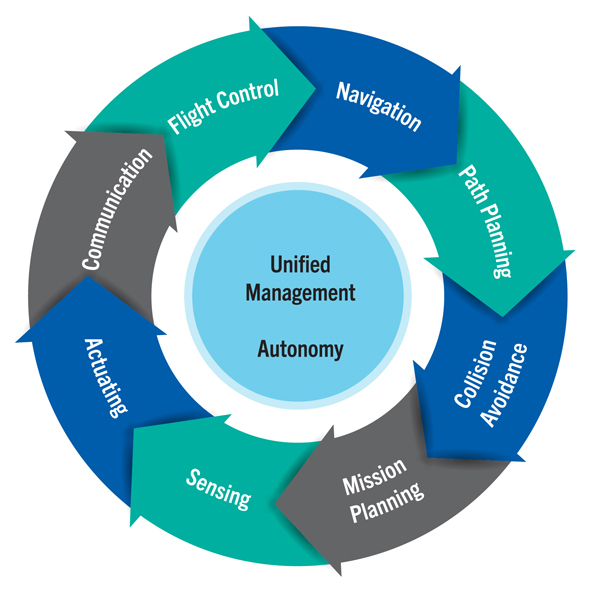
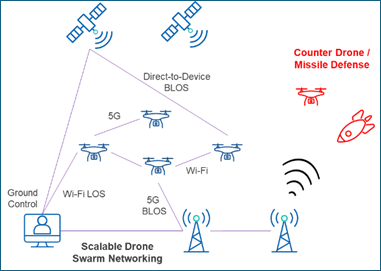 Drone Swarm Automation & Drone Traffic Management: With 5G’s ultra-low latency and massive device density, autonomous drone swarms can stay connected to coordinate flight patterns, avoid collisions, and dynamically respond to environmental changes in real time while collaborating under a specific mission plan. Standards-based drone traffic management systems can rely on constant communication between drones, command centers, and airspace regulators because of5G slicing and QoS assurance. This enables complex missions in logistics, inspection, surveillance, and even agriculture.
Implementation: 5G-connected edge compute nodes process telemetry and mission data locally, allowing drones and other devices to make split-second decisions collaboratively even when the devices are beyond line of sight.
Natural Disaster Response, Remote Medicine, and Emergency Management: During disasters, conventional infrastructure is often damaged or overwhelmed. 5G enables rapid deployment of mobile networks (via satellite or aerial base stations) that supports triage, video-assisted surgery, and coordinated rescue efforts.
Implementation: Portable 5G base stations with satellite backhaul can establish local coverage in minutes. Paired with drones and IoT sensors, responders can receive continuous situational awareness. Telemedicine benefits by using high-definition video, remote diagnostics, and AR-guided treatment—all requiring stable, low-latency bandwidth.
Worldwide Communications for National Security — From Garrison to Tactical Edge: Military operations demand seamless, secure communications from static bases to dynamic field operations. 5G enables agile, software-defined networks that interoperate with legacy systems while extending secure connectivity to vehicles, personnel, and drones.
Implementation: Using Open RAN together with satellite-integrated 5G, defense networks can deploy private slices for mission-critical data. Tactical edge nodes operate autonomously when disconnected and sync with core systems when available, maintaining resilience. Encrypted D2D (device-to-device) links and MEC (Multi-access Edge Computing) provide secure, low-latency command-and-control.
5G Adapts to Various Sectors
Advanced 5G creates a foundational architecture that adapts to the distinct needs of different sectors. Its flexibility, speed, and intelligence enable new capabilities tailored to complex, real-world challenges across enterprises, local governments, emergency services, and national operations.
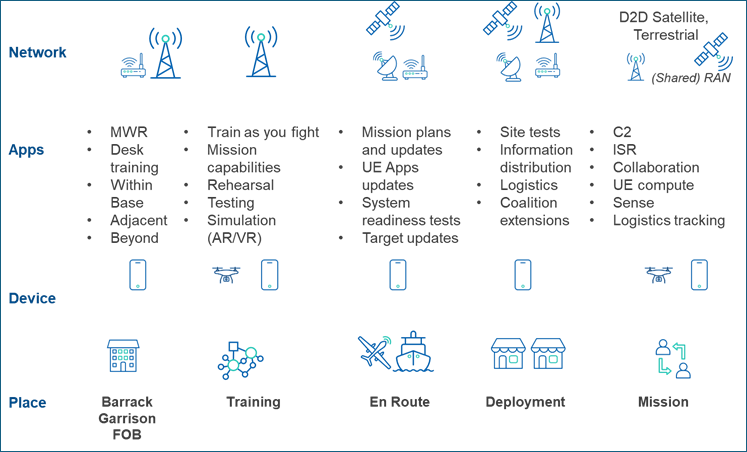
Unified connectivity from garrison to tactical deployment
National Governments: Governments at the national level require secure, scalable networks to support defense, transportation, health, and border operations. Traditional infrastructure often lacks agility or fails under duress. 5G combined with software-defined networking, zero-trust architectures, and space-terrestrial integration can ensure resilience under all conditions. Even public health agencies can leverage 5G to conduct large-scale testing, tracking, and vaccinations during pandemics.
Flightlines, for example, including those for military bases, can be better served with 5G compared to Wi-Fi which is primarily designed for offices and homes with small coverage areas.
Defense agencies: Military users benefit from edge-connected vehicles, secure battlefield communications, and autonomous drone coordination. Customs and border patrols can use 5G-enabled sensors (including on a variety of drones), cameras, and analytics to secure large, remote areas.
First Responders and Disaster Management: In times of crisis, communication is the first casualty. Firefighters, paramedics, and emergency coordinators often operate in degraded or destroyed network environments. 5G provides rapidly deployable mobile base stations and supports prioritized, mission-critical communications even in high-congestion zones.
The response teams in these circumstances need to stream HD video from bodycams, drones, and surveillance units for real-time situational awareness. Remote diagnostics and AR-assisted procedures become possible in the field. For disaster zones, 5G integrates with satellite and aerial platforms to restore connectivity in hours, not days, supporting life-saving coordination and logistics.
Enterprises–Factories, Warehouses, Agriculture: Enterprises face constant pressure to improve efficiency, automate processes, and reduce downtime.
In factories and warehouses, wired networks constrain flexibility. 5G offers wireless, ultra-reliable low-latency communication (URLLC) for robotic assembly lines, automated guided vehicles (AGVs), and safety-critical systems. Network slicing allows for custom virtual networks that segregate data from different processes, improving security and performance.
Local Governments: Cities and municipalities must manage infrastructure, traffic, utilities, and citizen services—often with limited budgets. 5G enables smart city solutions, such as connected traffic lights, public safety cameras with AI-based analytics, real-time waste and water management, and intelligent energy grids. By using 5G-enabled edge computing, local governments can make faster, localized decisions while reducing dependency on centralized data centers.
Bridging Digital Divide: Moreover, 5G supports digital equity efforts. High-speed wireless broadband becomes feasible in underserved communities, closing the connectivity gap and enabling remote work, online education, and telehealth services.
Agriculture has challenges that include unpredictable weather, labor shortages, and the need for precision resource management. 5G enables real-time monitoring of crops and soil through IoT sensors, supports autonomous tractors and drones, and facilitates predictive analytics for yield optimization.
From Vision to Action
Today, 5G technology provides real advantages to a variety of users. As the technology continues to rapidly advance, users can expect even more capabilities. However, unlocking 5G technology’s full value demands a coordinated effort across sectors. Governments, industry leaders, technology innovators, and public institutions must work together to foster shared vision, rapid execution, and bold partnership.
Collaboration across these entities must take place, as soon as possible. Governments must prioritize spectrum allocation, indigenous software-based 5G enhancements, secure hardware supply chains, public-private R&D investment, and regulatory support for open and interoperable systems like Open RAN and non-terrestrial networks. Industry must focus on developing scalable, secure, and standards-based platforms that address real-world needs—across governments, factories, farms, and frontline response.
Immediate applications are already within reach. Drone-based emergency response, mobile medical units, precision agriculture, and private 5G networks for defense or utilities can be expanded now. These aren't pilot projects—they are ready for scaled implementation.
Acting decisively will ensure strategic advantage—economic, societal, and geopolitical. The window is open. The technology and piloting infrastructure is ready. The time for siloed development is over and the ecosystem is ready for integration and scaling. To ensure that 5G becomes the enabler of societal transformation and national resilience, this information infrastructure must be shaped by all the players together so they can deliver the secure, connected applications for the next era in connectivity.