

Editor’s Note: This is the first in a series of AI articles from companies on how they use AI to improve the RF design process for engineers.
Much of the discussion around AI in RF design has focused on whether tools will one day synthesize amplifiers, filters or antennas directly from a text prompt. That possibility remains speculative. The immediate opportunity is more practical: using AI to reduce the repetitive setup, optimization, migration and results analysis work that consumes experienced engineers’ time. For RF teams facing tighter schedules and limited expert bandwidth, the near-term value is most likely to appear there.
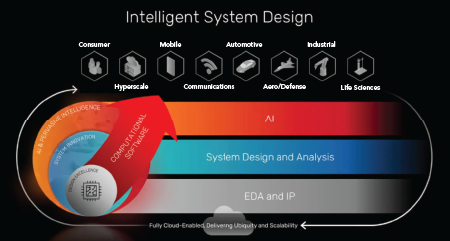
Fig. 1 Intelligent System Design leverages AI and computational software to support product development for markets requiring best-in-class RF technology.
Viewed that way, the central question is not whether AI can generate plausible RF components that meet state-of-the-art performance goals, but whether it can improve execution within the workflows used to develop such devices. For RF designers, the real benefit comes when AI is integrated with powerful computational software and IC/package co-design workflows already used to move from circuit intent to physical implementation. In that context, AI can help reduce the manual effort required to navigate trade-offs across simulation, optimization, layout, EM analysis and packaging integration. This is where agentic AI becomes essential — accelerating development while keeping design decisions grounded in proven workflows, foundry-approved PDKs, simulation models and in-design EM analysis. See Figure 1.
PRODUCTIVITY GAINS FOR THE ENTIRE RF DESIGN TEAM
Expert-in-the-loop matters because RF and custom analog projects still rely heavily on a relatively small pool of highly experienced designers, even as program schedules continue to compress. Engineering judgment remains essential. Agentic AI extends that judgment across the team. By capturing useful design context from data, IP and established tool flows, agentic AI enables engineers at any experience level to apply proven RF methodologies, no longer limiting them to the most senior engineers. Workflows that once required deep specialist knowledge become accessible across the broader organization, with less manual overhead and more consistent application of best practices.
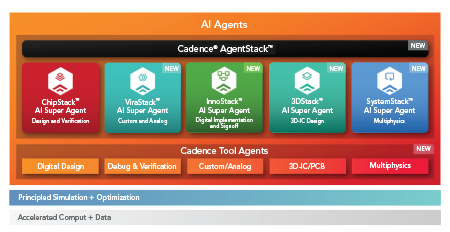
Fig. 2 Cadence AI Super Agents coordinate 3D-IC design for RF across different engineering disciplines, supporting a shift left in system development.
ENABLING AGENTIC AI WITH CADENCE AI STACK
Many current AI demonstrations in engineering focus on large language models that generate text, scripts or broad design suggestions. These capabilities are useful, but RF design places a higher premium on physically meaningful models, trusted simulation, multi-objective optimization and flows that remain anchored to foundry-approved processes. Cadence is layering its AI effort onto computational software already used to create and verify production RF designs.
That distinction is important. General-purpose AI models can propose actions, but they do not inherently understand nonlinear device behavior, EM coupling, layout-sensitive performance or the constraints that determine whether an RF design can be successfully manufactured. Cadence’s approach combines language-based interaction with domain-specific design engines and workflow infrastructure that can incorporate design expertise.
Cadence recently introduced AgentStack as an orchestration layer for AI super agents spanning chip, 3D-IC and system design, see Figure 2. For RF teams collaborating with multidisciplinary engineering teams at the system level, the architecture enables coordination of specialized agents, sharing of design knowledge and linking of natural-language requests to the tools that orchestrate those workflows and design/analysis tasks.
Sharing knowledge does not necessarily ensure that the right knowledge is applied to a harder problem. A language model may produce a plausible testbench or workflow suggestion, but does it contain the knowledge needed to synthesize a practical (physically realizable) RF design? Cadence’s approach rests on two concepts: Mental models (see Figure 3), which capture specifications, prior designs and other context-structured representations of intent, and AI Agent skills, which define how AI agents interact with the underlying tools for specific tasks. Together, mental models and agent skills ensure that AI reasoning is grounded in both the right design context and correct tool execution — bridging high-level intent with physically meaningful results.
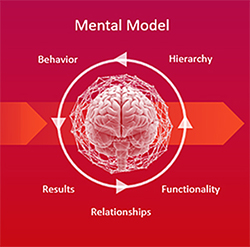
Fig. 3 Mental models aggregate design data to guide super agents.
The foundation powering Cadence’s agentic AI capabilities is the JedAI platform. It seamlessly integrates LLMs and leverages accelerated compute across cloud, hybrid and on-prem infrastructures. By abstracting model access, data orchestration and compute backends, Cadence’s AI super agents can scale efficiently, execute securely and deliver consistent performance — bringing AI closer to real design workflows without locking customers into a single model or deployment environment.
APPLYING AGENTIC AI TO ANALOG AND RF DESIGN
Custom analog and RF design remains unusually manual because progress depends on repeated trade-offs across circuit behavior, layout effects, verification setup and process constraints. The ViraStack AI Super Agent, integrated into the Virtuoso Studio platform, is designed to reduce some of that burden for custom analog IC designers by supporting schematic creation, testbench development, circuit optimization and design migration. For organizations with large catalogs of proven IP, the more interesting implication is the potential to reuse historical design knowledge with less manual translation from one project or process node to the next.