

CADENCE AI STRATEGY
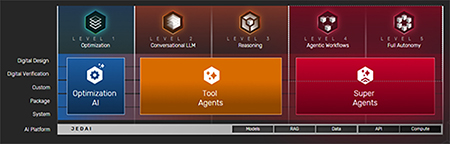
Fig. 4 Increasing autonomy chains multiple agentic workflows together through higher-level orchestration across the full SoC design flow.
Cadence frames its AI roadmap as a five-level progression, similar to the levels used to define the development stages of autonomous vehicles. For RF designers, each stage removes a different class of manual effort while keeping engineering decisions in the user’s hands. See Figure 4.
- Level 1: Optimization AI embeds AI and machine learning (ML) directly into optimization engines and into the surrounding design flows, such as circuit optimization, layout migration and yield improvement
- Level 2: Conversational AI provides natural-language access to documentation, tool knowledge and guided user interactions
- Level 3: Reasoning Agent with context awareness translates natural-language requests into actions across tools
- Level 4: Agentic Workflows support multi-step workflows coordinated by an AI Super Agent that manages specialized sub-agents performing specific design tasks
- Level 5: Increasing Autonomy connects these capabilities through higher-level orchestration across broader design flows.
LEVEL 1: OPTIMIZATION AI OFFERS THE MOST IMMEDIATE RF BENEFIT
The most immediate value of AI in RF and analog design comes from optimization and analysis rather than from full autonomy. Optimization and design synthesis have long been features of RF design tools, predating recent AI-based advances. For example, Microwave Office software incorporates an AI-driven search-and-optimization capability that explores a vast design space to identify and rank optimal matching network solutions, while simultaneously determining circuit topology, element values and sensitivity information. The approach supports arbitrary user-defined constraints and optimization goals, enabling designers to frame the problem directly in terms of system- or circuit-level performance objectives.
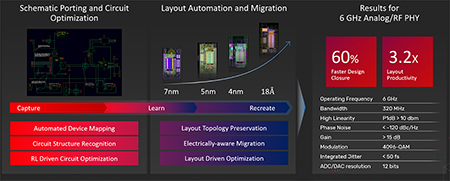
Fig. 5 Level 1 demonstration of AI/ML-based optimization used in workflow to support design node migration.
By combining ultra-fast simulation with an efficient search engine capable of evaluating more than 10 million simulations and cost functions per second, this capability can be applied directly to matching network synthesis from simulated load-pull data, including harmonic load-pull results. The result is a practical link between large-signal device characterization and optimized, realizable impedance-matching networks. Natural-language access to tasks such as these begins at Level 2 through conversational AI.
Cadence is already applying AI and ML to automate setups, explore large design spaces and recenter designs for performance and yield. In migration work, these methods can also reduce manual rework by helping designs converge under new process assumptions. This is a practical use of AI that is directly tied to engineering output, as seen in Figure 5.
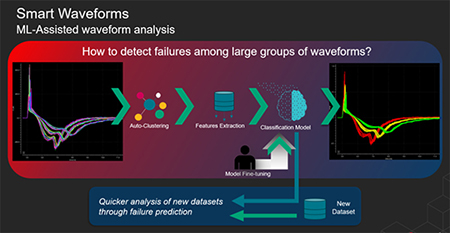
Fig. 6 Level 1 optimization plays a key role in design node migration.
WAVEFORM ANALYSIS AT SCALE
One practical application of AI-assisted optimization is waveform analysis. As simulation datasets continue to grow, reviewing waveforms is increasingly difficult for humans. ML-assisted waveform analysis offers a practical way to identify anomalies, classify behaviors and isolate likely failure modes more quickly than manual inspection alone. See Figure 6.
By extracting features from waveform data and applying classification and clustering methods, these tools can reduce the time designers spend sorting through large result sets. The greater benefit is not simply speed, but the identification of cases that require engineering attention and might otherwise be lost in a deluge of simulation data.
RF REQUIRES AI THAT UNDERSTANDS PHYSICAL IMPLEMENTATION
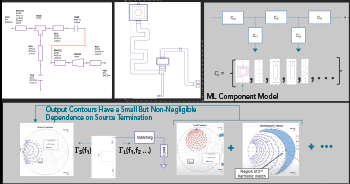
Fig. 7 Optimization and synthesis tools create networks from simulation data and user-defined design goals.
In RF design, the physical interconnect (transmission line) is a design element that can be tuned to influence electrical behavior, not merely a parasitic effect to be corrected later. Transmission lines, geometry and EM interactions are integral to the design from the outset. Pairing AI with RF design platforms is well-positioned in this area, since they already connect schematic, layout, EM analysis and optimization in a way that reflects actual RF practice. See Figure 7.
The AWR Design Environment and the newly introduced Virtuoso Studio RF platform support a unified data model, concurrent schematic/layout interaction, integrated full-wave EM analysis and parametric optimization. The architectural features of both platforms become increasingly significant in the AI era, as they provide the connected foundation required for agentic workflows. With Cadence JedAI and super-agent infrastructure, these dedicated RF design platforms provide the functionality needed to carry out all stages of RF product development, from implementation through verification.