

The business of testing and measuring is stepping up a gear. Today’s digitally-driven global economy expects high levels of performance and accuracy from its technology. This has helped to drive record growth in the test and measurement (T&M) market, valued at USD 34.11 billion in 2024 and set to reach USD 43.95 billion by 2030, according to Grand View Research.
The need for reliable testing is now paramount in a number of different industries. From aerospace electronics to modern defence systems, from communications infrastructure to energy and medicine, a low tolerance for failure requires testing and measurement that can function powerfully and at scale. What all these verticals have in common is that a single undetected technical weakness can escalate into expensive operational downtime, failed regulatory compliance and life-threatening disaster.
T&M is not just in hot demand; it is also clearly evolving to meet modern needs. Tools such as high-power RF and microwave test benches are still used, but these are now being transformed to work in a more automated and integrated fashion. Integrated test facilities are not new; they have existed for years in defence laboratories and aerospace qualification centres. But what were once bespoke, static installations are being replaced by software-driven platforms that combine high-power capabilities with automation, analytics and lifecycle traceability.
FROM HARDWARE-CENTRIC TO SOFTWARE-DEFINED
Testing of infrastructure in sectors such as telecom networks and energy has historically relied heavily on rigid modelling and operational monitoring within decentralised systems. Networks were designed to tolerate faults through redundancy, with distributed elements continuously evaluating abnormal conditions and rerouting traffic when required. In the energy sector, as renewable sources such as wind and solar were connected to the grid, ensuring stability became a distributed problem.
These instances reveal a common lesson: as systems decentralise and integrate, testing must anticipate interaction effects, not just component-level performance. In both cases, there has been a need to scale back reliance on early integrated test benches with their hardware-centric design.
This design has several limitations:
- Rigidity: Benches were designed for specific programmes and were difficult to adapt as requirements changed.
- Limited scalability: Approaches suitable for qualification testing did not translate easily to production or long-term maintenance.
- Human dependency: Even integrated systems depended heavily on expert operators, increasing risk and variability.

Figure 1 Aircraft mechanics performing safety checks. Source: Getty Images.
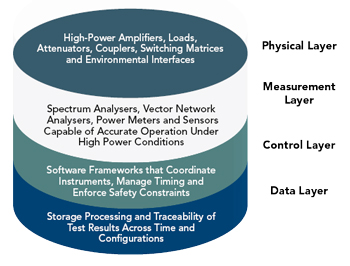
Figure 2 Pictogram displaying multi-layer integrated automation.
The modern shift is toward software-defined test architectures, as demonstrated in Figure 1. Hardware remains critical, but intelligence increasingly resides in control layers that manage configuration, sequencing, safety and data handling. Modular instrumentation, networked control and abstraction layers allow benches to be reconfigured rapidly without physical rewiring.
This transition mirrors developments in the systems being tested. As radios, power electronics and control units become software-driven, their validation environments must evolve in parallel.
COMBINING HIGH-POWER AND AUTOMATION
Automation has long been associated with low-power laboratory testing, where risks are manageable and margins forgiving. High-power RF and microwave testing, by contrast, introduces non-linear effects and failure modes that fundamentally alter how test systems must be engineered.
At elevated power levels, several factors dominate:
- Thermal stress: Components under test and within the bench experience significant heating, affecting performance and longevity.
- Non-linear behaviour: Amplifiers, mixers and passive components exhibit compression, harmonics and intermodulation.
- Reflected power risks: Impedance mismatches can generate standing waves capable of damaging equipment within microseconds.
- Electromagnetic coupling: High field strengths can interfere with control electronics and compromise measurement integrity.
In such environments, manual intervention is not just inefficient; it is risky. Automation becomes a safety mechanism as much as a productivity tool. Automated interlocks, continuous monitoring of forward and reflected power and real-time shutdown logic are essential to protect both equipment and personnel.
The critical analytical point is that high-power and automation were historically treated as separate concerns. Today, they must be designed together, from the earliest architectural decisions.
MULTI-LAYER INTEGRATED AUTOMATION
Fully integrated high-power test benches are best understood as systems-of-systems. They combine RF and microwave signal chains, power electronics, thermal management, control software and data infrastructure into a unified whole.
From a technical perspective, this integration operates across several layers, as shown in Figure 2.
- Physical layer: High-power amplifiers, loads, attenuators, couplers, switching matrices and environmental interfaces.
- Measurement layer: Spectrum analysers, vector network analysers, power meters and sensors capable of accurate operation under high-power conditions.
- Control layer: Software frameworks that coordinate instruments, manage timing and enforce safety constraints.
- Data layer: Storage, processing and traceability of test results across time and configurations.
Automation ties these layers together. Test sequences evolve from simple scripts into structured workflows that adapt dynamically to real-time conditions. If reflected power exceeds a threshold, the system responds instantly. If thermal drift is detected, parameters are adjusted or testing pauses automatically. This level of integration fundamentally changes the role of the test bench. It becomes an active participant in validation rather than a passive measurement tool.