

INDUSTRY APPLICATIONS UNDER THE SPOTLIGHT
Aerospace and Defence: Testing at the Edge of Physics
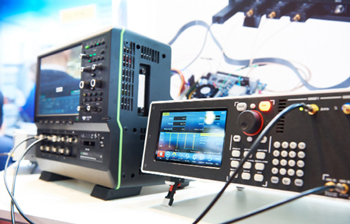
Figure 3 Digital pulse generator. Source: Getty Images.
Aerospace and defence systems exemplify why integrated, automated high-power test benches are essential, as exemplified in Figure 3. Radar systems, satellite transponders, electronic warfare payloads and secure communications must operate across wide frequency ranges, often at very high peak powers and under extreme environmental conditions.
A modern fighter aircraft, for example, may experience ground temperatures exceeding 50°C in the desert, followed by sub-zero conditions at altitude within minutes. RF performance must remain stable through these rapid thermal transitions. Automated benches capable of synchronising RF excitation with aggressive thermal cycling are essential. Thermo-mechanical life cycles are not merely reliability concerns; they are mission- and life-critical.
In addition, defence systems must withstand deliberate countermeasures. Jamming, spoofing and high-power interference are operational realities. Integrated test benches can emulate hostile RF environments, injecting jamming signals while monitoring system resilience, recovery behaviour and degradation thresholds. This level of validation is impractical with manual or loosely coupled setups.
The analytical value lies not only in efficiency, but in confidence. When test procedures are encoded in software and executed consistently, results become comparable across time, facilities and programmes.
Communications Infrastructure: Complexity at Scale
In telecommunications, complexity manifests through scale and integration rather than extreme environments. Technologies such as massive MIMO, beamforming and wideband modulation require simultaneous characterisation of many RF paths, often under high-power conditions.
Massive MIMO radio systems used in 5G networks represent investments of millions of dollars and demand engineering precision. Testing must verify not only individual transmit and receive chains, but also collective behaviour, such as beam patterns, phase coherence and power distribution under dynamic traffic loads. Automated, integrated benches make this feasible.
Satellite communications further illustrate the stakes. Components such as oscillators and high-power amplifiers undergo burn-in tests lasting thousands of hours. Once deployed, repair is impossible. A failure in orbit is catastrophic. Automated high-power benches enable long-duration, unattended testing with continuous monitoring, ensuring latent defects are identified before launch. Here, automation enables a shift from static compliance testing to dynamic performance evaluation that reflects real network behaviour.
Energy, Transport and Industrial Systems: Converging Domains

Figure 4 Graphic illustration of tightly configured data streams. Source: Getty Images.
High-power RF testing increasingly intersects with power electronics in energy and transport systems. Renewable energy converters, rail signalling equipment and industrial wireless controls operate in electrically noisy environments where RF performance and power integrity are tightly coupled, as exemplified in Figure 4.
Integrated benches that combine RF testing with high-voltage and high-current validation allow engineers to observe interactions that isolated tests miss. Switching noise from power converters can degrade communication links, while RF emissions may interfere with control electronics.
Looking ahead to automated and driverless vehicles, this convergence intensifies. Autonomous systems rely on radar, communications, sensors and control electronics operating in real-time. Failures are not merely inconvenient; they carry direct safety implications. Automation, AI and digital twins become essential tools to validate these interactions reliably and repeatedly.
Medical Technology: Precision, Safety and Traceability
Medical technology provides a compelling illustration of why integration and automation matter. Devices employing RF and microwave energy, such as MRI systems, RF ablation equipment, neurostimulators and implantable electronics, operate under uniquely stringent constraints.
Implantable cardiac pacemakers, for example, must function flawlessly for decades inside the human body. RF emissions must remain within strict exposure limits, and immunity to external RF interference must be guaranteed. Automated high-power test benches enable exhaustive, repeatable testing across operating conditions while ensuring comprehensive documentation.
Regulatory scrutiny is intense. Every test configuration, parameter and result must be traceable. Automation ensures repeatability, while integrated data management supports long-term compliance. Digital twins and AI analytics further enhance confidence by enabling predictive assessment of ageing and degradation without restarting full approval cycles.
From Automated Testing to Intelligent Validation
Automation, while transformative, represents only an intermediate stage in the evolution of high-power RF and microwave test benches. As systems continue to grow in complexity, automation alone is insufficient to capture the full range of behaviours that define real-world performance. The next phase is characterised by intelligence, modelling and lifecycle integration, in which test benches no longer simply execute predefined procedures but actively contribute to design understanding and long-term system assurance.
This shift is driven by a fundamental change in how engineering risk is managed. Rather than treating testing as a gate at the end of the development lifecycle, emerging approaches embed validation throughout the lifecycle, supported by digital models, advanced analytics and distributed collaboration frameworks.
AI-Driven Analytics: From Data Collection to Insight Generation
Modern automated test benches generate vast volumes of data: time-domain waveforms, spectral content, thermal profiles, power metrics and environmental parameters. Historically, much of this data was underutilised, stored for compliance rather than insight.
AI and machine learning techniques are beginning to change this dynamic. In high-power RF and microwave testing, AI-driven analytics can support:
- Anomaly detection: Identifying subtle deviations in behaviour that may indicate early-stage degradation long before conventional limits are exceeded.
- Pattern recognition: Correlating performance drift with specific operating conditions, duty cycles or thermal histories.
- Design feedback: Highlighting recurring weaknesses across test populations, therefore informing future design iterations.
Importantly, these techniques do not replace engineering judgement. Instead, they act as force multipliers, allowing engineers to focus attention where it matters most. In complex systems with thousands of parameters, AI helps surface relationships that would otherwise remain hidden.
From an analytical perspective, the value of AI lies in its ability to transform test benches from pass/fail instruments into learning systems, continuously refining understanding of how high-power RF systems behave over time.
Cloud Integration and Distributed Collaboration
As engineering teams become more geographically distributed, test environments must support collaboration without compromising data integrity or security. Cloud integration is emerging as a key enabler in this regard.
For automated high-power test benches, cloud-connected architectures allow:
- Centralised data repositories: Test results from multiple sites are aggregated and analysed consistently.
- Remote access and oversight: Experts can review test execution and results without being physically present.
- Cross-functional collaboration: Design, test, quality and regulatory teams working from a shared data foundation.
In regulated industries, this capability must be implemented carefully, with strict controls over access, versioning and traceability. When done correctly, however, cloud integration reduces duplication of effort and accelerates decision-making across the product lifecycle.
Lifecycle Confidence: Testing Beyond Initial Qualification
A defining feature of future test strategies is the emphasis on lifecycle confidence. For many high-power RF and microwave systems, particularly in aerospace, energy and healthcare, operational lifetimes span decades. Initial qualification, while essential, cannot guarantee long-term reliability.
Automated, integrated test benches increasingly support:
- Production consistency: Ensuring that systems leaving the factory remain aligned with qualified performance.
- Field return analysis: Comparing failed or degraded units against baseline test data to identify root causes.
- Upgrade validation: Retesting modified systems against original benchmarks to manage obsolescence and enhancements.
This lifecycle perspective reframes the role of the test bench. It becomes a persistent reference point, a technical memory of the system, rather than a one-time hurdle.
Yet, technology alone is insufficient. Process, skills development and collaboration are equally critical. Integrating RF, high-power electronics, software and safety systems requires multidisciplinary expertise. Engineers must understand automation frameworks and data analysis alongside traditional RF theory. Effective test systems increasingly depend on close cooperation between system designers, test engineers and technology providers.
The central question facing the industry is no longer whether to adopt integrated and automated high-power test benches, but how to implement them effectively. As electronic systems become more complex and the stakes rise, testing must evolve from a downstream activity to a strategic enabler.