Blog Posting

GSA 5G Ecosystem December 2020 Report

More Than 300 5G Devices Released to Date

The Global Mobile Suppliers Association (GSA) announced the the number of 5G devices has surpassed 500 for the first time, accompanied by rapid increase in the number of commercially available 5G devices.


Read More

Horns Will Help to Make 5G Millimeter Waves a Reality

Mario Leone, Owner Impulse Technologies, Inc.

Horn antennas and the waveguide transmission lines to which they are typically attached may seem like things of the past, or technologies that have long since seen their primes. But in an age in which the world is readying for the 5G cellular wireless communications, horn antennas provide real solutions for communications links operating at millimeter-wave frequencies. Learn about the advantages of using horn antennas in your design.


Read More
Junkosha probe cable

The Importance of Cabling in Probe Stations for High Frequency 5G Applications

Masaru Omoto, Junkosha

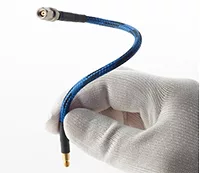
Probe stations allow a user to position electrical, optical or RF probes on a silicon wafer and connect them to a Vector Network Analyzer (VNA) so that the device can be tested. Using high-end cabling in a probe station is crucial: cables must be low loss, lightweight and both phase and amplitude stable against temperature, flexure and vibration. Learn how cable manufacturers are optimizing for high frequency 5G applications.


Read More

Thoughtful Material Choices Can Help Shrink RF Circuits

Smaller is often wiser in this age of electronic mobility and portability, and the choice of circuit material when starting a design has much to do with attempts to create smaller RF and microwave circuits. Circuit materials with higher dielectric constant (Dk) typically yield circuits with smaller features and dimensions for a given frequency range. But the higher Dk values can also result in increased insertion loss and other performance tradeoffs. The Dk value of a circuit material will also impact such circuit parameters as radiation loss, dispersion, and coupling.


Read More
SATCOM

Digitization of Satellite RF Systems

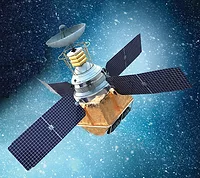
The past several years have seen wide upheaval in the space communication sector, from satellite payloads to ground station technology. This renaissance of space communications has largely been a shift from the five-decade-long approach of highly dedicated satellite communication and ground station technology to increased digitization and virtualization. A key aspect of this transformation is the digitization of satellite RF systems to yield more compact, lower weight, more configurable, and lower cost. Learn about this evolving trend.


Read More

New Features for RF Engineers in Comsol 5.6

COMSOL offered a preview of the upcoming release of COMSOL Multiphysics® version 5.6 at the COMSOL Conference 2020 North America, October 7–8. It is planned to be released in fall 2020 and brings faster and more memory-efficient solvers, better CAD assembly handling, application layout templates and a range of new graphics features including clip planes, realistic material rendering, and partial transparency. See what is new for RF engineers.

Read More
mmWaves

5G Standalone Networks Have Arrived

When we started 5G network deployments, it was planned to first implement 5G non-standalone (NSA) networks that used 4G infrastructure followed by standalone (SA) 5G networks that are separate, complete 5G networks. This year marks the first release of 5G SA networks as GSA has identified 47 operators in 24 countries worldwide that have been investing in public 5G SA networks (in the form of trials, planned or actual deployments). In addition, a number of these are testing or deploying 5G standalone technologies for private networks.


Read More