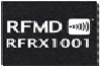
 RFMD introduces their GaAs MMIC IQ downconverters RFRX1001 and RFRX1002. The RFRX1001 is a 10 to 15.4 GHz GaAs pHEMT downconverter, incorporating an integrated LNA, image rejection mixer, LO buffer amplifier, and DC decoupling capacitors. The RFRX1002 is a 9 to 14GHz GaAs pHEMT downconverter, incorporating an integrated LNA, image rejection mixer, LO buffer amplifier, and DC decoupling capacitors.


 RSS
RSS
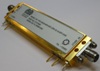 PMI Model No. PE2-4020-9R510R7-2R5-12-12-SFF-VVG is a voltage variable gain, low-noise amplifier that operates over the 9.5 to 10.7 GHz frequency range. This model provides 40 dB of small signal gain with a typical noise figure of 4.0 dB and an OP1dB of +12 dBm.
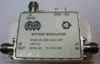 Model BPM-1G2G-1-SFF is a bi-phase modulator designed to operate over the 1.0 to 2.0 GHz frequency range. This model can handle RF input signal levels up to -3 dBm and has an insertion loss of 8.8 dB maximum.
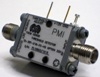 Model TD-30T-218-FC-HS Option 220 is a high speed threshold detector designed to operate over the 2 to 20 GHz frequency range. It has as external adjustment to vary the threshold level from -10 to -20 dBm, with an input flatness of typically ±1.0 dB and a VSWR of less than 3.0:1.
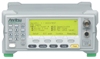 The Anritsu MT8852B Bluetooth Test Set is the market leading RF measuring instrument for design proving and production test of a wide range of products that integrate Bluetooth technology, including; phones, headsets, computers, audio-visual and gaming products as well as modules. In production, a single key press initiates a measurement script that tests a device in less than 10 seconds.
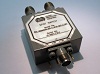 PMI Model No. P2T-500M20G-50-T-512-SFF-I-NH is a terminated single pole, two throw switch that operates from 500 MHz to 20 GHz which handles +23 dBm CW input power. The port to port isolation is 50 dB minimum, Insertion loss of 2.8 dB maximum and has a maximum switching speed of 50 nsec.
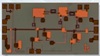 Custom MMIC is offering a new device from its growing MMIC design library. The CMD162 is a GaAs MMIC low-noise amplifier (LNA) chip for applications from 26 to 34 GHz. Optimized for 30 GHz satellite communications, the CMD162 boasts a typical noise figure of 1.7 dB with a small-signal gain of 22 dB and an output 1 dB compression point of +7 dB.
 RFMD’s new GaAs InGaP RFVC183x and RFVC184x series MMIC VCOs offer low phase noise and include integrated frequency dividers for Fo/2 and Fo/4 output frequency, as well as integrated RF output buffer amplifiers.
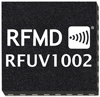 RFMD releases updates on their GaAs pHEMT up-converters. RFUV1002 is a 9 to 14 GHz GaAs pHEMT up-converter, incorporating an integrated LO buffer amplifier, a balanced single-side band (image rejection) mixer, followed by a variable gain amplifier and a DC decoupling capacitor. RFUV1003 is a 12 to 16 GHz GaAs pHEMT up-converter, incorporating an integrated LO buffer amplifier.
 RFMD’s new RFCA3302 is a high performance InGaP HBT MMIC amplifier designed to run from a single +5 V supply without the need for an external dropping resistor. The high gain, high linearity, and low distortion from 40 to 1008 MHz make this part ideal for broadband cable applications. An integrated bias circuit provides stable gain over temperature and process variations.