

Developing and testing 5G devices in accordance with 3GPP standards and regulatory agencies is becoming increasingly complex. From multiple frequencies extending into mmWave and greater bandwidth requirements, to antenna arrays and high speed chipsets in compact packages, performance verification is essential. Anritsu has introduced two software solutions for its radio communication test station MT8000A to address the challenges associated with verifying the RF performance of 5G devices.
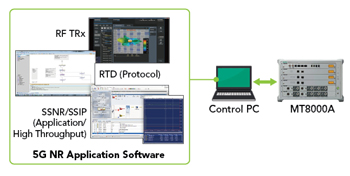
Figure 1 Anritsu software for verification of 5G devices.
The new software options support key technologies specified in 3GPP Release 17, including 1024-QAM modulation for downlink (DL) and Tx switching 2Tx to 2Tx for uplink (UL), enabling accurate and flexible evaluation of 5G devices with enhanced transmit/receive (TRx) performance. They create a flexible solution to conduct necessary RF tests efficiently and accurately (see Figure 1).
The NR DL 1024-QAM MX800010A-022 software enables RF testing for DL 1024-QAM modulation. It delivers significantly higher data rates and spectral efficiency than 256-QAM by encoding more bits per symbol, but it requires a much stronger signal-to-noise ratio and is more susceptible to interference and noise. The NR UL Tx switching 2Tx to 2Tx MX800010A-019 software supports RF testing for UL transmission switching technology.
Dynamic switching between multiple antennas based on communication conditions can be done through the software to ensure stable and high speed transmission performance. Easy-to-change parameter settings are also supported by the MX800010A software to simplify RF performance tests.
EMERGING 5G USE CASE SUPPORT
Anritsu has developed these two software options to address new 5G use cases, such as augmented/virtual reality (AR/VR), 8K video and live streaming, as they require a test environment that can evaluate the Tx and Rx performance of 5G devices. These technologies will utilize frequency range (FR) 1 sub-6 GHz frequency bands and pose complex design and test challenges.
The MX800010A software now also supports 5G NR non-terrestrial network (NTN) measurements. Signals between low Earth orbit satellites used in NTNs are subject to propagation delays and the Doppler effect. The MX800010A measures the shifted frequency as carrier frequency to ensure 5G devices are performing according to 3GPP NR NTN standards using a simple GUI that creates straightforward displays, as shown in Figure 2.
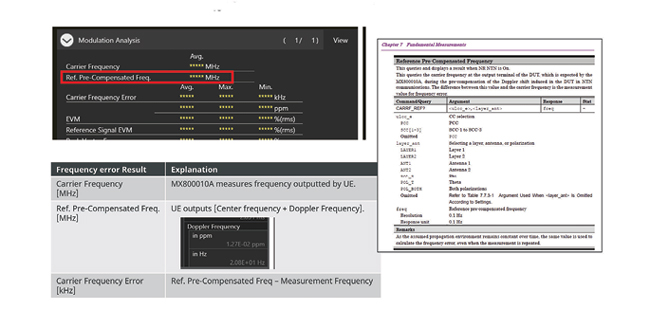
Figure 2 GUI for easy-to-understand results based on 3GPP NR NTN standards.
FLEXIBLE PLATFORM SUPPORT
The MX800010A expands the overall capability of the MT8000A, a modular platform that supports a wide range of RF, microwave and mmWave testing. It can be used for 5G, LTE and other wireless standard validations by providing all-in-one support for RF measurements, protocol tests and applications tests in FR1 and FR2 mmWave bands.
When the software is installed in the MT8000A, it can be used with an over-the-air (OTA) chamber to conduct mmWave RF measurements and beamforming tests using call connections specified by 3GPP. OTA tests are essential because the TRx performance of mobile devices is influenced by factors such as the terminal form and antenna characteristics.
Anritsu’s compatible OTA solutions extend MT8000A capabilities across diverse use cases aligned with CTIA and 3GPP test specifications. The MT8000A is listed on CTIA’s authorized equipment list for 5G FR2 OTA testing and validated for 3GPP FR2 OTA RF conformance testing.
In addition to mmWave 5G TRx tests, the MX800010A enabled MT8000A can evaluate antenna characteristics. The two OTA antenna tests that can be conducted in this configuration are total radiated power and total radiated sensitivity.
The software can also be used to conduct specific absorption rate tests to determine the amount of energy in the electromagnetic spectrum radiated from the 5G UE. The test helps protect mobile device users from electromagnetic waves based on national and regional regulations and standards.
CONTROLLING COST-OF-TEST
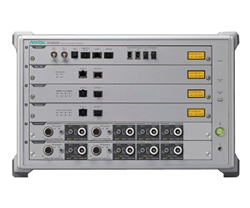
Figure 3 The radio communication test station MT8000A.
The MX800010A is part of Anritsu’s software-based approach that helps control the cost-of-test of 5G devices. The MT8000A, as shown in Figure 3, is a flexible hardware platform that allows for easy integration of software into the analyzer. Other key tests on various technologies can be integrated into the MT8000A with specific software and modules, allowing for a solution that addresses the need to test legacy technologies, as well as an efficient upgrade path to support future standard development and regulatory requirements.
For example, the new MX800010A software supports a 5G non-standalone (NSA) mode that can be used in conjunction with Anritsu’s radio communication analyzer MT8821C as an LTE anchor or the LTE anchor can reside on the MT8000A. NSA call connection and RF tests can be performed in this configuration so that legacy tests can be done. The MT8821C can also operate standalone for NTN NB-IoT measurements.
EASE-OF-USE
The new MX800010A software comes with a GUI to create a comprehensive, user-friendly platform for RF signal testing and measurement. It provides an intuitive interface to simplify performing various measurements, analyzing RF signals and managing test results. MX800010A also integrates with specified OTA chambers, allowing scripting with third-party tools.
When used with the MT8000A, the MX800010A GUI enables streamlined and efficient testing of 5G devices. The GUI controls measurements and configures tests easily for all 3GPP and CTIA RF tests supported by the software, such as spectrum analysis, channel power measurement and modulation accuracy.
The platform supports the creation of test setups based on standards, allowing the MT8000A/MX800010A solution to comply with ever-changing test parameters. All tests can be automated for one-button testing and repeatable results, regardless of who is performing the tests.
Anritsu Company
Morgan Hill, Calif.
www.anritsu.com