


Software-defined radios (SDRs) have become the standard for both commercial and military applications around the world due to their ability to operate internationally, particularly where dynamic reconfiguration and multi-standard capabilities are essential. Where a traditional hardware-based radio requires physical touching and changing of the piece parts to reconfigure the system, an SDR allows the user to adapt to operating in different frequency bands and RF environments through software. An SDR is the younger, faster sister of the hardware-based radio, not quite “your father’s brother’s nephew’s cousin’s former” roommate’s radio (We are in an argument over which is the best: Spaceballs, Star Wars, or Star Trek.)
In the DOD and the United States, spectrum supportability is part of the certification process, which examines, identifies and assesses regulatory, technical and operational spectrum issues. These have the potential to impact the required operational performance of a candidate system through the process of the Spectrum Supportability Risk Assessment (SSRA).1,2 The U.S. DOD, however, does not typically operate within its own borders, except for testing, training and disaster relief. As such, the supportability needs to be looked at internationally through host nations and proposed operating areas. The U.S. frequency allocation chart, as shown in Figure 1, and all non-U.S. frequency allocation charts must be examined.

Figure 1 United States frequency allocation chart. Source: Department of Commerce.
The African Telecommunications Union’s spectrum allocation chart is shown as an example in Figure 2. In comparing the two charts, there are both similarities and differences. For example, the lower 3 GHz frequency band is harmonized for radiolocation (radar), but the U.S. adds an allocation for amateur radio.

Figure 2 African spectrum allocation chart. Source: African Telecommunications Union.
Outstanding examples of SDRs that have been ruggedized for both radiation hazards and shock and vibration, as well as being deconflicted intergalactically, are the Star Wars Commlink, the Star Trek Communicator and the Spaceballs Spaceball, which operate across the galaxy without issues. We will leave it up to the reader as to which is the best SDR, as we have our own opinions.
SDRs are inherently more flexible than traditional hardware-based radios.3 Traditional radios are typically optimized for specific frequency bands and wireless standards, and changing those often involves physically modifying or replacing components. These differences are shown in Figure 3. Unlike a traditional radio, an SDR can change wireless standards and frequencies through software changes, allowing for support of a broader range of applications. This flexibility is achieved by utilizing programmable hardware components that can be reprogrammed to accommodate new protocols and frequencies as needed. SDRs can implement advanced signal processing algorithms that can dynamically adjust to varying signal conditions, optimizing performance in real-time.4 This enables SDRs to support a wide array of communication standards, from legacy systems to emerging technologies, without the need for hardware changes.5 Additionally, SDRs enable quick deployment in dynamic environments, as they can be swiftly reprogrammed to adapt to new operational requirements and innovations.
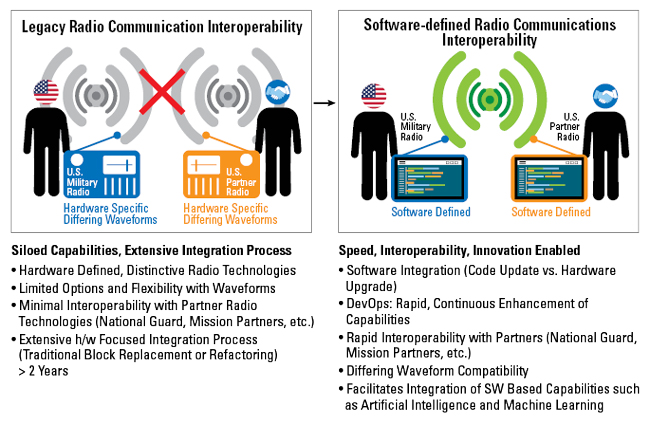
Figure 3 Legacy radio vs. SDR interoperability. Source: Air Force Research Laboratory (AFRL).
While SDRs have many advantages, they also have challenges. They typically require more power than traditional hardware-based radios, which can be a limitation in power-sensitive applications. The complexity of the software involved in SDRs necessitates sophisticated development and maintenance, often incurring higher initial development and ongoing maintenance (or sustainment) costs. Furthermore, the initial investment in SDR technology can be more expensive compared to conventional radio systems, which may be a barrier for some organizations. Additionally, the need for robust cybersecurity measures to protect against software vulnerabilities adds another layer of complexity and expense.5
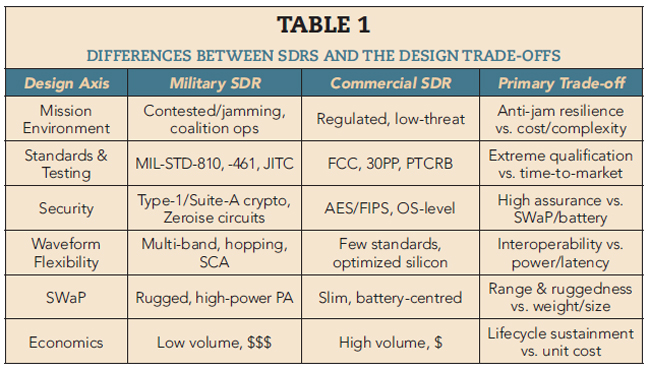
Commercial SDRs are primarily designed to meet the needs of a broad market, focusing on flexibility and interoperability across various consumer and enterprise applications. They typically prioritize cost-effectiveness and ease of use, supporting multiple communication standards such as LTE, Wi-Fi and Bluetooth. In contrast, military SDRs are built to meet stringent requirements for durability, performance, reliability and security while operating in harsh environments and incorporating advanced encryption and anti-jamming technologies. Additionally, military radios are ruggedized to withstand extreme conditions, including shock, vibration and radiation hazards. Cybersecurity is another critical concern in military SDRs, necessitating robust protective measures to safeguard against cyber threats and ensure the integrity of communications.6,7 While SDRs offer significant benefits, their design and implementation are tailored to meet the specific demands of their respective use cases.
Military and commercial SDRs have distinct differences in size, weight and power (SWaP), and costs driven by their specific operational requirements and use cases. A table summarizing the differences between commercial and military SDRs and the trade-offs is shown in Table 1.
Looking at it in greater detail, military SDR designs have specific requirements that drive form factors:
- Size and Weight: Military ruggedization results in bulkier devices compared to their commercial counterparts.
- Power: Military requirements for encryption and anti-jamming technologies, as well as the need to support multiple, simultaneous communication channels, typically require more power to operate.
- Reliability: The requirement to have a single radio operate reliably in frozen worlds like Star Wars’ Hoth and Earth’s Southeast Asian rainforest drives design accommodations and results in higher material costs in military SDRs.
In contrast, a commercial SDR has a very different set of priorities:
- Size and Weight: Commercial SDRs prioritize ease of use, portability and cost-effectiveness, often resulting in more compact and lightweight designs.
- Power Costs: Designed to be power efficient, commercial SDRs cater to consumer and enterprise applications, where battery life and energy consumption are important factors. They focus on optimizing power usage for standard communication protocols such as LTE, Wi-Fi and Bluetooth.
- Cost Considerations: The emphasis on affordability and accessibility for a wide range of users drives the design and manufacturing processes.
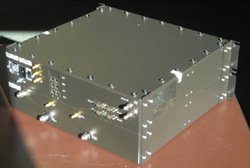
Figure 4 Vanu Inc.’s Anywave® global system for mobile communications. Source: Vanu Inc.
Under harsh operating conditions, military priorities of security and performance result in generally higher SDR SWaP values. In contrast, commercial SDRs focus on cost-effectiveness, portability and power efficiency, leading to lower SWaP values tailored to their respective markets. The number of production units manufactured is an order of magnitude higher than the military, which drives production costs down.
The first commercial SDR approved by the Federal Communications Commission (FCC) was Vanu Inc.’s Anywave® global system for mobile communications (GSM) base station in November 2004, as shown in Figure 4. It ran on a general-purpose processing platform and was a dual-mode cellular base station that supported both GSM and code division multiple access (CDMA). In a press release announcing the certification, Vanu stated their system consisted, “entirely of software applications that support all of the GSM cellular base station functionality running on off-the-shelf Hewlett-Packard ProLiant servers with an ADC Digivance RF subsystem.” At the time, the FCC chairman called the approval “the first step in what may prove to be a radio technology revolution.”8 And there has been, or rather, in the words of Star Wars Episode VII, The Force Awakens: “There has been an awakening. Have you felt it?”
The Joint Tactical Radio System (JTRS) was the first major military software-defined radio. The first true military SDRs were the SPEAKEasy I and II, developed at the Air Force’s Rome Labs in New York.9 Phase I was demonstrated in 1994.10 They were proofs of a concept, research and development program, with two programmable channels, a Texas Instruments quad-TMS 320C40 multi-chip module for digital signal processing and a SUN Sparc 10 workstation as a man-machine interface.9 The architecture for SPEAKEasy I is shown in Figure 5.
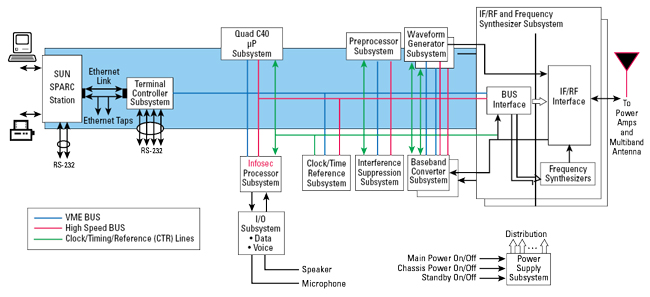
Figure 5 SPEAKEasy Phase 1 architecture. Source: AFRL.
By the early 2000s, advances in radio technology had complicated communications. Ground and aviation radios were typically unable to communicate with modern satcom systems.11
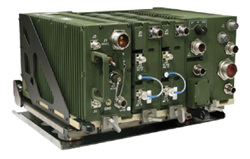
Figure 6 The JTRS SDR was designed to use a common architecture. Source: U.S. Army.
When JTRS was initially being developed in the early 2000s, its primary goal was to be fully interoperable between the different types of radios11, as shown in Figure 6. The Army was the lead military department for the acquisition. They intended to change that with JTRS by developing and acquiring affordable, high-capacity, fully interoperable tactical radios to meet the bandwidth needs of different military areas. The JTRS program had eight common goals and a multi-billion-dollar budget. In 2012, they delivered a ground mobile radio (GMR) after having spent billions on other radios.12 The GMR could not tolerate harsh conditions, making it unusable in the desert. The key issue with the program was that the U.S. military started with a technological advancement problem the size of a Borg Cube and decided it was the size of a short Jedi Master. And, like Yoda being underestimated because of his size, the size and complexity of the development efforts needed to create and implement ruggedized, fully interoperable multi-domain SDRs were significantly underestimated.3 For scale, a Borg cube has an approximate volume of 27 cubic kilometers, and Yoda is 66 cm tall.