

Stable signal sources are essential for many high-precision electronic systems, such as wireless communications, RF testing and radar equipment. A key parameter of a stable signal is low phase noise. Phase noise is a characteristic of any fixed or tunable frequency source, from reference oscillators to frequency synthesizers. This phase modulation noise consists of short-term fluctuations in the frequency or phase of a source’s output signal. At the system level, additional components, including cables connected to a signal source, can also contribute residual phase noise. Excessive phase noise can limit the sensitivity and performance of various types of receivers used across many fields, making phase noise testing critical throughout a broad range of industries.
TRADITIONAL PHASE NOISE TESTING METHODS
The direct spectrum method uses a spectrum analyzer to directly analyze the frequency spectrum of the signal. This is a quick method of testing and quite simple in comparison with other methods. However, the sensitivity and measurement accuracy can be limited by the spectrum analyzer’s own noise floor.
Time domain analysis generally requires a high-end oscilloscope or time interval analyzer. This method is well-suited for broadband noise and analyzing wideband signals and applications where time stability is important. Time domain analysis can lack sensitivity for low phase level measurements and has limited offset resolution which is often required for RF and microwave applications. Additionally, high-end oscilloscopes are usually quite costly.
The cross-correlation method employs two identical measurement setups in parallel, usually requiring low noise reference oscillators, phase detectors, spectrum analyzers and cross-correlation software. This method excels at ultra-low phase noise measurement and is ideal for applications that require precise phase noise measurement. This method has been notoriously complex, time-consuming and expensive.
Some labs and production facilities use specialized or integrated phase noise analyzers. These analyzers combine reference sources, phase detectors, PLLs and cross-correlation functionality into a single box. These analyzers can simplify the testing process through automation, ease of use and flexibility, but are often cost-prohibitive.
ALL-IN-ONE PHASE NOISE AND VCO TEST SOLUTION
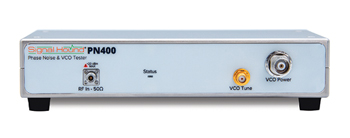
Figure 1 PN400 Phase Noise and VCO Tester.
Signal Hound has introduced a revolutionary phase noise and VCO test solution. The PN400 all-in-one test solution uses cross-correlation methodology and feature-rich software to provide a level of performance and sensitivity beyond the capabilities of one spectrum analyzer. The PN400 system offers enterprise-grade accuracy and innovative features that can compete with dedicated and costly phase noise testers for applications such as phase noise testing and characterization, VCO testing and characterization, production and manufacturing testing, source characterization, system-level debug and SDR characterization. The PN400 all-in-one test solution is shown in Figure 1.
This unique and innovative phase noise test solution incorporates the PN400 hardware with an Advanced Phase Noise Test Tool Kit and requires two Signal Hound SM-series spectrum analyzers for operation. Combining the PN400 with two SM200 or SM435 spectrum analyzers enables cross-correlated phase noise measurements and VCO characterization via low noise tuning and supply voltage. It also offers all the power and flexibility of Signal Hound’s spectrum analysis capabilities.
Introduction of the Advanced Phase Noise Test Tool Kit via Signal Hound’s powerful Spike™ spectrum analysis software brings a comprehensive suite of tools to this new test solution. Combined with the PN400 hardware, the new VCO characterization mode in Spike’s licensed phase noise test tool kit enables automatic sweeps across a configurable VCO tuning range. It allows accurate and low noise voltage sources to be combined with easy-to-use software supporting efficient characterization for R&D and manufacturing lines. However, the features go even further. Configurable automation, measurement of phase noise and amplitude noise or a combination of both, along with automatic signal detection, are just a few of the valuable capabilities included in the tool kit. Figure 2 shows an example of the output of the Spike spectrum analysis software.
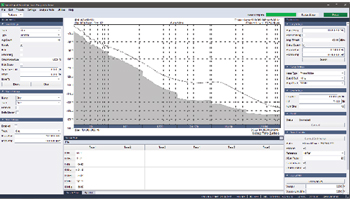
Figure 2 Representative Spike spectrum analysis software output.
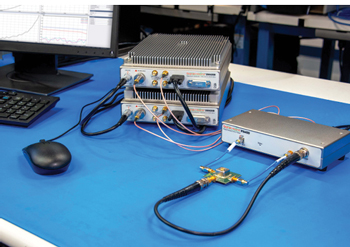
Figure 3 PN400 system using SM435B spectrum analyzers.
The PN400 Phase Noise and VCO Tester operates at an input frequency range of 100 kHz up to 43.5 GHz, depending on the pairing of the SM-series spectrum analyzers. The utilization of two Signal Hound high frequency spectrum analyzers to perform cross-correlation measurements allows the system to achieve phase noise floors 20 to 30 dB lower than the capabilities of a single SM-series spectrum analyzer (-160 dBc/Hz at 40 GHz). This advanced hardware pairing creates an ideal system for applications that require precision phase noise measurement. The PN400 system, using two identical SM435B 43.5 GHz real-time spectrum analyzers for cross-correlated phase noise measurements and VCO characterization, is shown in Figure 3.
The PN400 test system has a standard operating temperature range of -40°F to 185°F (-40°C to +85°C) and can be seamlessly integrated into a wide range of test environments. The phase noise test solution is also compact enough to fit easily on a benchtop. Traditional methods for precise phase noise measurement have been complex, time-consuming and expensive. Due to its ease of use, flexibility and affordability, the PN400 tester is poised to streamline workflows for a broad segment of users.
Signal Hound
Battle Ground, Wash.
signalhound.com