Articles by National Instruments, Austin, Texas

Ni wp nov2019 skysafe casestudy cvr150

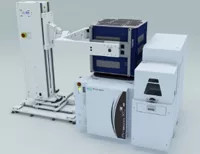
SkySafe Defeats Drone Threats with Open-Source SDR

With the emergence of highly capable, low-cost, wirelessly controlled drones, bad actors can easily execute disruptive operations, such as airport intrusions or surveillance abuse. Read how SkySafe rapidly prototyped and deployed a cutting-edge software defined radio (SDR)-based drone defense system on USRP, delivering industry-leading capability faster and at a much lower cost to the government.


Read More
Niawr august wp150

5G NR Primer for Amplifier and Filter Design

Future communication systems will comprise many diverse systems that will be implemented with a wide array of solutions. Providing increased mobile broadband traffic and higher data rates, as demanded by end users, will require adding more spectrum, making that spectrum more efficient, and building out ultra-dense network configurations.

Please note:
By downloading a white paper, the details of your profile will be shared with the sponsoring company and you may be contacted by them directly.



Read More
Awr ni 150

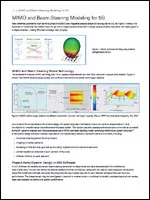
5G Primer for MIMO/Phased-Array Antennas

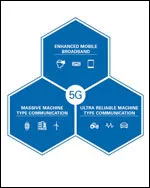
Evolving communication systems are driving developments in the RF/microwave industry. The large umbrella of 5G focuses on supporting three main technologies:

  • Enhanced mobile broadband, which is the natural development of long-term evolution (LTE)
  • Massive achine-type communications, also known as the industrial internet of things (IIoT)
  • Ultra-reliable, low-latency communications providing mission-critical infrastructure for services such as transportation, public safety, medical, and more.


Read More
Ni awr150

System Simulation Primer for RF Link Budget Analysis

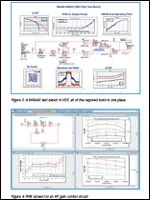
An RF link budget is used to account for all the gains and losses in a telecommunication system — from the transmitter, through the medium (free space, cable, waveguide, fiber, and more), to the receiver. By accounting for the attenuation of the transmitted signal as it propagates through the communication channel, system designers can determine the required signal strength and antenna gain necessary to overcome all feedline and miscellaneous losses in order to ensure an appropriate quality of signal for successful data transmission.


Read More
Ni awr150

RF Basics & Real Time

An RF link budget is used to account for all the gains and losses in a telecommunication system — from the transmitter, through the medium (free space, cable, waveguide, fiber, and more), to the receiver. By accounting for the attenuation of the transmitted signal as it propagates through the communication channel, system designers can determine the required signal strength and antenna gain necessary to overcome all feedline and miscellaneous losses in order to ensure an appropriate quality of signal for successful data transmission.


Read More