

Near-field communication (NFC) is a standards-based short-range wireless connectivity technology that operates using electromagnetic fields. It facilitates the exchange of currency and data, enabling the connection of various electronic devices. The speed and convenience of the connection enable data sharing between smartphones, tablets and laptops. The standard is geared towards ease-of-use; NFC users can gesture their phones towards an enabled device and share information without manually establishing a connection.

Figure 1 Global NFC market size by year. Source: press releases, investor presentations, interviews with experts and MarketsandMarkets analysis.
Figure 1 depicts the global NFC market size from 2024 to 2029. According to MarketsandMarkets, the NFC market was estimated to be $21.69 billion in 2024 and is projected to reach $30.55 billion by 2029 at a compound annual growth rate of 7.1 percent during the forecast period. The prediction of high usage of mobile devices for mobile-to-mobile data transfer and mobile-based payments is expected to create lucrative market opportunities for players in the future.
NFC MARKET OVERVIEW
The NFC technology market is growing rapidly in all geographical regions. The ease of contactless communication between devices such as smartphones and tablets drives the demand for this technology worldwide. The NFC market has been segmented based on geography into North America, Europe, Asia-Pacific and the rest of the world.
Asia-Pacific hosts some of the world’s fastest-growing and leading industrialized economies. The region is witnessing dynamic changes in the adoption of new technologies and advancements across industries. NFC-enabled handsets, wearable devices and products are most used in Japan for payment, customer or product identification and access control applications. Similarly, South Korea, China and India also contribute to the NFC market in Asia-Pacific. The mobile payments market is significantly growing in Asia-Pacific countries.
Contactless debit and credit cards have become popular in many parts of India. Some banks offering NFC-enabled contactless credit cards in India are Citibank, Kotak Mahindra Bank, HDFC Bank, IndusInd Bank, Standard Chartered Bank, American Express (India), ICICI Bank and State Bank of India. As per Reserve Bank of India mandates, all payments made using NFC-enabled contactless credit cards in India must be below $23 per transaction. Applications that use NFC payment systems are Apple Pay, Google Pay and Samsung Pay.
PROMINENT NFC MARKETS
Consumer Electronics: The consumer electronics market is the largest end user of NFC and holds a significant market share owing to the commercialization of the technology in smartphones, media tablets, smart TVs, set-top boxes and gaming consoles. The production of NFC-based interfaces has increased, enabling users to control devices using this short-range communication technology. Mobile phones and tablets are the most common devices enabled with NFC technology and are within the reach of all customers. Therefore, the availability of NFC in mobile phones makes this segment promising. Many wearable devices such as smartwatches, fitness trackers, smart glasses and smart rings have NFC technology. This technology allows these devices to interact with other NFC-enabled devices or tags for contactless payments and data transfer applications. For instance, smartwatches from major brands such as Apple and Samsung feature NFC capabilities, allowing these devices to be used for contactless payments, access control and data sharing. The market for wearable devices has lucrative growth potential in the consumer electronics sector, resulting in growth potential for NFC technology in the wearable electronics sector.
Retail: The NFC application has shown tremendous growth in the retail industry, owing to the production of NFC-enabled smartphones. These phones have an embedded NFC chip. With the help of banking gateways and trusted service managers, consumers simply need to wave their phones in front of the NFC tag to deduct the required balance from their accounts. The purchase of goods and services and their payment is made online or at the point of sale. In the retail industry, NFC technology is used for access control, product identification and transaction applications. Product identification and tracking are among the advanced functions of NFC in the retail industry. NFC tags play a crucial role in providing information about products. Using NFC-enabled devices, users can easily identify the location and availability of items. When NFC tags are placed on product shelves, consumers can access personalized information by scanning them with an app that integrates their profile. For example, if a customer has a nut allergy, the app could automatically detect whether a product contains nuts and provide an alert.

Figure 2 Market segmentation. Source: press releases, investor presentations, interviews with experts and MarketsandMarkets analysis.
Transportation: In the transportation industry, NFC-enabled phone transactions can be used with existing contactless infrastructure without additional investments. NFC enables two-way communications, such as redeeming a ticket and sensing a receipt. NFC forum tags placed behind posters and other printed media (smart posters) allow travelers to touch and read schedules, get special offers and learn about destination highlights. The major applications of NFC in the transportation industry are ticketing and access control. The current trends and customers’ interest in mobile commerce have strengthened the ticketing market in the transportation industry. Commuters are looking forward to adopting mobility in all aspects of transit, such as information lookup, journey planning and ticketing. NFC transactions eliminate ticket vendors and queues, thereby reducing frustration among other passengers. The passenger can use NFC to facilitate payment for credit/debit cards, pre-paid tickets and traveler passes using their smartphone. These tickets are also stored on the phone.
FORECASTS AND SEGMENTATION
NFC hardware is a fixed component integrated into devices such as smartphones and point of sale (POS) terminals to implement the actual NFC transactions. These NFC ntegrated circuits (ICs)/chips are used to handle payments through smartphones, tablets and other electronics requiring a contactless payment system, electronic access control and NFC device pairing to enable data sharing. NFC tags and readers are implemented in various contactless data transfer and transaction use cases, such as mobile payments, access control, data exchange and loT connectivity. NFC ICs are used for various applications such as mobile phones, secure coupling techniques including Bluetooth and Wi-Fi, tablets, wearables, product differentiation and identification and medical devices. Figure 2 shows the latest MarketsandMarkets segmentation of hardware and software revenue in the NFC market for 2024 and 2029.

Figure 3 Card emulation by operating mode. Source: press releases, investor presentations, interviews with experts and MarketsandMarkets analysis.
The NFC market is segmented by operating mode into card emulation, reader emulation and peer-to-peer applications. In the card emulation mode, an NFC device functions as a contactless smart card. In this mode, the NFC reader creates an RF field. It can be specifically configured to send messages that enable the NFC device to act as a contactless credit card. This mode allows smartphones to replace credit cards, debit cards, transit cards, access cards and more. An NFC device can also include a secure element to safely store information for the emulated card. An external reader cannot differentiate between a smart card and an NFC device in emulation mode, making it especially useful for contactless payment and ticketing applications. Figure 3 shows MarketsandMarkets’ estimate for the card emulation, reader emulation and peer-to-peer applications revenue in 2024 and 2029.
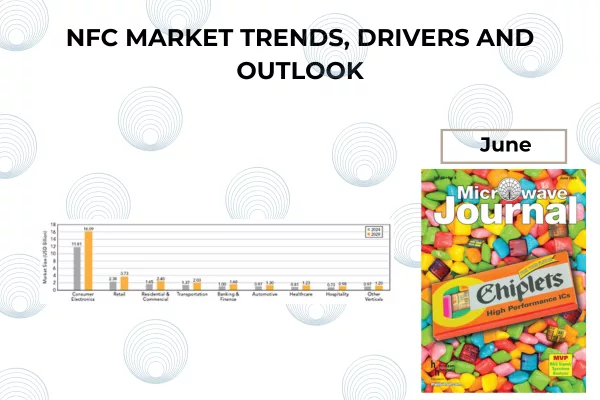
The NFC market is witnessing rapid growth owing to the high penetration of NFC technology in consumer electronics devices such as smartphones and tablets. Smartphones and tablets widely use NFC technology for contactless payments and data transfers. Consumers can tap their devices on NFC-enabled POS terminals/ticketing terminals to make transactions. NFC also results in convenient and secure data transfers between devices, such as contact information, files, website links, etc. These NFC-enabled consumer electronic devices can also enable home automation and control. Overall, the NFC technology offers customers convenience, security and flexibility in payment transactions and data transfer applications. Figure 4 shows forecasted revenue associated with NFC use in the most popular market segments for 2024 and 2029.

Figure 4 NFC market verticals. Source: press releases, investor presentations, interviews with experts and MarketsandMarkets analysis. Note: Other verticals primarily include education, agriculture and government.
FUTURE OUTLOOK
Continued advancements in NFC chip technology, such as improved security and faster data transfer rates, are expected to expand the applications of NFC technology. Integrating NFC with other technologies, like IoT and blockchain, will create new opportunities for secure and efficient data exchange. As the adoption of smartphones and other NFC-enabled devices increases, we can anticipate a wider range of NFC applications, from contactless payments to digital ticketing and access control. Table 1 includes estimated market sizes and compound annual growth rates of adjacent markets.

References
- www.marketsandmarkets.com/Market-Reports/wireless-connectivity-market-192605963.html.
- www.marketsandmarkets.com/Market-Reports/rfid-market-446.html.
- www.marketsandmarkets.com/Market-Reports/access-control-market-164562182.html.
- www.marketsandmarkets.com/Market-Reports/authentication-brand-protection-market-5950532.html
- www.marketsandmarkets.com/Market-Reports/5g-fixed-wireless-access-market-41266711.html.