

In May, we spoke with Giorgia Zucchelli, a subject-matter expert and product manager for RF and Analog Mixed-Signal at MathWorks, for our online executive interview to discuss how AI is used to design complex phased-array antennas in today’s terrestrial and satellite communication systems. What follows is a continuation of that conversation and the workshop that she co-presented at IMS with ADI.
|
Q. |
What are the primary challenges engineers face when designing and integrating antennas for telecom networks such as 5G, 6G or satellite communications?
|
A. |
One of the main challenges engineers face is that modern communication systems are moving to higher frequencies, larger bandwidths and multiband operation. Yet, they still have tight constraints on power, size and installation. As a result, engineers are working with systems whose design spaces grow dramatically, with far more parameters to tune than in the past.
In these systems, antenna design can’t be treated in isolation because each antenna is coupled to the rest of the system. Engineers work with highly integrated phased-array systems that can include hundreds or even thousands of antennas. Each element introduces its own parameters, such as phase delays, amplitude settings, filters and gains. When engineers combine all of that, they arrive at a design space with millions of possible configurations. This is why first-principles or pen-and-paper approaches do not work in practice.
Antenna design becomes even more complicated because the components are not ideal, especially at higher frequencies. Antennas are typically placed close together, leading to coupling and other unwanted effects. These interactions make it difficult to rely on linear analysis alone to understand system behavior. Another challenge is that both prototyping and simulation are expensive. Electromagnetic simulations can take days to analyze a single antenna and high-fidelity simulations for large arrays add significant cost. These simulations are often run after the design is complete, so the results arrive too late to influence key decisions.
|
Q. |
Why is antenna test data often incomplete, and how did engineers traditionally handle those performance and integration gaps before AI was introduced?
|
A. |
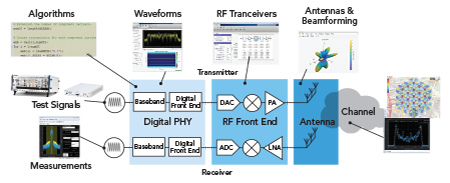
Fig. 1 Today’s wireless systems require system level evaluation across antenna, RF and digital domains earlier in development.
Antenna test data is often incomplete because fully characterizing an antenna is both expensive and time-consuming. In many cases, the antenna does not exist when system-level decisions must be made. Engineers typically work with components from different vendors that provide only datasheets. A datasheet includes basic information such as gain or a simplified radiation pattern, but this information does not represent the antenna’s overall behavior.
Datasheets are not executable models and do not capture the full 3D radiation behavior required for system-level analysis. Converting that limited information into a realistic system simulation is difficult, especially when antennas interact with beamformers, amplifiers, converters and other components from various vendors. See Figure 1.
Traditionally, engineers addressed these gaps with simplified assumptions at the system level. They filled in missing behavior with approximations and accepted a certain level of uncertainty, knowing that systems could be adjusted later in the lab. Part of the reason is the difficulty of obtaining complete antenna data in practice.
Once an antenna is built, engineers can measure its performance, but those measurements can be costly. Over-the-air antenna characterization can easily take a full day per antenna, and collecting complete data across all angles and configurations takes time that many engineers do not have. When an antenna does not exist, the situation is not much better. Engineers then rely on electromagnetic experts to design the antenna and run simulations, a process that can take weeks and delay system design.
|
Q. |
How does AI reconstruct the full behavior of an antenna from partial measurements, and why is that capability important for telecom applications?
|
A. |
AI reconstructs an antenna’s complete behavior by learning from previously observed patterns and data. The way an antenna radiates in space can be visualized as an image. Because AI is great at image reconstruction, it can reconstruct the full radiation behavior of an antenna even with limited information.
Traditional analytical reconstruction methods also exist, but they often apply only to specific antenna types and rely heavily on assumptions about geometry and behavior. AI is more flexible because it learns from a wide range of antenna behaviors rather than a single analytical form. This allows engineers to build usable antenna models even with limited data.
This AI-based reconstruction approach is also distinct from accelerating electromagnetic simulation. In fact, AI models can predict antenna behavior without requiring an expensive electromagnetic analysis. AI can also reconstruct missing behavior from limited data, producing a usable antenna model. The result is a more complete and representative picture of the antenna’s behavior.
For telecom applications, having a complete antenna model early is critical. Without it, engineers cannot realistically evaluate coverage, beam steering or interactions with the rest of the system. AI-based reconstruction enables system-level analysis with models that reflect real antenna behavior, even when data is incomplete.
|
Q. |
How does AI-based reconstruction reduce the time and effort required for antenna design and for system-level integration?
|
A. |
AI-based reconstruction reduces time and effort by eliminating the slowest steps in antenna design and system-level integration. Traditionally, engineers had to wait for lengthy electromagnetic simulations or spend a full day characterizing a single antenna in the lab. As systems grow more complex, simulation and measurement become increasingly time-consuming and resource-intensive, often forcing teams to pause work while they wait for results.
With AI-based reconstruction, engineers do not need to fully characterize every antenna configuration before proceeding. They can collect less data in the lab and use AI to reconstruct the rest, rather than capturing every point up front. This speeds up antenna characterization and enables teams to test more antennas in the same amount of time.
AI’s impact is also clear at the system level. A more complete antenna model removes many of the restrictions on system-level analysis. For example, an incomplete pattern makes it difficult to analyze coverage or beam behavior when the beam is steered in a different direction. Those analyses can be performed earlier in the design process, rather than waiting for all measurements or long simulation runs to complete.
|
Q. |
How do engineers validate AI-generated antenna models to ensure they accurately reflect real-world performance?
|
A. |
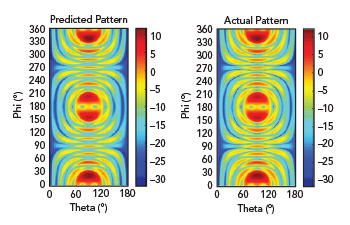
Fig. 2 Reconstructed antenna patterns are validated by comparing AI generated results with simulated or measured reference data.
A key question in validation is how useful the model is in practice. By definition, no model can perfectly reflect real-world performance. The goal of validation is not to achieve an exact match but to ensure that the reconstructed behavior is accurate enough to be useful for system-level analysis.
Validation begins with how the AI model is trained and tested. The reconstruction network is trained on a large dataset of antenna patterns generated through electromagnetic analysis, spanning many antenna types and configurations. The model’s performance is then evaluated using a separate set of antenna patterns not included in the training data. Engineers compare the reconstructed results against these independent reference cases to assess how well the model reproduces known antenna behavior across a range of scenarios.
Simulation data is only one part of the validation process. The process also involves comparing AI-reconstructed patterns with real antenna measurements. Antennas are measured using over-the-air (OTA) techniques and those measurements are then used as input for AI-based reconstruction. The reconstructed patterns are compared with the measured results to assess how well the model matches real antenna behavior, as seen in Figure 2.
Validation does not end with a single check. As additional electromagnetic analysis results or measurement data become available, engineers compare them with the reconstructed models. This ongoing comparison builds confidence that the AI-generated antenna behavior is consistent with physical reality and supports integration and system-level decisions.
|
Q. |
How does early access to complete antenna behavior improve integration with larger network systems and accelerate deployment for 5G, advanced radar and satellite communications?
|
A. |
Early access to a complete understanding of antenna behavior helps engineers predict how the system will perform once everything is integrated. When antenna behavior is only partially known, system-level analysis relies on assumptions, making it difficult to evaluate performance after deployment realistically. A more complete antenna model reduces uncertainty earlier in the design process.
With a complete antenna model, engineers are not limited to examining isolated antenna behavior and can better understand how it will perform once deployed. This enables evaluation of coverage and beam behavior under real-world operating conditions. Without that information, even basic system-level questions are difficult to answer, particularly for technologies such as 5G, advanced radar or satellite communications.
Early access to complete antenna behavior helps keep development moving as the design evolves. Engineers no longer need to wait for hardware to be finalized or for every measurement to be available before starting system-level testing and exploring different scenarios. This matters for complex systems where it is impractical to test every possible operating condition in the real world.
For large-scale deployments, such as cellular networks or radar platforms, having this insight earlier helps teams identify risks sooner and focus on critical scenarios. To avoid late-stage problems, engineers can evaluate system-level behavior earlier, reducing surprises as the system comes together. That leads to smoother integration and more confident deployment.
|
Q. |
Where have you seen AI-based reconstruction deliver tangible benefits and how do you expect it to evolve as the industry moves toward 6G and beyond?
|
A. |
The most visible benefits of AI-based reconstruction arise from its use in conjunction with antenna measurements and system-level modeling. One clear example is the combination of OTA antenna measurements with pattern reconstruction. Rather than characterizing an antenna across every angle and configuration, engineers can take fewer measurements and use reconstruction to recover the full antenna behavior. This approach makes antenna characterization much faster and enables teams to test more designs within the same development cycle.
These benefits are especially clear for highly integrated systems, such as beamformers, where the antenna is tightly coupled to the rest of the RF chain. In such cases, isolating and modeling the antenna is often difficult. Engineers can combine measured data with reconstruction to build a usable model much earlier, rather than waiting to analyze components in isolation.
Looking ahead to 6G and beyond, this becomes even more important. With higher frequencies and larger arrays, predicting how the system will behave once deployed is more difficult. It is not realistic to test every condition in the real world, especially for large-scale deployments. AI-based reconstruction enables earlier, more realistic system-level evaluation using models that reflect how the hardware actually behaves.