

New England is deeply rooted in the history of RF and microwave technology and is home to many leading RF and microwave organizations such as Analog Devices, Amphenol, MACOM, MITRE, MIT Lincoln Labs, Raytheon, Mercury Systems, BAE, Anduril, Honeywell, Spectrum Control and Skyworks. From early wireless telegraphy and commercial broadcasting to pioneering radar research and post-war industrial growth, New England’s engineers, laboratories and companies helped shape the modern RF and microwave landscape. This article presents a technical and historical overview of RF and microwave progress in New England, including some of the major institutions, companies, technical breakthroughs and device evolution from the early 20th century to today plus an outlook on future developments.
EARLY WIRELESS TRANSMISSIONS AND RADIO STATIONS
The earliest forays into RF in New England were rooted in wireless telegraphy and maritime communications. Coastal stations, such as those in Rhode Island and Massachusetts, were established to transmit Morse code messages over long distances. These early stations used spark-gap transmitters and vacuum tube amplifiers — the precursors to modern RF systems.
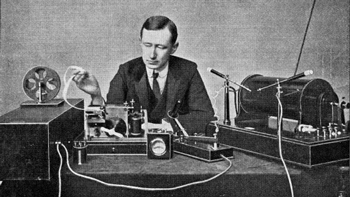
Figure 1 Marconi in front of his receiving device for wireless telegraphy.
The first public two-way wireless communication between Europe and America occurred in 1903 with a message from President Theodore Roosevelt to King Edward VII that was translated into international Morse code at the South Wellfleet, Mass., location and sent to England using a system developed by Marconi (see Figure 1). The antennas were mounted on four wooden towers 210 ft. in height and to generate enough power, Keroseneburning engines that produced 2,200 V, were used to feed a Tesla transformer that stepped the voltage up to 25,000 V.1
New England’s proximity to the Atlantic made coastal wireless communications vital in the early 1900s. One of the most significant surviving artifacts from this era is the Massie Wireless Station in Rhode Island, built in 1907. This station, now preserved at the New England Wireless and Steam Museum, is one of the oldest surviving working wireless telegraph installations in the world. It originally communicated Morse code messages to approaching ships and relayed weather and navigational warnings to mariners at distances exceeding 150 miles under early conditions.2
By the 1920s and 1930s, commercial broadcasting emerged, with stations like WBZ in Massachusetts pioneering high-power AM transmissions that covered large geographic regions, advancing modulation techniques and frequency allocation practices foundational to regulated RF spectrum use. WBZ was founded by Westinghouse in Springfield, Mass., in 1921 and is New England’s oldest broadcasting station and was the first commercial radio station.
WORLD WAR II AND THE BIRTH OF MICROWAVE RADAR
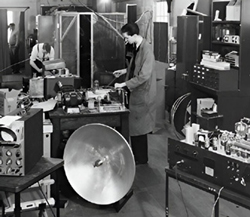
Figure 2 Technicians at work in the rooftop laboratory of Building 4 in 1941. Source: MIT Museum.
At the outbreak of World War II, the U.S. faced a strategic need for advanced radar systems to detect targets such as aircraft and ships. The MIT Radiation Laboratory (Rad Lab), established in October 1940 in Cambridge, Mass., on the MIT campus, became the epicenter of this development (see Figure 2). Radar’s success hinged on the cavity magnetron, a high-power microwave source originally developed by British scientists and shared with the U.S. as part of the Tizard Mission.3 With magnetrons driving centimeter-wave transmitters, the Rad Lab rapidly developed compact, high-resolution radar sets for aircraft, coastal defenses and naval vessels. By 1945, the Rad Lab had designed more than 100 radar systems, accounting for roughly half of all radar deployed by the Allies in the war.3 These systems incorporated innovations in transmitter and receiver design, high frequency antenna arrays, waveguide technology and early signal processing concepts. The wartime urgency accelerated RF engineering from low frequency broadcast and telephony into high frequency microwave engineering, laying the foundation for post-war radar and communications technologies.
Following the Rad Lab’s closure in late 1945, MIT established the Research Laboratory of Electronics (RLE) in 1946 to carry forward microwave physics, RF communication systems and electronic engineering research.4 RLE became a cornerstone of interdisciplinary research, leveraging wartime microwave experience to explore communications, antenna theory, propagation and semiconductor devices. RLE’s work catalyzed many research directions, including early solid-state RF devices, high frequency propagation models and fundamental studies in electromagnetic materials. Some of their current work includes terahertz microscopy and imaging, quantum computing and communications, nanowires, photonic devices and systems, bio-inspired electronics and advanced telecommunications, to name a few.
In 1951, MIT founded Lincoln Laboratory as a federally funded lab focused on systems engineering of advanced electronics, particularly air defense and radar systems. Projects such as the Semi-Automatic Ground Environment (SAGE) network leveraged RF links, phased arrays and real-time computation — systems that required integrated RF subsystem design and complex signal routing.5 Today, Lincoln Lab’s RF Systems Test Facility supports integrated testing of radar and communications systems across broad frequency ranges and phased array technologies, pushing modern microwaves into multi-function radar, communications and electronic warfare realms.
INDUSTRIAL EXPANSION: RF AND MICROWAVE COMPANIES IN NEW ENGLAND
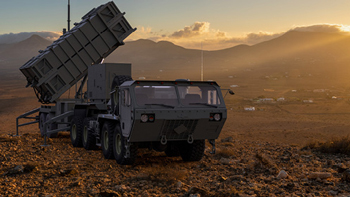
Figure 3 Raytheon Patriot surface to air missile defense system.
One of the most influential RF and microwave companies emerging from New England is Raytheon, founded in Cambridge, Mass., in 1922 as the American Appliance Company. Initially producing electronic tubes, Raytheon quickly transitioned into magnetron production and radar systems during World War II and manufactured a substantial number of all magnetrons used in U.S. radar sets.6 Raytheon’s post-war innovations included missile guidance radars and diversification into guided weapons and aerospace electronics. Probably its most famous military system is the Patriot air and missile defense system developed in the 1970s. The system has gone through many upgrades and is still successfully used today, as shown in Figure 3. Its RF heritage also contributed to the invention of the microwave oven, accidently discovered by Dr. Percy Spencer when he noticed a candy bar in his pocket was melting because he was standing in front of an open microwave source.7 The first commercial “Radarange” appliances appeared in Boston hotels in the late 1940s before evolving into common household appliances.
Amphenol was founded in Chicago in 1932 by entrepreneur Arthur J. Schmitt whose first product was a tube socket for radio tubes.8 Amphenol expanded significantly during World War II and the company became the primary manufacturer of connectors used in military hardware, many used in airplanes and radios. The company sells its products into diverse electronics markets, including military-aerospace, industrial, automotive, information technology, mobile phones, wireless infrastructure, broadband, medical and pro audio. Amphenol has acquired many RF and microwave companies over the years such as SV Microwave (2005), Times Microwave (2009) and Carlisle Interconnect Technology (2024). Operations are located in more than 60 locations around the world and its headquarters is now located in Wallingford, Conn.

Figure 4 Microwave Associates started with $10,000 and rented 2,800 sq. ft. in Boston.
Founded in 1950 in Boston (see Figure 4), Microwave Associates became a cornerstone of RF and microwave engineering. Microwave Associates originally specialized in semiconductors, passive components and subsystem modules used in radar, communications and broadcast systems.9 The company developed early magnetrons, varactor diodes with excellent noise characteristics, high-power PIN diodes and later microwave integrated circuits that contributed to miniaturized and reliable high frequency systems. They were also one of the first companies to supply high volume MMIC switches to the cellular market.
MACOM, as they are now known after several rebrands, acquired many companies and divested others including Linkabit, Laser Diode, Lawrence Labs, Prodelin, MPD and others. Two of the founders from Linkabit (Irwin Jacobs and Andrew Viterbi) went on to found Qualcomm so it was a big missed opportunity by the company. MACOM was split up by Tyco Electronics in 2008/2009 and sold to several companies with the largest parts going to Cobham and GaAs Labs. The company was relaunched out of GaAs Labs as an IPO in 2012 and today supplies both RF/microwave and optical devices/components, headquartered in Lowell, Mass. MACOM recently acquired a couple of significant RF companies including Wolfspeed and OMMIC in France.
BAE Systems traces its roots to Sanders Associates, founded in Nashua, N.H., in 1951. In 1952, Sanders Associates moved into a Canal Street mill in Nashua, revitalizing the area and specializing in military technology. In 1986, Lockheed Martin acquired Sanders Associates along with its state-of-the-art GaAs wafer fabrication facility. Then in 2000, BAE Systems acquired the Lockheed Martin division, solidifying its presence in southern New Hampshire. BAE now has facilities in Nashua, Hudson, Merrimack and a newer facility in Manchester employing over 6,000 people in the state plus another facility in Burlington, Mass.
Alpha Industries was founded in 1962 by George and Andrew Kariotis specializing in waveguide assemblies and later expanded into diodes and other semiconductors mostly for defense applications. While the company had several facilities in Massachusetts, their headquarters and wafer fabrication facility was located in Woburn, Mass. They were a fierce yet small competitor to MACOM in the 1990s and in 1992, MACOM unsuccessfully tried to acquire Alpha Industries.10 In 2002, Alpha Industries merged with Conexant’s Wireless Division to form Skyworks Solutions to leverage its broad technology portfolio and manufacturing expertise into the fast-growing mobile market. Skyworks was very successful in the mobile markets for many years and competed head-to-head with Qorvo.8 Last year, the two companies agreed to merge as profits declined in the mobile markets when other competitors like Qualcomm and Murata took a larger share of the market and 5G rollouts did not see the expected volumes they had predicted. We will see this year if the merger forms a new combined company.
Analog Devices was founded in 1965 in Cambridge, Mass., by MIT graduates Ray Stata and Matthew Lorber as a pioneering semiconductor company specializing in high performance analog, mixed-signal and digital signal processing integrated circuits.11 Starting with operational amplifiers, Analog Devices revolutionized data conversion and sensor technology, critical for bridging the physical and digital worlds. They had moved the company headquarters to Norwood, Mass., where it operated for many years and recently consolidated several operations into a new headquarters in Wilmington, Mass. They have acquired several large RF and microwave related companies including Hittite Microwave (2014), Linear Technology (2017) and Maxim Integrated (2021) to become one of the largest RF device companies in the industry.11 They are one of the few companies that can supply devices into the complete radio signal chain and supply fully integrated, software-defined radios on a single chip.
Mercury Systems was founded in 1981 as Mercury Computer Systems by Jay Bertelli and serves the aerospace and defense industry.12 They are based in Andover, Mass., and supply open architecture computer hardware and software products, including secure embedded processing modules and subsystems, avionics mission computers and displays, rugged secure computer servers and trusted microelectronics components, modules and subsystems. During the 1980s, Mercury produced a number of array processor products for use with host computer systems and went public on the Nasdaq in 1998.12 The company has acquired many RF and microwave companies such as LNX Corporation (2011), KOR Electronics (2011), Micronetics (2012), Delta Microwave, (2017) and one of their prime competitors, Pentek (2021).
When Cobham plc acquired Atlantic Microwave Corporation in 1994, it was renamed Cobham Advanced Electronic Solutions (CAES). CAES went on to acquire many microwave companies over the next two decades, including Continental Microwave Tool & Co. in Exeter, N.H., in 1996 and Tyco Electronics’ M/A-COM Radio Frequency Components and Subsystems business in Lowell, Mass., in 2008. This later portfolio consisted of acquired solutions from Microwave Associates, Stellex Microwave/Watkins-Johnson and Adams-Russell. The Tyco Electronics’ M/A-COM group was moved into Exeter, and the facility today manufactures antennas, components and integrated assemblies. In 2024, Honeywell acquired CAES, so the facility is now part of Honeywell.
Anduril Industries, a California-based defense technology company founded in 2017, has rapidly expanded its footprint in New England, specifically focusing on undersea technology, imaging systems and autonomous vehicles through strategic acquisitions and facility openings. They have a unique business model for the industry where they develop products and software first and then sell them to the military so have reversed the process in an effort to speed up innovation and delivery of systems to the field. They have an imaging division in Lexington, Mass., and underwater autonomous systems division in Quincy, Mass. They also have offices in a couple of other Massachusetts towns, becoming a major company in the state.
Spectrum Control (renamed from API Technologies in 2023) is headquartered in Marlborough, Mass., and has a 70-year legacy of engineering, officially founded in 1968 to manage electromagnetic interference. As a leader in RF and microwave signal conditioning, it has evolved through over 40 acquisitions (e.g., Spectrum Microwave, Sage, Inmet) into a premier provider of conditioning and processing of RF and microwave signals and protecting equipment from electromagnetic interference.
SCIENTIFIC MICROWAVE RESEARCH
MITRE was founded in 1958, sponsored by the U.S. Air Force to bridge across the academic research community and industry to architect the SAGE that was a key component of Cold War era air defense.13 In 1959, the agency now known as the FAA founded a collaboration with the Air Force to engage with MITRE on the project called SAGE Air Traffic Integration (see Figure 5) to develop a unified system for managing the national airspace.13 MITRE is unique as it was founded as a not-for-profit company to serve as impartial advisers in systems engineering to government agencies, both military and civilian. Based in Bedford, Mass., the company advances technology ranging from radar, cyber, GPS, cancer research and aviation collision-avoidance systems to breakthroughs in evolving disciplines such as vehicle autonomy, AI and synthetic biology.
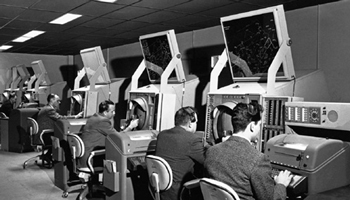
Figure 5 Semi-Automatic Ground Environment Air Traffic Integration center. Source: MITRE.
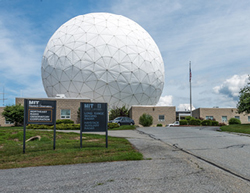
Figure 6 Haystack Observatory, an astronomy observatory owned by MIT in Westford, Mass.
New England’s microwave research extends into radio astronomy and atmospheric science. The Haystack Observatory in Westford, Mass., originally built by Lincoln Laboratory in the 1960s, is a premier center for radio science and microwave observations. Haystack’s facilities, including large steerable antennas and incoherent scatter radars (see Figure 6), enabled studies of cosmic radio sources and ionospheric structures. This blend of RF engineering and scientific measurement advanced radar remote sensing and mmWave instrumentation design.
EDUCATION, WORKFORCE AND FUTURE RF INNOVATION
Universities such as the University of Massachusetts (UMass) Lowell now offer microwave and wireless engineering programs that combine theory and hands-on RF training. These curricula produce engineers capable of designing RF systems, antennas and high frequency circuits, skills directly tied to New England’s industrial and research base. UMass Lowell houses the Microwave Characterization Labs and collaborates with industry partners such as Analog Devices to provide students with access to high frequency instruments (network analyzers, spectrum analyzers, microwave generators), bridging academia and industry.
UMass Lowell has many electronics research centers.13 The Advanced Electronic Technology Center works closely with engineers from local electronic companies, such as MACOM, MITRE, Polaroid, Raytheon and Triton Systems, to develop students who are ready for the challenges of a technology-oriented workplace. Another lab is the Center for Advanced Computation and Telecommunications created to support students and faculty in interdisciplinary research, education and service with a focus on computational modeling of acoustic, communications and stochastic systems. The Center for Photonics, Electromagnetics and Nanoelectronics conducts innovative research in electromagnetic materials (metamaterials), optoelectronic devices, biosensors, antennas and flexible electronics. The Printed Electronics Research Collaborative is a strategic partnership between industry, university and government to establish a world-class Additive Manufacturing and Printed Electronics research center based on real world applications. It includes companies of all sizes, public and private universities. The U.S. Department of Defense and New England partners to strengthen and expand the region’s capabilities in printed and flexible electronics.
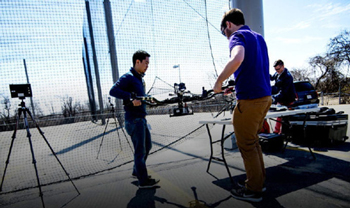
Figure 7 Northeastern University Innovation Campus outdoor drone testing area.
Northeastern University’s Innovation Campus at Burlington, Mass., provides co-location of industry, government and Northeastern research laboratories and access to university faculty and Ph.D. students for research in many areas such as new materials and devices; manufacturing; national security, cybersecurity and intelligence; drug analysis and testing; structural testing of materials and designs; large-structure design and testing; and data analytics, systems modeling and network science.14 The campus is home to some very interesting RF/microwave testing facilities. They have one of the largest anechoic chambers on the east coast measuring 50 × 50 × 22 ft. It has an opening on one side that directly connects to a large, netted drone testing area (see Figure 7) that is 150 × 200 ft. in size so that testing can be directly compared from the chamber to the open field area. The outdoor area is large enough for GPS testing. The facility is also home to the DARPA Colosseum, which is a 256 × 256 RF channel emulator that can calculate and simulate in real-time more than 65,000 channel interactions among 256 wireless devices. The Colosseum has 128 two-antenna software-defined radios and 64 field programmable gate arrays. Interestingly, this campus was initially a U.S. Army missile base to protect the U.S. from Soviet bombers carrying nuclear weapons during the Cold War era. The complex was decommissioned in the late 1950s and purchased by Northeastern University as an academic campus. The missile silos are still buried beneath the parking lot.
CONCLUSION
As we look forward to developments in 6G technology like high throughput terahertz communications and joint communications and sensing technology, New England will continue to contribute to new developments in the industry. MIT and other universities in New England are working on cutting-edge technologies like quantum computing, diamond transistors and AI technologies that will shape the future of our industry. In the defense area, companies like Raytheon, BAE, Mercury Systems, Honeywell, Spectrum Control and Anduril have New England facilities driving the next generation of defense systems and drone technology.
From the intensive wartime innovation of the MIT Radiation Laboratory to the post-war growth of industry leaders like Analog Devices, Amphenol, MACOM, Honeywell, Spectrum Control, Raytheon, Mercury Systems, BAE, Anduril and Skyworks/Qorvo, and from academic research at MIT, MITRE, Northeastern and UMass Lowell, to modern RF education and cutting-edge labs, New England’s contribution to RF and microwave technology is profound and continuing. Through generations, engineers and scientists here have advanced magnetrons and microwave radar, microwave integrated circuits, wireless networking and scientific sensing systems, shaping both the technical foundations and practical applications of high frequency electromagnetics that define modern life.
References
- “Marconi and the South Wellfleet Wireless,” National Park Service, April 6, 2017, Web: https://www.nps.gov/caco/learn/historyculture/marconi.htm.
- “Massie Wireless Station,” Wikipedia, Web: https://en.wikipedia.org/wiki/Massie_Wireless_Station.
- “MIT Radiation Laboratory,” MIT Lincoln Laboratory, Web: https://www.ll.mit.edu/about/history/mit-radiation-laboratory.
- “RLE History,” Research Laboratory of Electronics at MIT, Web: https://www.rle.mit.edu/about/history/.
- “History,” MIT Lincoln Laboratory, Web: https://www.ll.mit.edu/about/history.
- “RTX Corporation,” Wikipedia, Web: https://en.wikipedia.org/wiki/RTX_Corporation.
- “Radar and Microwave Ovens,” Cambridge Historical Society, Web: https://historycambridge.org/innovation/Microwaves.html.
- “Amphenol,” Wikipedia, Web: https://en.wikipedia.org/wiki/Amphenol.
- P. Hindle, “M/A-COM is Reborn on Its 60th Birthday,” Microwave Journal, April 1, 2010, Web: https://www.microwavejournal.com/articles/9294-m-a-com-is-reborn-on-its-60-sup-th-sup-birthday.
- D. Vye, “Such Great Heights,” Microwave Journal, June 5, 2011, Web: https://www.microwavejournal.com/articles/11272-such-great-heights.
- “Timeline,” Analog Devices, Web: https://www.analog.com/en/timeline/timeline.html.
- “Mercury Systems,” Wikipedia, Web: https://en.wikipedia.org/wiki/Mercury_Systems.
- “Our Story,” MITRE, Web: https://www.mitre.org/who-we-are/our-story.
- “Overview,” Department of Electrical and Computer Engineering at UMass Lowell, Web: https://www.uml.edu/engineering/electrical-computer/research/#centers.
- “Laboratories,” Northeastern University Innovation Campus at Burlington, Web: https://www.burlington.northeastern.edu/facilities/buildings-labs/.