

The compact dome is an established antenna style that is both functional and, when well-designed, aesthetically pleasing. Sometimes called saltshaker or shot glass antennas because of the similarity in shape to those common household items, the label “compact dome” better contrasts the relative physical size of this style with other common external antenna formats, such as puck- and blade-style antennas.
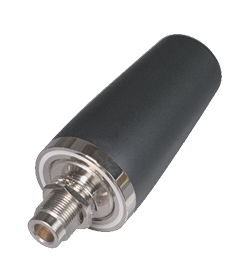
Figure 1 Panel mount, N-connector antenna (AC85002-NJB).
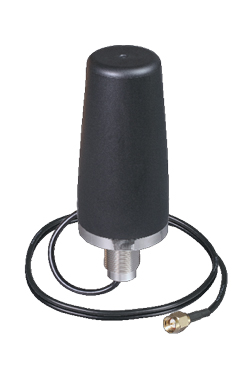
Figure 2 Panel mount antenna cabled with SMA connector (AC87001-100B).
Compact dome antennas may be offered with multiple mounting and termination options. Most typical are panel mount offerings with an N-connector termination (see Figure 1) that also serves as the fastener to hold the antenna fast to the panel. Cabled terminations, commonly with SMA-type connectors, may also be used for panel mount installations (see Figure 2). Both connector and cabled terminations can also lend themselves to remote bracket mount installations (see Figure 3).
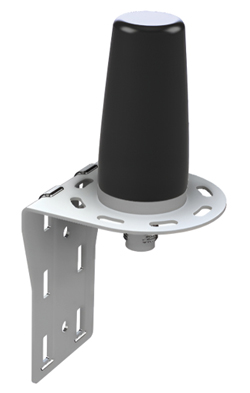
Figure 3 Antenna on a remote mount bracket.
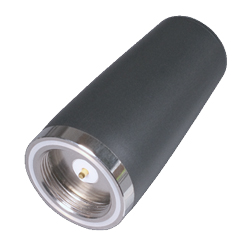
Figure 4 NMO mount antenna (AC85002-NMB).
Mobile application mounts, such as automotive roof mounts, may be implemented by either of these termination types or by using an NMO connector termination (see Figure 4). These are commonly used in mobile applications because they offer a simple screw-on antenna replacement from outside of the vehicle.
Having a design structure that offers the same base antenna solution across all termination options allows users to make mounting changes during design and supports manufacturing economies of scale, supporting cost effectiveness.
The compact dome antenna format is enduring in the market because it provides a balance of size, physical robustness and RF performance under the cover of an unobtrusive visual.
The compact dome profile is lower and employs a stronger mount than most whip-style antennas, reducing the risk of snapping off throughout its lifetime. Additionally, some compact dome products are designed for increased impact resistance, for example, testing to the IEC 62262 IK10 impact standard. Supporting such standards also tends to improve wind resistance ratings, which are important for mobile applications and installations that may be affected by extreme weather conditions.
Other prominent characteristics of superior compact dome antennas include ingress protection (IP rating) and ultraviolet (UV) light resistance. These characteristics imply readiness for outdoor usage in most environments. Ingress protection is typically reported as an IP code specified in IEC 60529. IP65 and IP67 are common specifications, the former specifying dust-tightness with protection from water jets and the latter specifying dust-tightness with protection against immersion up to one meter of depth. UV protection is essential for antenna longevity outdoors. It is implemented with a UV-resistant dome plastic such as ASA and/or with the addition of a UV stabilizer additive to the dome material.
Less prevalent, but also important characteristics for robust usage are salt spray resistance, typically tested to MIL-STD 810F and/or ASTM B117, and dome (in)flammability rating under the UL 94 standard.
Typical compact dome height is tall enough to eclipse puck antenna RF performance while providing performance that rivals taller/bulkier whip solutions. Antenna efficiency and voltage standing wave ratio (VSWR) are the most commonly considered antenna performance parameters, but antenna peak and average gain, omnidirectionality and polarization may also be considered for some applications. Best-in-class performance characteristics vary by technology — wideband cellular, cellular IoT (e.g., Cat-M1), Wi-Fi®, Bluetooth®, low-power wide-area networking (e.g., LoRaWAN®) or others, but in all cases, VSWR should be as close to 1:1 as possible and efficiency as high as possible in the frequency bands of operation.
The termination options of compact domes are suited for many end-user applications. Mobile applications are a historical forte for compact dome antennas. Public safety applications, such as the use of emergency vehicles and equipment, represent a large consumer segment for compact dome antennas. This, along with mobile IoT applications like off-highway vehicle usage on heavy equipment for mining and smart agriculture (e.g., wirelessly connected harvest equipment), comprises significant markets for all compact dome termination types.
Many other IoT applications are served well by compact dome antennas. The classic IoT architecture wirelessly connects “things” — weather sensors, asset tracking tags, electric meter data, etc. — and aggregates them at a gateway or router for local processing or backhaul to a remote system (see Figure 5). The size and performance of compact dome antennas serve the router/gateway elements of the application, and “thing” reporting may be accomplished by an antenna appropriate to an endpoint, which could also be a compact dome antenna. Some gateways may even use compact dome antennas to serve multiple applications, for example, managing the Wi-Fi-based sensor network with one compact dome antenna and then providing data backhaul via the cellular network using another compact dome antenna.
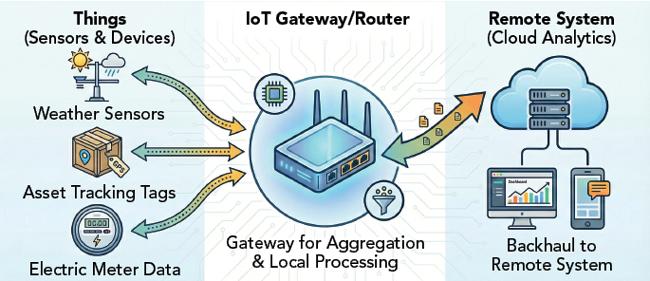
Figure 5 Classic IoT application architecture.
Compact domes work well as single antennas on such devices, but they also lend themselves to use in pairs for MIMO applications that can provide spatial and polarization diversity, as shown in Figures 6 and 7, respectively, for improved communication with IoT sensors in an area-efficient configuration.
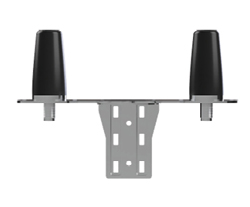
Figure 6 Spatial diversity MIMO configuration.
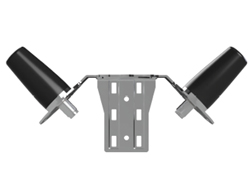
Figure 7 Polarization diversity MIMO configuration.
External antenna formats have many well-known styles, including whips, blades, pucks and parabolics. Each has its place, but when it comes to combining performance, ruggedness and aesthetics, the compact dome antenna is a versatile and suitable option.
The Antenna Company
Eindhoven, The Netherlands
www.antennacompany.com
Bluetooth is a registered trademark of Bluetooth SIG, Inc.
Wi-Fi is a registered trademark of Wi-Fi Alliance
LoRaWAN is a registered trademark of LoRa Alliance®