

RF and microwave technologies have proven their utility in the realm of “digital” test, with test fixtures and evaluation platforms requiring frequencies out to 90 GHz and beyond. Evaluating silicon is highly dependent on the signal quality that loops between the printed circuit board (PCB), test fixture and test equipment. This becomes even more important for 224 Gbps signals, and as the industry looks towards testing 448 Gbps signals, it has become very challenging, with designers asking for an interconnect that handles up to 130 GHz.
While frequencies continue to trend upwards, most of today’s leading-edge needs are in the realm of 224 Gbps. One way for designers to set up tests for 224 Gbps signaling is to use single-channel test connectors, which create an immediate and significant real estate issue on PCBs. Alternatively, they could use a ganged, two-piece interconnect (a board connector and cable harness), which can be costly. Additionally, this is not a flexible use case because they require PCB connectors to be hard-mounted on every PCB.
COST, SIZE AND PERFORMANCE
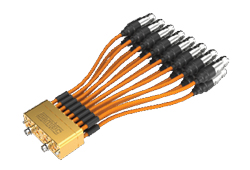
Figure 1 Samtec’s BE71A Bulls Eye Phase & Amplitude Test Assembly.
Designed to address these real estate, cost and flexible use case issues, the Samtec BE71A Bulls Eye® Phase & Amplitude Test Assembly combines the Bulls Eye assembly’s space-saving compression-mount design with Samtec Nitrowave™ phase-stable high performance cables. The test assembly, as shown in Figure 1, is a solderless design that compression mounts to the board for high speed digital test, SerDes characterization and automated test equipment. It is also well suited for high-density multi-port panel and I/O connections, including quantum computing racks or high-density cable-to-board connections. Optimized for use out to 71 GHz in support of 224 Gbps PAM4 SerDes testing, the BE71A test assembly is configured in a double-row, supporting microstrip/coplanar waveguide or stripline PCB transmission with 50 Ω impedance.
Featuring a standard 1.85 mm connection to instrumentation, the BE71A test assembly also eliminates the need to upgrade to more costly 1.00 mm test equipment that is commonly required for 224 Gbps PAM4 testing.
IMPORTANCE OF PHASE MATCHING
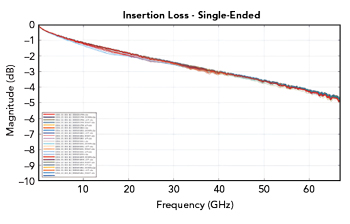
Figure 2 Samtec’s BE71A loss performance.
As frequencies increase in today’s use cases, concerns about phase matching between the cable assemblies emerge. Precise signal timing is vital when assessing performance or detecting faults in test and measurement. The BE71A offers 0.5 ps phase matching. This matters for signal integrity, transmission reliability and error reduction. While this level of phase matching in cable assemblies is important, maintaining that phase match while test fixtures and cables are tweaked and moved is even better. The Nitrowave cables in the BE71A were specifically designed to maintain phase match in these types of circumstances. In fact, because it is equipped with Nitrowave LL071 cabling, the BE71A is Samtec’s best phase match (0.5 ps) and lowest insertion loss Bulls Eye assembly, as shown in Figure 2. Performance shown in Figure 2 is recorded during 90-degree cable movement.
ENABLING TECHNOLOGY
Samtec first released the Bulls Eye test point system in 2011 for 20 GHz connections. Since then, the product family has rapidly expanded to include 40, 50, 70, 71, 90 and soon 130 GHz (for 448 Gbps testing). Figure 3 shows the Bulls Eye product family across different frequencies.
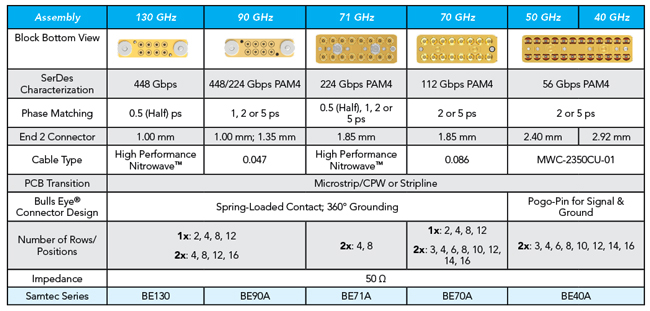
Figure 3 Bulls Eye product family.
The BE71A test system is an expansion that takes advantage of Samtec’s proprietary Nitrowave cable technology launched in 2025.1,2 Nitrowave cable was developed to address repeatability and loss margins at mmWave frequencies for improved electrical performance with lower insertion loss and excellent phase matching to 0.5 picoseconds.
BENEFITS TO TEST
Historically, the one-piece, solderless design of the Bulls Eye test assemblies improves cost and ease of use within a lab setting. Customers who are already working with BE71A test assemblies are using them as part of a test fixture setup, and, in some cases, as part of the actual test equipment. For example, the high-density, space-saving Bulls Eye BE71A test assembly can be integrated directly into the front panel of test equipment used for 224 Gbps analysis, such as a bit error rate tester. Outside the box, the BE71A test assembly enables smaller evaluation boards and shorter trace lengths in test and measurement applications. The assembly compression-mounts3 directly to the board for placement adjacent to the SerDes under characterization, reducing trace length and associated loss.
CONFIGURATIONS AVAILABLE NOW
BE71A test assemblies can be configured with 3, 4, 6, 8, 10, 12, 14 or 16 positions per row. The operating temperature is specified at -65°C to +125°C.
References
- “Samtec Releases Nitrowave™ Phase and Amplitude Stable Microwave Cable Assemblies to 110 GHz,” Microwave Journal, June 3, 2025, Web: https://www.microwavejournal.com/articles/44209-samtec-releases-nitrowave-phase-and-amplitude-stable-microwave-cable-assemblies-to-110-ghz.
- “Fabs and Labs: Samtec,” Microwave Journal, Vol. 66, No. 9, September 2023, p.98.
- J. Alexander, D. Birch and D. Beraun, “Evolution of Interconnects in Benchtop RF Test,” Microwave Journal, March 2025 Special Focus.
Samtec, Inc.
New Albany, Ind.
www.samtec.com