


A dual-post SIW filter was designed using SIGGW technology, with overall dimensions of 2.16 λ0 × 0.74 λ0 × 0.16 λ0.15 It consisted of 12 posts (arranged in a 6 x 2 configuration) spaced at half-wavelength distance. The taller posts acted as inductive reactance, whereas the shorter posts acted as capacitive reactance, altogether forming an effective LC resonant structure. It enabled control over the TZs. The filter has a center frequency of 28 GHz with an FBW of 5 percent and an insertion loss of 1.8 dB.
LTCC-Based SIW Filters
A low-temperature co-fired ceramic (LTCC) is a multilayer ceramic fabrication technology. LTCC-based SIW filters blend the advantages of substrate-integrated waveguide with the LTCC’s outstanding high frequency properties. The key advantages include low dielectric loss, multilayer integration capability, hermetic packaging for rough environments and more. An mmWave SIW filter based on LTCC was developed.16 The structure consisted of via arrays mounted in SIW to replace the E-plane iris in the rectangular waveguide. The filter has a passband from 34.1 to 35.9 GHz, with an insertion loss of 1.8 dB and return loss of more than 21 dB. A compact SIW LTCC BPF based on capacitively loaded cavities measuring an overall dimension of 3.35 mm × 2.10 mm × 0.66 mm.17 The CPW fed filter has a center frequency at 28 GHz with 8 percent FBW. The filter has CPW fed structures and four SIW cavity resonators. An inductive window enabled coupling between R1 and R4, as well as between R2 and R3. The circular slot provided electrical coupling between R4 and R3, whereas the pair of fan-shaped slots provided magnetic coupling between R1 and R2. Based on the coupling, the filter generated two TZs at the stopband. Figure 5 depicts the filter geometry and its frequency response.
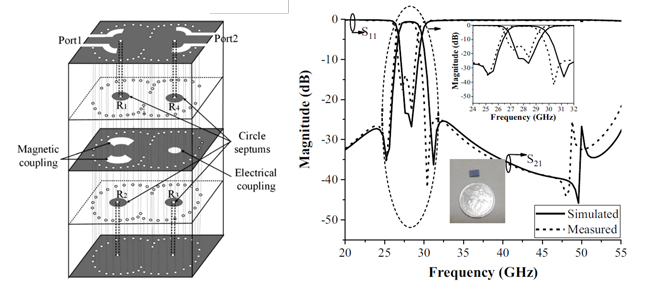
Figure 5 Visual decomposition of the filter and its response.17
FILTER TECHNOLOGIES FOR 6G
Innovative filters will be developed for use in the terahertz field as part of the 6G wireless communication system. They are significant components in the RF front end. There are various techniques applied to the design and development of 6G filters, as shown in Figure 6.
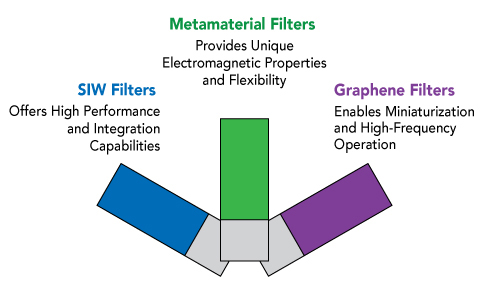
Figure 6 Technologies for 6G filter development.
SIW Filters
Rogers materials, like RO4003C, have a loss tangent value of 0.0027 at 10 GHz. For higher frequencies, losses become substantial, which degrades the filter’s performance. Additionally, at THz, the ohmic loss also increases due to the lower value of skin depth. Another challenge is the via spacing, which should be very small, making it difficult to achieve in the PCB process. Hence, for higher frequencies, it is advisable to use high-performance substrates such as Si, SiC or ceramics. A third-order SIW BPF on a 100 µm thick SiC substrate was demonstrated.18 The filter has three cavities, in which cavities 1 and 3 operate at the TE101 mode and cavity 2 functions at the TE103 mode. Cavity 2 was larger, which provided a wider coupling window between the other cavities and hence resulted in a wider bandwidth and higher Q factor. The filter has a passband centered at 140 GHz with an FBW of 9 percent, 1.04 dB insertion loss and a return loss of 20 dB.
Through silicon vias (TSVs) replace large interconnects like bond wires or ball grid arrays (BGAs) by allowing vertical routing through the wafer. This makes it possible to stack passive components in three dimensions, integrate them compactly and route signals directly through silicon. A TSV-based tandem cross-coupled SIW bandpass filter with an overall dimension of 0.496 mm × 0.33 mm.19 It consisted of a top redistribution layer (RDL), a TSV layer and a bottom RDL layer. The top RDL consisted of a feeder, coplanar waveguide slot, S-type slot and remainder RDL layer (the top surface of the six resonator cavities). Based on the tandem cross-coupled topology, TSV positions were set. The bottom layer has an inverted S slot and the feeder. The filter has a center frequency of 0.370 THz with a bandwidth of 0.0165 THz, insertion loss of 2 dB and return loss of 10.7 dB. Figure 7 depicts the TSV-based SIW filter and its response.
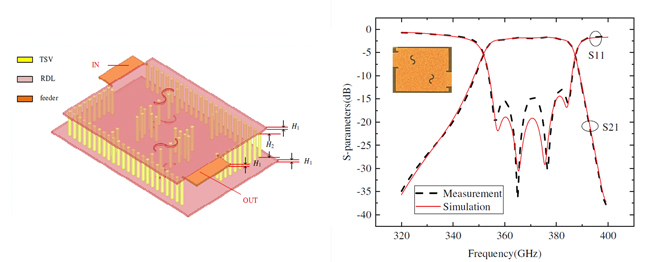
Figure 7 The TSV-based SIW filter and its response.19
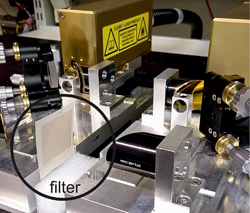
Figure 8 Filter between beams in a Terapulse 4000 system.20
Metamaterial-Based Filters
Metamaterial filters are promising candidates for addressing the challenges of 6G communication, including operation at extremely high frequencies, space constraints and integration with advanced systems such as beamforming antennas and reconfigurable intelligent surfaces (RIS). Metamaterial filters are very compact, possess multiband capability and have high performance, which makes them a plausible choice for 6G communication. Researchers developed a 240 GHz metasurface BPF with a split ring resonator (SRR) matrix.20 The SRR consisted of two concentric metallic rings with gaps on opposite ends. 30 mm diameter SRR matrices (period 0.8 mm) were fabricated on Rogers Duroid board of 50 µm thickness and copper thickness of 17 µm. They were tested using a Terapulse 4000 system and a 9 mm diameter plane wave, as shown in Figure 8. The filter exhibited an 80 GHz bandwidth and an insertion loss of 0.75 dB. The SRR matrices can be cascaded to improve the filtering response.
Graphene-Based Filters
Space communication demands robust RF components that can withstand extreme radiation exposure and temperature variations. In deep-space exploration, achieving a high signal-to-noise ratio (SNR) is critical, necessitating low loss and high-selectivity filters. Graphene-based THz filters are promising in this context due to their tunability, radiation hardness and ability to operate efficiently at terahertz frequencies. A graphene-based tunable THz BPF operating at 6.35 THz was developed.21 The filter consisted of a graphene layer between the conductor and dielectric, facilitating the excitation of surface plasmon modes that enable dynamic frequency tunability. The filter provided precise bandwidth control by adjusting the physical dimensions of the resonator, while the center frequency was tuned by varying the chemical potential of the graphene, achieving a tunable range of approximately 0.16 THz. Figure 9 shows the 3D model of the filter and its response.
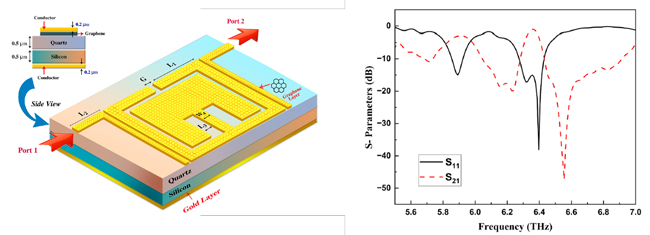
Figure 9 Graphene-based THz filter and its response.21
CONCLUSION AND FUTURE CHALLENGES
This review summarizes the recent advancements in RF filter technologies for 5G and 6G systems. For 5G, SIW, air-filled SIW, SIGGW and LTCC filters offer compact, low loss and easily integrated solutions. In 6G, advanced materials and structures such as graphene-based filters, SIW extensions and metamaterial-inspired designs like SRRs show potential to meet the demands of higher frequencies and reconfigurability. Moving forward, key focus areas include overcoming fabrication and thermal challenges, enhancing tunability and developing hybrid, multifunctional filters. Innovations in AI-assisted design, system-level integration and advanced packaging will be essential to realize high performance, scalable filters for future communication networks.
References:
- 1.Business Research Insights, ”5G mmWave Filters Market Size, Share, Growth, And Industry Analysis, By Type (LTCC 5G mmWave Filters & SAW 5G mmWave Filters), By Application (5G mmWave Smart Phone & 5G mmWave Base Station), Regional Insights and Forecast From 2025 To 2034,” Available: https://www.businessresearchinsights.com/market-reports/5g-mmwave-filters-market-105244.
- 2.Rogers Corporation, “RT/duroid® 5880 Data Sheet,” [Online]. Available: https://rogerscorp.com.
- 3.Murata Manufacturing Co., “LCP and Ceramic Substrates for RF Applications,” [Online]. Available: https://www.murata.com.
- 4.B. Razavi, “Design Considerations for Millimeter-Wave CMOS Radios,” IEEE Journal of Solid-State Circuits, Vol. 42, No. 5, May 2007, pp. 956–966.
- 5. R. Camacho-Galeano, R. A. York and A. Oliner, “Loss Mechanisms in High-Q Planar Resonators for RF and Microwave Applications,” IEEE Transactions on Microwave Theory and Techniques, Vol. 53, No. 1, January 2005, pp. 38–47.
- 6.A. Natarajan et al., “A Fully-Integrated 16-Element Phased Array Receiver in SiGe BiCMOS for 60-GHz Communications,” IEEE J. Solid-State Circuits, Vol. 46, No. 5, May 2011, pp. 1059–1075.
- 7.Y. Wang et al., “Antenna-Filter Integration for Millimeter-Wave Systems: Techniques and Challenges,” IEEE Access, Vol. 7, 2019, pp. 186629–186643.
- 8.S. Pinel et al., “A 60 GHz SoP Integrated Antenna-Receiver Module for High-Speed Wireless Links,” IEEE Trans. Adv. Packag., Vol. 27, No. 2, May 2004, pp. 332–338.
- 9. K. Grenier et al., “Thermal Management in Millimeter-Wave Systems-on-Package,” Microwave Journal, Vol. 59, No. 10, October 2016, pp. 100–110.
- 10.L. Ma, J. Zhuang and J. Zhou, “A Cross-coupled Substrate Integrated Waveguide Filter for 28 GHz millimeter wave Communications,” 2016 IEEE International Symposium on Circuits and Systems (ISCAS), Montreal, QC, Canada, 2016, pp. 814-817, doi: 10.1109/ISCAS.2016.7527365.
- 11.J.-M. Huang et al., “Substrate-integrated Waveguide Bandpass Filter for 5G Applications,” Sensors and Materials, Vol. 36, No. 3, (2024), March 2024, pp. 1105–1113.
- 12.N. H. Nguyen, F. Parment, A. Ghiotto, K. Wu and T. P. Vuong, “A fifth-order Air-filled SIW Filter for Future 5G Applications,” 2017 IEEE MTT-S International Microwave Workshop Series on Advanced Materials and Processes for RF and THz Applications (IMWS-AMP), Pavia, Italy, 2017, pp. 1-3, doi: 10.1109/IMWS-AMP.2017.8247355.
- 13.Y. Li, C. Tian, S. Li, P. Chen, Y. Li and K. Yang, “Air-filled Substrate Integrated Waveguide Bandpass Filter based on Miniaturized Non-resonant Node Structure,” Int. J. Microw. Wirel. Technol., Vol. 16, No. 6, 2024, pp. 919-924, doi: 10.1017/S1759078724000084.
- 14.C. Segura-Gómez, A. Biedma-Pérez, D. Santiago, Á. Palomares-Caballero, I. Arregui, M. A. Gómez Laso and P. Padilla, “Cavity-stacked Filter in CLAF-SIW Technology for millimeter waves,” AEU - Int. J. Electron. Commun., Vol. 193, 2025, p. 155725, [Online]. Available: https://doi.org/10.1016/j.aeue.2025.155725.
- 15.K. Salehian and M. Tayarani, “A Novel SIGGW Dual Post Band-pass Filter for 5G millimeter-wave Band Applications with a Transmission Zero,” Sci. Rep., Vol. 13, article 20743, 2023, doi: 10.1038/s41598-023-47490-1.
- 16.P. Qiu, Y. Zhang and B. Yan, “A Novel millimeter-wave Substrate Integrated Waveguide (SIW) Filter Buried in LTCC,” 2008 Asia-Pacific Microwave Conference, Hong Kong, China, 2008, pp. 1-4, doi: 10.1109/APMC.2008.4958217.
- 17.X. Zhang, J. Yan, H. Zhang and Y. Chen, “Miniaturized Substrate Integrated Waveguide 5G LTCC Bandpass Filter Exploiting Capacitive Loaded Cavities,” Int. J. RF Microw. Comput.-Aided Eng., Vol. 29, No. 11, p. e21730, November 2019, doi: 10.1002/mmce.21730.
- 18.Z. Luo and K. Zhou, “A D-Band Substrate Integrated Waveguide Bandpass Filter Based on Silicon Carbide Technology,” 2023 IEEE MTT-S International Microwave Workshop Series on Advanced Materials and Processes for RF and THz Applications (IMWS-AMP), Chengdu, China, 2023, pp. 1-3, doi: 10.1109/IMWS-AMP57814.2023.10381150.
- 19.F. Wang, Y. Lu, X. Yin, J. Liu, N. Yu, and Y. Yang, “Miniaturized Silicon-based Substrate Integrated Waveguide Filter for 6G Applications,” Microelectronics Journal, Vol. 138, 2023, p. 105837, doi: 10.1016/j.mejo.2023.105837.
- 20.S. Myllymäki and M. Kokkonen, “240 GHz Meta-surface Band-pass Filter and Lens Integration in 6G Telecommunication Systems,” Microw. Opt. Technol. Lett., Vol. 63, 2021, pp. 2013–2017, doi: 10.1002/mop.32502.
- 21.G. C. Ram, N. K. Maurya, S. Yuvaraj, K. B. Sindhuri, D. R. Varma, D. G. Kumar, K. P. Vasavi and S. H. Rao, “Graphene based THz Filter Design using Open-loop Resonator for Space Applications,” Diamond Relat. Mater., Vol. 151, 2025, p. 111820, doi: 10.1016/j.diamond.2024.111820.