


Figure 1 EM/Gammalert indicating HPM energy and gamma radiation.
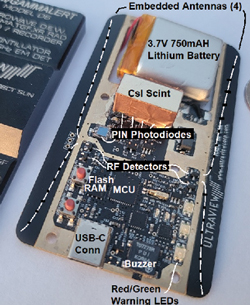
Figure 2 PCB-embedded antennas extend outside the machined case.
Recent advances in GaN power amplifiers1 and microwave tubes have enabled the development of portable microwave jammers and directed energy weapons (DEWs), which have the potential to pose a human health threat. Of particular concern are high-power microwave (HPM) pulse trains. Without inexpensive miniature RF alerting and recording devices that can be carried by thousands of government workers, military members and the general public, it is not possible to track the presence and potential effects of direct energy weapons.
THE NEED FOR WEARABLE ALARMS with logging
Historically, spectrum analyzers and wideband digitizers used for monitoring HPM energy have been expensive and large, while portable RF field strength meters have been inadequate for characterizing pulsed microwaves. Hence, Ultraview developed its EM/Gammalert, a 4-ounce, 5.5 × 9 × 1.5 cm pocket/purse device, shown in Figure 1, that issues visual and audible warnings of HPMs, as well as conventional radiation threats, including gamma radiation. These prompt the wearer to retreat from the threat and alert others.
In addition to providing an immediate alarm, the device records each event for forensic and research purposes. Its flash RAM stores 1000 complete sets of time-aligned microwave and gamma energy envelope waveforms, each with a 1 second universal time tag for downloading. Users download via USB to a host PC, enabling viewing and waveform storage in a searchable SQL database on the computer. After examination, they can upload concerning events to a monitored global SQL database for worldwide scrutiny and near-real-time AI-assisted recognition of emerging threat patterns.
MICROWAVE/EMP DETECTION and recording CIRCUITRY
The EM/Gammalert senses RF/microwave energy using four 0.5 to 10 GHz angled monopole antennas embedded in the PCB edges, which extend outside the aluminum clamshell case, as shown in Figure 2. Each feeds a Schottky diode detector and a hold capacitor connected to a 12-bit analog-to-digital converter (ADC) in the embedded TI MSP430FR5969 microcontroller unit (MCU). These detectors can capture continuous wave (CW) and pulsed microwave bursts as short as 300 ns, as well as lightning or nuclear-induced electromagnetic pulses (EMPs). The hold capacitors “stretch” short bursts, allowing 40 KSPS ADC sampling.
The GUI software allows users to set separate trigger thresholds for RF, microwave, EMP and gamma events. When any threshold is exceeded, the entire set of EM and gamma energy waveforms, including 8 milliseconds of pre-trigger view, are stored on internal 16 MB persistent memory. Two threshold levels are programmable — one for energy levels that routinely occur and will be indicated by green LED flashes and beeps, to indicate that the device is functioning, and a higher threshold for dangerous levels, signified via a beep and continuous red LED, which may require retreat and later examination of stored waveforms.
IONIZING RADIATION DETECTION SECTION
The unit detects ionizing radiation using four parallel-connected PIN photodiodes optically coupled to a thallium-doped cesium iodide scintillator crystal. A fifth photodiode is located separately to prevent overload from high-flux pulsed radiation events, enabling, for example, enhanced research into lightning-induced terrestrial gamma flashes (TGFs) that may occasionally deliver high peak exposures to air passengers but are too short for characterization by conventional wearable radiation monitors. The photocurrents of the reverse-bias PIN diodes drive picoampere-bias amplifiers, which drive ADCs in the MCU.
Operation of this section was validated using X-rays, gamma sources and ground and airborne background radiation. Figure 3 shows X-rays recorded by EM/Gammalert moving through a hand-carry baggage scanner. Spikes at the upper left of the waterfall are earlier-captured background cosmic radiation events.
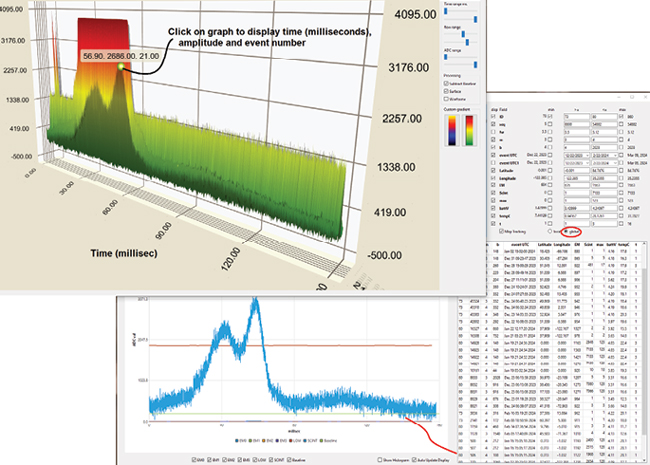
Figure 3 X-rays and background radiation recorded by EM/Gammalert.
VALIDATING THE UNIT USING AN EMULATED MICROWAVE DEW
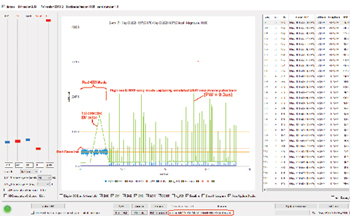
Figure 4 Microwave pulses recorded by the EM/Gammalert.
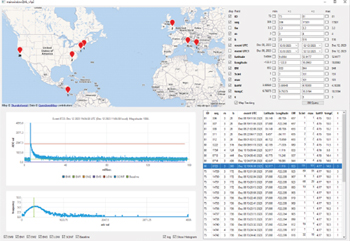
Figure 5 Global database map of user-uploaded events.
There are concerns regarding the microwave auditory effect2 (Frey Effect), which results from exposure to intense sub-millisecond microwave bursts repeating at an audio-frequency rate. The duty cycle may be too low to cause dangerous heating, but the kilohertz range may cause adverse health effects.
The unit can respond to a wide RF duty cycle range, from 300 ns single HPM events to CW. To emulate a hypothetical pulsed DEW that might evoke 1600 Hz chirps, an EM/Gammalert was placed at close range from an Ultraview Ultracomb-8G GaN 20 V 90-picosecond radar pulse generator driving a Vivaldi antenna and producing 500 million pulses per second (500 MPPS), gated on in 300 ns wide bursts, repeating 1600x per second. Figure 4 shows a captured train of 300 ns microwave bursts, repeating 1600x per second. The green and blue pickets are from the antennas facing the source.
EMERGING GLOBAL THREAT ANALYSIS
Data from any instrument studying new threats and sparsely-researched phenomena must be vetted by experts. Isolated alarm indications, unless correlated with concurrent health effects or readings from other instruments, may not be credible. However, if similar indications from clusters of devices are received in a global database, as in Figure 5, an increased level of confidence and global knowledge could then be established.
SUMMARY
A pocket device designed to warn of and record emerging threats has undergone preliminary validation using X-ray, gamma and a wide range of CW and pulsed microwaves.
Ultraview,,
Berkeley, Calif.
www.ultraviewcorp.com
References
- B. Manz, “Delivering More Power – GaN Continues to Supercharge Electronic Attack,” The Journal of Electronic Dominance, June 2025, pp. 20–30, Web: https://www.jed-digital.com/jedm/0625_june_2025/MobilePagedArticle.action?articleId=2060635.
- K. R. Foster, D. C. Garrett and M. C. Ziskin, “Can the Microwave Auditory Effect Be “Weaponized”?,” Front Public Health, Vol. 9, December 22, 2021, 23;9:788613. doi: 10.3389/fpubh.2021.788613. PMID: 35004589; PMCID: PMC8733248.
- “An Assessment of Illness in U.S. Government Employees and Their Families at Overseas Embassies,” The National Academies of Sciences, Engineering and Medicine, 2020, Washington, DC., Web: https://doi.org/10.17226/25889.
- S. Pelley, “Havana Syndrome Mystery Continues as a Lead Military Investigator Says Bar for Proof was Set Impossibly High,” CBS News, July 2024, Web: www.cbsnews.com/news/havana-syndrome-culprit-investigation-new-evidence-60-minutes-transcript-2024-07-07.
- K. D. Stephan and M. L. Shmatov, “Hazards to Aircraft Crews, Passengers, and Equipment from Thunderstorm-Generated X-rays and Gamma-Rays,” Radiation, Vol. 1, No. 3, 2021, pp. 162-173, Web: https://doi.org/10.3390/radiation1030015.