

mmWave, commonly called extremely high frequency or very high frequency, is the band of spectrum between 30 and 300 GHz. Their wavelengths range from 1 to 10 mm. Previously, mmWaves were mainly used in military and satellite communication applications; however, this technology has been gaining traction in mobile and telecom applications, including 5G. In the context of wireless communication, mmWave generally refers to bands of the spectrum centered at 38 GHz, 60 GHz and 94 GHz. According to MarketsandMarkets, and as shown in Figure 1, the mmWave technology market is expected to grow at a CAGR of 20.1 percent between 2024 and 2029, driven by increasing mobile data traffic, growing demand for bandwidth-intensive applications and high adoption in small cell backhaul networks. Mobile and telecommunication is one of the most significant end-use segments for mmWave technology, as mmWaves are widely used in small cell backhaul networks to ensure fast connectivity. Thus, mmWave backhaul equipment is an integral part of the deployment of 5G, which is expected to create avenues for future growth. In addition, the aggregate data rates supported by the upcoming 5G technology are expected to be 1000x and 100x more than those of the existing 3G and 4G data rates, respectively. Thus, there would be a growing need for the mmWave spectrum to provide an increased data rate and enhanced quality of the received signal.
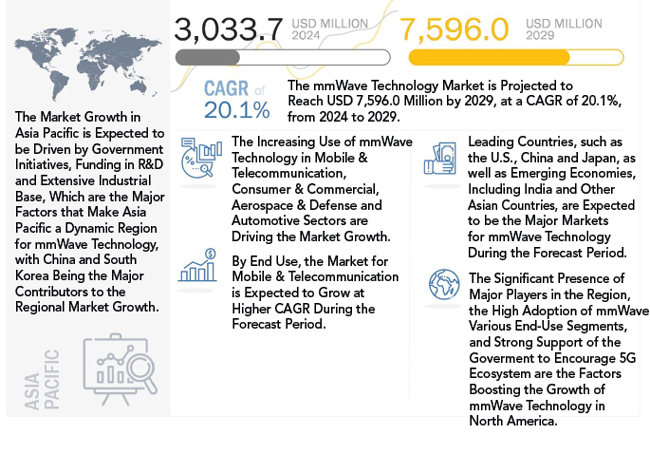
Figure 1 Overview of mmWave technology growth.
INCREASING USE OF MMWAVE TECHNOLOGY IN VARIOUS INDUSTRIES
mmWave is a preferred technology across various industries. The mmWave technology market has experienced significant growth over the past decade. Currently, mmWave finds use in mobile and telecom, consumer and commercial, aerospace and defense, imaging, commercial and industrial segments, with many additional potential applications. The mmWave ecosystem comprises product manufacturers, component manufacturers, network infrastructure designers and network operators, as shown in Figure 2. mmWave products are emerging in the microwave provider market; however, they differ from other RF products in terms of their end uses and functionalities. Moreover, the integration of mmWave products with 5G connectivity makes them suitable for a wide range of applications. The component and product manufacturers use technologies offered by mmWave solution providers to develop comprehensive solutions. These solutions are then distributed and supplied by either distributor channels or specialized digital product suppliers through online and offline marketing channels.
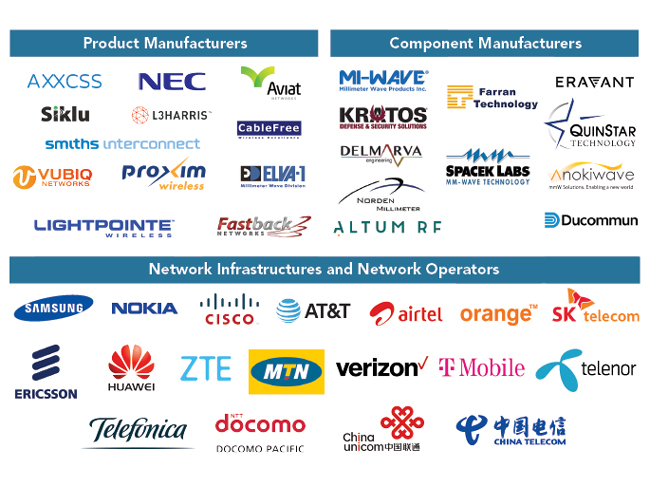
Figure 2 mmWave technology market participants.
KEY PARTICIPANTS IN MMWAVE MARKET
mmWave bands meet the high-capacity needs of 5G enhanced mobile broadband. They provide a high-capacity wireless backhaul solution, which can benefit the rapidly growing number of cell sites, particularly in densely populated urban areas. mmWave technology is becoming increasingly prevalent in wireless backhaul networks due to the growing demand for high speed internet and 5G networks. This translates to faster data transfer rates between base stations and the core network, which is crucial for supporting the massive data traffic generated by applications like 5G, virtual reality and IoT.
With the increase in congestion levels of global data traffic, the need for mmWave technologies in mobile networks is expected to rise significantly, particularly in macrocell and microcell backhaul. In the past three to four years, LTE rollouts have increased worldwide. In turn, mmWave technology increased rapidly because LTE networks are denser than 2G and 3G networks. E-Bands and V-Bands are widely used for mmWave backhaul solutions, as they can provide a high bandwidth through a single channel, with the capability to secure about 400 Mbps transmission for a single 250 MHz channel. With the availability of equipment that supports high bandwidth, wireless networks will face increasingly heavy congestion over the next five years. This will drive the shift from the existing 3G and 4G technologies to 5G. As previously mentioned, the aggregate data rates supported by 5G technology are expected to be 1000x and 100x faster than the existing 3G and 4G data rates, respectively.
According to the Ericsson Mobility Report 2023, during the last quarter of 2023, there was a significant increase in the number of 5G subscribers, with more 5G devices becoming available. More than 50 service providers worldwide announced commercial 5G service launches. A significant upsurge in 5G subscriptions has been witnessed in South Korea, where all service providers launched commercial 5G services in April 2022. 5G network deployments increased globally in 2023, laying the foundation for the massive adoption of 5G subscriptions. Over the next five years, the adoption of 5G subscriptions is expected to be significantly faster than that of LTE. A key factor in this is China’s early involvement in 5G. This early adoption is in contrast with LTE, where the country was not one of the early markets to launch, although devices were available earlier. China is expected to hold a significant share in the 5G loT market in Asia Pacific due to the high investments in network infrastructure and the presence of major telecom players. The rise in industrial automation is expected to accelerate the deployment of 5G networks in China, as it will provide single wireless access to large industrial facilities instead of using different short-range wireless standards, thereby minimizing signal interferences caused by obstacles. The rise in implementation of 5G networks for various applications, including manufacturing, would create a significant opportunity for mmWave technology to develop 5G infrastructure.
AI AND ML ADVANCEMENTS
Artificial intelligence (AI) and machine learning (ML) are two emerging trends in the technology industry that continue to impact various sectors. The demand for high data rate communication and the scarcity of available spectrum in existing microwave bands have been the catalysts for the introduction of 5G. To fulfill these demands, mmWaves with large bandwidths have been proposed to enhance the efficiency and stability of the 5G network. In mmWave communication, the concentration of the transmission signal from the antenna is conducted by beamforming and beam tracking.
Al and ML can be used to optimize mmWave network performance by analyzing real-time data on traffic patterns, signal strength and interference. This allows for dynamic adjustments to beamforming, resource allocation and network management, maximizing efficiency and user experience. In 5G mmWave, the process of initial beam selection, i.e. finding an appropriate beam pair between transmitter and receiver, is time-consuming. AI and ML can play a significant role in reducing the beam selection time during initial access.
THZ WAVES
With 5G efforts ongoing, in 2019, the Federal Communications Commission (FCC) opened the gates to a potential 6G future by allowing companies to begin experimenting with terahertz (THz) and submillimeter waves. These are radio bands that fall in the spectrum of 95 GHz to 3 THz.
THz waves have higher frequencies than mmWaves, addressing network congestion and bandwidth limitations. Advanced versions of 5G rely on mmWave bands to carry vast amounts of data at ultrafast speeds with minimal response time, making it possible to achieve milestones such as autonomous cars and remote surgeries. mmWaves work only over short distances, requiring a line of sight between the transmitter and the user, and THz waves have an even weaker range. However, if THz waves can be harnessed with innovative networking approaches, they may unlock more capacity for applications over a 6G wireless network.
While mmWaves boast advantages over other radio frequencies, they also have disadvantages. For example, mmWaves are not capable of bouncing off physical objects. Obstacles such as tree branches and walls can interfere with and absorb the transmission or halt the signal. In addition, mmWave technology is often more expensive than other commonly used frequencies. This makes the technology difficult for smaller companies to access. Currently, mobile network providers are focused on building mmWave ready 5G infrastructure. This includes setting up micro base stations in open land with technology that supports mmWaves and redesigning the structure of devices that will run using the 5G network.
The limited range of mmWave technology forces telecom operators to increase the number of towers and other equipment. This range can also be expanded by increasing the transmitting power. However, increased transmitting power can result in increased fuel consumption and radiation. Transmission towers also consume a significant amount of space, leading to large-scale deforestation, primarily in rural areas. In addition, several materials used for mmWave circuits are toxic, and their prolonged use can be hazardous to the surrounding environment. These materials include SiGe, GaAs, InP and GaN.
mmWaves open more spectrum; however, until recently, only a few electronic components could generate or receive mmWaves. This gap in available electronic components caused the spectrum to remain unused. Generating and receiving mmWaves is challenging, but the traveling media is the bigger challenge associated with these high frequencies. Other challenges include atmospheric and free-space path loss, as well as poor foliage penetration. mmWaves are governed by the same physics that governs the rest of the radio spectrum, and as such, they have limitations related to their wavelength. The shorter the wavelength, the shorter the transmission range for a given power. The signal properties remain constant, regardless of factors such as antenna gain at the transmitter and receiver ends or reflection, absorption and diffraction during signal transmission. mmWaves, sub-mmWaves and THz waves will continue to have an impact on the telecom and other industries, starting with 5G growth and moving towards the introduction of 6G.
GAN TRANSISTORS
GaN high-electron-mobility transistors (HEMTs) are a viable option for mmWave applications because they can operate simultaneously at high voltage and high frequency. GaN HEMTs are used in mmWave power amplifiers, which require a gate length of less than 150 nm to control short-channel effects. These transistors offer superior performance at high frequencies compared to traditional silicon transistors. Advancements in GaN technology are crucial for developing efficient mmWave power amplifiers, a key component for mmWave systems.
As 5G expands and 6G gets closer on the horizon, mmWave and THz wave technologies will become an increasing priority for network providers. This growth will usher in new products, materials and network designs, enabling faster speeds and more usable bandwidth.