

Testing the radiated power or chirp linearity and rate of a radar is traditionally very difficult due to the variation in direction of radiation over frequency. The Antennex measurement platform solves this issue, making the tests easier and faster, and can help avoid weeks to months of debugging. The Antennex system comes with instrument integration libraries that automatically control instruments from well-known vendors without the need to write SCPI commands for instrument compatibility.
Anouk Hubrechsen, CEO of Antennex (who is also the Women in Microwave Engineering Chair for EuMW this year), commented, “There is a trend for devices to become significantly more integrated, with the antenna as an integral part. This means that many tests can only be done OTA. Wireless tests are traditionally slow and inaccurate, and Antennex has set out to solve that with a disruptive new technology.”
Staal Instruments is also based in Eindhoven. Its maxSHIFT60 wireless radar level sensor at 60 GHz is designed to offer reliable level monitoring for tanks, containers and sewers. With a 10 m range, 4G connectivity and battery power, it provides accurate data and integrates with the cloud for monitoring and alerts.
RESEARCH AND DEVELOPMENT
An organization always at the forefront of R&D in the Netherlands RF and microwave community is TNO, an independent research organization based in The Hague, which has played a pivotal role in EuMW over many years. Frank van den Bogaart, the president of the European Microwave Association, was a principal advisor at TNO until last year and was also a member of the steering committee of the Dutch Radar Centre of Expertise (D-RACE), a strategic cooperation between TNO and Thales Nederland. A special session at EuRAD 2025 will explore the past, present and future of the Dutch ecosystem for defense radar. It will feature speaker Frank van Vliet, who is a principal scientist at TNO and a member of the EuMA Board of Directors.
TNO has a broad mission to connect people and knowledge, creating innovations that enhance the competitive strength of industry and the well-being of society in a sustainable manner. It focuses on driving change and improvement across several areas, including defense, safety, security, energy, healthy living, smart manufacturing, ICT and transportation applications where microwave technology plays a significant role.
Recent technical publications by TNO researchers include a paper at last year’s European Microwave Conference on the topic of CVD diamond heat spreaders to improve the performance of a 400 W AlGaN/GaN S-Band PA MMIC, by M. van Heijningen et al. Another paper, presented at an international metamaterials conference, featured the design of cloaking and transparent metasurfaces using split-ring resonators.
EUROPEAN SPACE AGENCY
The European Space Research and Technology Centre (ESTEC) in Noordwijk is both the largest site of the European Space Agency (ESA) and its main technology hub for R&D. ESA and ESTEC both celebrated their 50th anniversary this year with a series of events.
Earlier this year, ESA’s Radio Frequency Equipment and Technology section tested a new patented antenna beamforming technique that used geometrical symmetry to direct the beams in the desired directions, thus reducing the number of components required and consequently, the size, mass and power consumption.
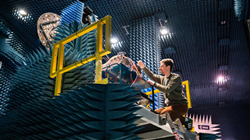
Figure 4 A new beamforming technique being tested in ESA’s HERTZ chamber. Source: ESA-SJM Photography.
Figure 4 shows the advanced beamforming technique under test in the recently extended anechoic chamber at the Hybrid European Radio Frequency and Antenna Test Zone (HERTZ) at ESTEC.
SIMULATION
Dutch software vendor COMSOL provides multiphysics simulation software that can be used for modeling designs, devices and processes in all fields of engineering, including electromagnetics and is particularly applicable for modeling antennas and their radiation patterns. New to COMSOL Multiphysics version 6.3 is a chatbot window functionality that connects the user directly to OpenAI GPT models, allowing them to generate or debug COMSOL API code to automate workflows, add custom functionality to apps and integrate with external tools. For example, it is capable of helping convert repetitive tasks into loops or locate logic errors in a method. It can also be used to query for general modeling advice.
ANECHOIC CHAMBERS AND MATERIALS
Given the prominence of antenna design in the Benelux region, it is not surprising that there is a proliferation of suppliers of test chambers, absorber materials and test equipment in Belgium and the Netherlands.
Holland Shielding Systems in Dordrecht makes a range of EMC and EMI shielding materials, Faraday cages and test enclosures (including those for military bunkers and TEMPEST rooms) and absorbers. They specialize in short delivery times, with the ability to design and manufacture custom-made products in two to three days.
Comtest is a family-owned business in Zoeterwoude, the Netherlands, owned by the de Groot family. The company, which celebrated its 40th anniversary in July this year, builds anechoic chambers, EMC test chambers and antenna test ranges for a wide range of industrial and research applications.
Dutch Microwave Absorber Solutions (DMAS), also in Zoeterwoude, is an independent supplier of high performance expanded polystyrene microwave absorbers suitable for anechoic and semi-anechoic chambers for both EMC and broadband microwave testing.
E&C Anechoic Chambers develops and manufactures microwave absorbing materials and anechoic chambers in Westerlo, Belgium. Originally a division of Emerson & Cuming, it is now part of German anechoic chamber company Albatross Projects.
CHIP DESIGN IN BELGIUM
Imec in Leuven, Belgium, is a center of excellence in the European electronics industry, not only in microwave and RF but in all branches of electronics. It claims to be the world’s largest independent research and innovation center for nanoelectronics and digital technology, with a global ecosystem that includes startups, industrial partners and over 200 universities.
The specialist research and innovation organization has offices and labs across Belgium and the Netherlands, with others in the U.S. and across Asia Pacific, as well as a recently opened office in Cambridge, U.K. The Leuven facility includes both 200 and 300 mm semiconductor pilot lines with extensive cleanrooms and labs, enabling innovation spanning R&D, prototyping and manufacturing.
In June this year, Imec announced a new RF transistor process aimed at integrating GaN technology into next-generation mobile devices, particularly those targeting the 6G FR3 band between 7 and 24 GHz. The GaN-on-Si metal-oxide-semiconductor high-electron-mobility transistor (MOSHEMT) offers exceptional efficiency and output power for an enhancement-mode (E-mode) device operating at low supply voltage. At the same time, they demonstrated a record-low contact resistance of 0.024 Ohm·mm, which will further boost output power in future designs.
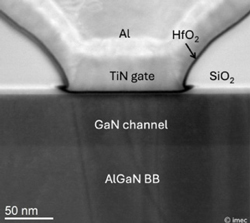
Figure 5 Cross-sectional TEM image of Imec’s MOSHEMT transistor.
The shift to higher frequencies required to meet the data rate demands of 6G systems means that existing GaAs HBTs will struggle to achieve the required performance, as their efficiency and gain degrade significantly above 10 to 15 GHz. GaN has been recognized as a promising alternative due to its higher power density and breakdown voltage. Although GaN-on-SiC transistors have shown good performance in higher frequency base station applications, the cost of the SiC process is a barrier for the mobile market. Building high-efficiency GaN-on-Si transistors has previously been challenging due to the lattice and thermal mismatch between the two materials, which can compromise material quality and device reliability, a challenge that is even greater for E-mode designs that typically require thinning the transistor barrier and channel under the gate.
The GaN-on-Si E-mode MOSHEMT developed by Imec reaches 27.8 dBm output power — equivalent to 1 W/mm — and 66 percent PAE at 13 GHz when operating at 5 V. This result was obtained from a single device with an eight-finger gate layout, providing the gate width needed for high output power without requiring the combined power of multiple transistors. Figure 5 shows a cross-sectional TEM image of the gate structure in Imec’s GaN-on-Si MOSHEMT transistor for 6G mobile applications.
In another recent development, Photonics Research Group and IDlab, which are both Imec research groups at Ghent University, published in Nature Communications a demonstration of a fully-integrated single-chip microwave photonics system, combining optical and microwave signal processing on a single silicon chip. The chip integrates high speed modulators, optical filters, photodetectors and transfer-printed lasers, making it a compact, self-contained and programmable solution for high frequency signal processing. By replacing larger, power-hungry components, the new chip will enable faster wireless networks, low-cost microwave sensing and scalable deployment in applications like 6G, as well as satcom and radar systems. Figure 6 shows a microscope image of the microwave photonic chip, integrating high speed modulators and detectors, a programmable optical filter bank and two transfer-printed lasers.
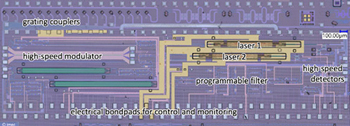
Figure 6 Microscope image of Imec/University of Ghent microwave photonic chip.
Tusk IC is a specialist mmWave IC design house based in Antwerp, Belgium. It was founded in January 2018 and focuses on designs for satcom beamforming and similar applications in CMOS, RFSOI and SiGe process nodes. Other work has included designs from 60 to 600 GHz in bulk CMOS.
Tusk IC’s current NEBULA project aims to develop cost-effective, modular Ka-Band RF beamforming solutions for the LEO/MEO/GEO ground segment of Ka-Band satellite communication links. This product is currently under development with the ESA under the ARTES program.
Also under development is a customizable multi-channel Ka-Band beamformer IC for satcom and 5G infrastructure, supporting both receive (17.3 to 21.2 GHz) and transmit (27.5 to 31 GHz) for phased arrays and active electronically steered antenna. Although targeted at LEO, MEO and GEO satellite applications, the transmitter is also suitable for use in 5G infrastructure.
CONCLUSION
The Benelux region holds a pivotal position in R&D in Europe, providing a home not only for the EU’s principal R&D administrative organization but also three world-class research hubs: TNO, Imec and ESTEC. The strength of both countries, but particularly the Netherlands, in both silicon and compound semiconductor technology is primarily due to the legacy of Philips Semiconductors, which continues to inspire a new generation of younger companies and startups. Expertise in antenna technology, as well as the test facilities required for this, has also flowed from the presence there of ESTEC and its leading position in developing satellite communications technology.