

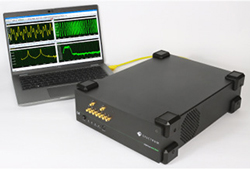
Figure 1 The NETBOX offers mobile and easy operation.
Spectrum Instrumentation has released a new series of ultrafast arbitrary waveform generators (AWGs) and digitizers that can be controlled easily over Ethernet. These NETBOX instruments are ideal for automated and/or remote applications. They connect directly to PCs, laptops or even the company network, using a simple Ethernet/LXI cable. Small and compact, they can be placed almost anywhere, running as standalone units or, as they are fully programmable, integrated into sophisticated automated testing systems. Figure 1 shows the NETBOX, weighing less than 7 kg.
The new instruments offer test engineers, scientists and designers a cost-effective means of producing and acquiring electronic waveforms up to microwave frequencies, with high purity and low distortion. For signal acquisition, the DN2.33x series of digitizers offers sampling rates of up to 10 GSPS, bandwidths of up to 4.7 GHz and uses the latest 12-bit analog-to-digital converter technology. The DN2.63x series of AWGs makes an excellent companion product line, generating waveforms at rates up to 10 GSPS with bandwidths up to 2.5 GHz, utilizing 16-bit digital-to-analog converters. Single- and dual-channel models are available, offering a choice of maximum sample rates and bandwidths to create perfect-fit solutions.
Along with their ultrafast sample rates and wide bandwidths, the products feature onboard waveform memories of up to 8 GS (16 GB) per channel. Large memories enable the acquisition and generation of long and complex signals. For example, running at 10 GSPS, single-shot or transient waveforms can be captured or generated over a full 800 milliseconds with a sample resolution of just 100 picoseconds. If required, the large memories can also be partitioned and combined with different trigger, acquisition and generation modes. This enables optimized memory usage, allowing the products to capture or replay multiple signals.
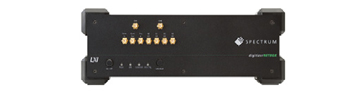
Figure 2 NETBOX front plate.
For easy system integration, the NETBOX products include a host of signal inputs and outputs via standard front panel connectors. These connector functions include channel, trigger and clock signals, lines for multi-purpose digital I/O and status flags. If needed, there is even a high speed Digital Pulse Generator option. NETBOX products have a variety of connectors on the front plate, making it easy to integrate a NETBOX into any test application. Figure 2 shows the front plate of a NETBOX unit.
Each NETBOX product is shipped with Spectrum’s graphical user interface (GUI), SBench 6 Pro, which provides local, interactive control, waveform acquisition, creation, display, signal analysis and documentation. It also includes useful data import and export functions, making it easy to transfer data between different NETBOX instruments, as well as third-party hardware and software products. If you wish to run your own application-specific code, the units are fully programmable when running on Windows or LINUX operating systems. All NETBOX products come with software development kits for programming in a host of different languages, including C++, Python, MATLAB and LabVIEW.
In general, Spectrum Instrumentation offers over 110 variants of NETBOX products, allowing customers to pay only for the speed, channels and features they truly need. Working together, the NETBOX digitizer and AWG products form a formidable team that is perfect for stimulus-response or closed-loop type applications.
MULTITONE TESTING FOR AMPLIFIER LINEARITY
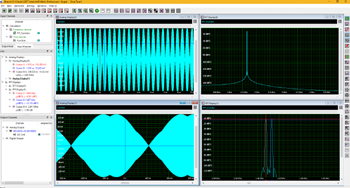
Figure 3 A dual-tone test signal consisting of the sum of two sine waves.
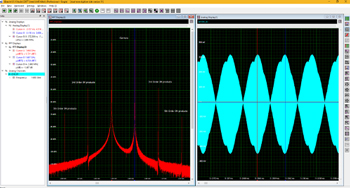
Figure 4 Two-tone test input and results.
This section contains a real-world example of the advantages and benefits of the NETBOX product line. Multitone testing is a common way of assessing the linearity of amplifiers. Tests are frequently conducted using dual sinusoidal signals with high signal purity. The two signals are applied to the input of an amplifier and the distortion resulting from the nonlinearities in the amplifier is measured. The Spectrum DN2.63x series AWGs can generate a dual-tone signal in a single channel with very low distortion, as shown in Figure 3.
The software tool, SBench 6 Pro, can create the data for the required dual-tone waveforms by summing two sine waves. In this case, the Spectrum DN2.636 series AWG is producing sine waves at frequencies of 1.664 and 1.667 GHz. The data is created using a formula in the GUI’s function generator. The resultant waveform shows a beat pattern equal to the frequency difference between the two sinusoidal components. This is shown in the top and bottom left quadrants of Figure 3. The FFT of the signal, as shown in the upper right quadrant of Figure 3, reveals a combined frequency peak at 1.66 GHz. Horizontally expanding the FFT shows the two frequency components measured by the cursors. The data is transferred to the AWG memory and the output signal is then applied to the amplifier under test. A DN2.336 digitizer is then used to acquire and measure the amplifier’s output. Figure 4 shows the two-tone input signal on the left and the acquired time signal on the right. The figure shows that the acquired time signal retains the beat frequency of the two carriers.
The frequency spectrum of the acquired signal is expanded about the carriers to show the classic intermodulation mixing components. Cursors mark the carrier frequencies in the spectrum trace and the beat frequency in the time domain view. The third-order mixing products result from mixing a second harmonic of one of the carrier signals with the other carrier. Other mixing products, such as the second- and fifth-order products, occur due to the similar mixing of harmonics and the carrier signals. The amplitudes and frequencies of these harmonic and mixing components are used to compute several amplifier performance figures of merit. The purity of the signals from the source determines the limits of this type of measurement. As shown in the example, the Spectrum NETBOX instruments offer a straightforward method for generating and acquiring high frequency, high purity and low distortion waveforms.
Spectrum Instrumentation GmbH
Grosshansdorf, Germany
www.spectrum-instrumentation.com