

The R&S FSMR3000 microwave measurement receiver calibrates signal generators and attenuators with a single instrument designed to reduce calibration complexity. It provides features including level and tuned RF level (TRFL) measurements, analog modulation and spectrum analysis. Hardware can be added for high performance phase noise testing, meaning better than the standard phase noise measurements achieved using a spectrum analyzer. With 80 MHz analysis bandwidth, the R&S FSMR3000 handles both digital and analog modulation analysis, as well as pulsed and VOR/ILS signals.
TRFL CALIBRATION AND POWER MEASUREMENT
The main application for the FSMR3000 receiver is measuring the power of a signal generator precisely and simply. The absolute power and reference power are measured with high accuracy using a power sensor connected to the R&S FSMR3000. The sensor’s input is either connected directly to the output of the generator being tested or by placing a power splitter in parallel with the input of the R&S FSMR3000. The measuring receiver corrects the power splitter’s frequency response and insertion loss. Power sensors are available with an integrated power splitter, like the R&S NRP-Z27/-Z37 power sensor modules, which also have automatic VSWR correction, increasing calibration accuracy.
The power sensor cannot measure conventional RF generators over their full range, e.g., from -150 to +20 dBm; this requires a TRFL measurement. To optimize the signal-to-noise ratio for the power level measurement, the input attenuation, preamplifier and IF gain of the R&S FSMR3000 must be switched between ranges, using adjacent range calibration to eliminate potential level errors from parameter changes (see Figure 1). With this approach, the FSMR3000 achieves a high linearity of ±(0.009 dB + 0.005 per 10 dB range) across the entire power range.
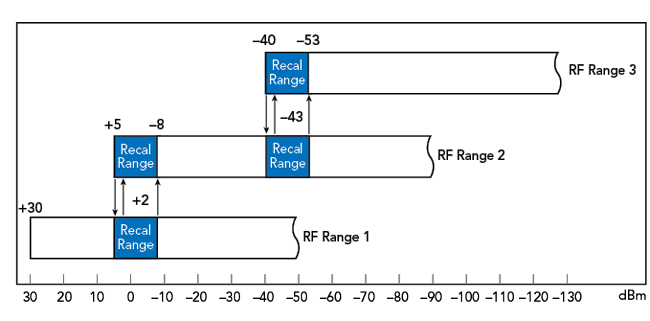
Figure 1 Adjacent range calibration for a TRFL measurement.
Calibrating for this wide dynamic range requires only a few steps, beginning with a reference measurement with the power meter. The level of the device to be calibrated is then reduced by the desired steps and verified. If the test signal is outside the usable measurement range, the input attenuation, IF gain or preamplifier setting of the R&S FSMR3000 are adjusted. The RECAL key initiates the adjacent range calibration, automatically switching the R&S FSMR3000 measurement range. Figure 2 shows the linearity that can be achieved when measuring devices, including the uncertainty and overall limits.
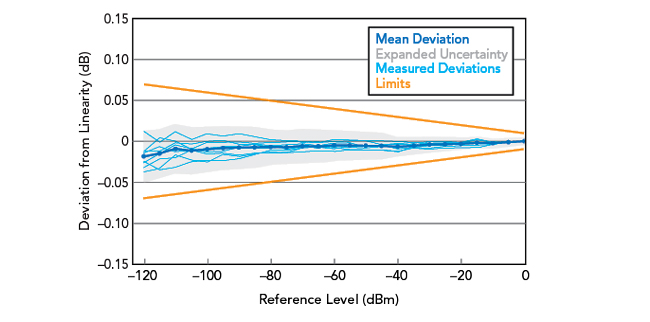
Figure 2 Deviation from linearity performance of the R&S FSMR3000.
AM/FM/PM ANALYSIS
The R&S FSMR3000 features a complete, integrated modulation analyzer for AM, FM and PM analog modulation. It measures the audio parameters on the demodulated signal or directly on the audio signal, meaning no extra instrument is required for calibrating the modulation settings and modulation generator.
Various audio filters, deemphasis functions and detectors are available for audio analysis. Total harmonic distortion (THD) and signal-to-noise and distortion (SINAD) are automatically calculated and displayed, and all key results are displayed simultaneously. Users can also choose only certain parameters to display and arrange the windows (see Figure 3).
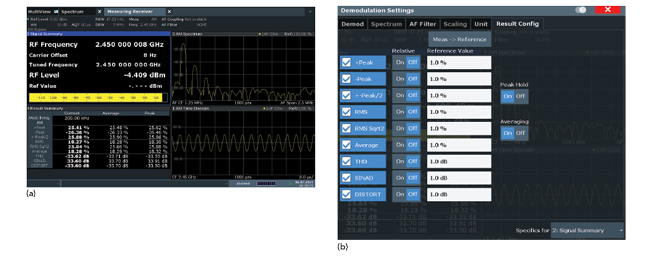
Figure 3 Analysis of an AM signal (a). The user can select which parameters to show in the results (b).
SIGNAL AND SPECTRUM ANALYSIS
For calibrating signal generators, a spectrum analyzer is often needed, such as for measuring harmonics. The R&S FSMR3-B1 option makes the measuring receiver a full-featured signal and spectrum analyzer, with functionality and performance equivalent to the R&S FSW signal and spectrum analyzer. Offering excellent performance—phase noise, wide dynamic range because of low intrinsic noise (DANL) and input third-order intercept (TOI) to +30 dBm—the instrument also has several standard functions required for calibration and performance verification of signal generators. For example, the R&S FSMR3-B1 can measure a generator’s higher-order harmonics at the press of a key. It also has a routine for measuring TOI or adjacent channel power and an array of marker functions.
In addition to spectral measurements, the R&S FSMR3000 serves as a signal analyzer with an analysis bandwidth up to 80 MHz. It can analyze pulses, digital modulated signals and VOR/ILS signals.
HIGH PERFORMANCE PHASE NOISE ANALYZER
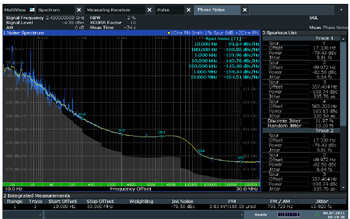
Figure 4 An option enables measurement of the amplitude and phase noise of a signal.
Phase noise is a key parameter for signal generators: the lower the phase noise, the better the signal and modulation quality. While phase noise can be measured with a spectrum analyzer, accurately measuring this parameter requires an analyzer with even lower intrinsic phase noise. The wide dynamic range of the R&S FSMR3000 makes it well-suited for phase noise measurements. At 10 kHz offset from the carrier, the analyzer’s phase noise is -133 dBc/Hz with a 10 GHz carrier.
However, if the phase noise performance of the built-in spectrum analyzer is not sensitive enough to calibrate some high-end signal sources, the R&S FSMR3-B60 option turns the R&S FSMR3000 into a phase noise analyzer that demodulates the signal in real time, measuring phase noise and amplitude noise in parallel. A second receive path enables cross-correlation, which increases the sensitivity by up to 30 dB depending on the number of correlations. The cross-correlation gain appears as a gray area below the phase noise trace, showing the expected sensitivity due to cross-correlation (see Figure 4), enabling users to accurately assess the measurement. If the gray area is well below the trace, the device being tested can be accurately analyzed, with errors due to insufficient sensitivity excluded.
The new R&S FSMR3000 is a full-featured tool for calibrating signal generators and characterizing their modulation quality. In addition to this functionality, it has options to incorporate a high performance signal and spectrum analyzer and high performance phase noise tester, becoming the only one-box solution that will cover all the functions needed in a modern high-end calibration lab.
Rohde & Schwarz
Munich, Germany
www.rohde-schwarz.com