We use cookies to provide you with a better experience. By continuing to browse the site you are agreeing to our use of cookies in accordance with our Privacy Policy.
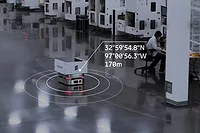
42 Technology (42T) has played a central role in helping Omnisense, a company specialising in terrestrial positioning technology, to demonstrate a safer autonomous drone landing system when satellite navigation signals are unreliable.
Taoglas® announced the GVLB208 Series, an active and passive dual-band GNSS L1/L5 stacked patch antenna and the first products in a new family of ultra-compact antennas.
Iridium Communications Inc. announced that it has entered into a definitive agreement to acquire Aireon LLC, operator of the world’s only space-based Automatic Dependent Surveillance-Broadcast (ADS-B) air traffic surveillance system.
Ericsson announced the launch of its 5G Advanced location services offering, a comprehensive suite of innovations designed to redefine location-based services across commercial 5G SA networks.
Safran Federal Systems has been selected by Moog Inc. to provide its Skynaute navigation solution as part of Moog’s Genesys Avionics Suite™ for the Lockheed Hercules platform (L-Series and C-130).
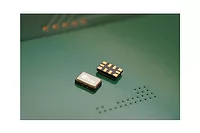
SiTime Corporation launched the Endura® temperature compensated oscillator (Super-TCXO®), ENDR-TTT, for position, navigation and timing (PNT) applications.
Quectel Wireless Solutions has partnered with Swift Navigation to deliver Quectel’s Real-Time Kinematic (RTK) Correction Solution, which enables cost-effective, centimeter-level positioning accuracy for a new generation of IoT applications.
Microchip Technology announced the release of the TimeProvider® 4500 v3 grandmaster clock (TP4500) designed to deliver sub-nanosecond accuracy for time distribution across 800 km long-haul optical transmission.
Satelio will test a pioneering system that allows its satellites to connect with IoT devices without relying on satellite navigation systems (GNSS) such as the American GPS.
RF co-site interference has become a major issue with the proliferation of antennas, particularly in dense urban areas. This paper offers a practical perspective for those using or specifying new RF wireless systems about what RF co-site interference is, where it comes from, and some of the most common techniques and tools that are available in today’s market to solve these RF co-site interference problems.

 Subscribe