

 RSS
RSS
Non-Terrestrial Networks (NTNs) are redefining global connectivity – but designing them presents unique engineering challenges. Unlike traditional terrestrial networks that depend on fixed, ground-based infrastructure, NTNs use space-based and airborne platforms such as satellites, high-altitude platforms (HAPs), and unmanned aerial vehicles (UAVs) to deliver communication services. While the concept has historical roots in military and governmental use, today’s NTNs are increasingly aimed at serving the public and closing the global connectivity gap.
According to the International Telecommunication Union (ITU), 2.6 billion people remain offline, primarily due to limited communication infrastructure. NTNs offer an opportunity to extend reliable coverage to underserved and remote areas, making them critical for bridging the digital divide and supporting key use cases like delivering communication to remote areas or disaster recovery.
However, designing effective NTNs requires solving a set of complex technical problems that go far beyond those faced in terrestrial systems. Scientists and engineers must carefully address several critical areas:
- NTN Link Design: High Doppler shifts, long signal delays, and rain fading must be modeled and mitigated to ensure consistent signal quality. Given that NTN path loss is significantly greater than terrestrial path loss, optimizing the received signal power presents a major technical challenge.
- Coverage and Capacity: Systems must guarantee wide-area coverage and scalable capacity, despite the dynamic nature of aerial and space platforms.
- Platform Modeling: Accurate trajectory modeling of aircraft, HAPs, UAVs, and satellites is essential for system integration and performance optimization.
- NTN Link Budget Calculation: Engineers must ensure sufficient signal power and quality through careful link budget analysis for reliable data transmission. This underscores the need for techniques that can focus and steer RF energy—such as employing phased array antennas and optimizing onboard hardware, including minimizing power amplifier nonlinearities.
As NTNs become increasingly integrated into 5G and future wireless systems, with mega-constellations from companies like Starlink, OneWeb, and Amazon, these design considerations become even more critical. The 3rd Generation Partnership Project (3GPP) is also advancing global standards to incorporate NTNs into next-generation cellular systems, further driving innovation and adoption. The first normative release on Non-Terrestrial Networks (NTN) within the 3rd Generation Partnership Project (3GPP) standards was Release 17.
Figure 1: 6200 Low Earth Orbit satellites for NTN connectivity modeled in MATLAB. ©2025 The MathWorks, Inc.
Let's delve into the design of NTN links and explore the fundamental components involved. Figure 2 presents a block diagram for NTN link simulation. The Tx/Rx Processing shown in blue illustrates the generation and reception of 5G downlink signals. The yellow block represents the NTN channel model, while the green blocks indicate additional processing blocks essential for NTN links.
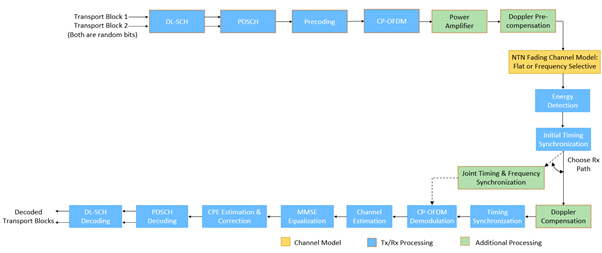
Figure 2: 5G NTN link simulation for throughput calculation. ©2025 The MathWorks, Inc.
Additional Processing Blocks Essential for NTN Links
Additional processing is essential to address the unique challenges posed by NTN links. One major challenge is the larger propagation delays, as NTN links cover significantly greater distances compared to terrestrial links, resulting in substantial delays. 3GPP NTN specification provide hybrid automatic repeat request (HARQ) support up to 32 processes to address the long round trip time from satellites. Figure 3 illustrates a strategy for dividing Doppler compensation between the transmitter and receiver. By assuming the user equipment (UE) is positioned at the beam center, the common Doppler shift fd,common can be pre-compensated at the transmitter. Meanwhile, the residual satellite Doppler shift fd,sat - fd,common, along with the Doppler shift resulting from UE movement, can be compensated at the UE.
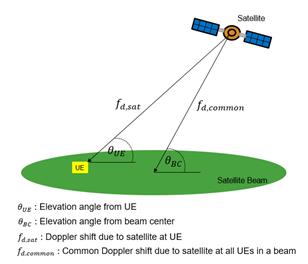
Figure 3: Approach to manage high Doppler shift. ©2025 The MathWorks, Inc.
The 3GPP specifications include four distinct power amplifier (PA) models to accommodate various frequency and material requirements: the 2.1 GHz GaAs, 2.1 GHz GaN, 28 GHz CMOS, and 28 GHz GaN models. These models are available in both memoryless configurations and configurations with memory, allowing for flexibility in addressing different system needs. Additionally, digital predistortion (DPD) techniques can be employed to linearize the entire transmitter chain, enhancing performance and efficiency across these PA models. Figure 4 illustrates the impact of PA nonlinearity, which results in a 2 dB compression at approximately 0 dB normalized input power.
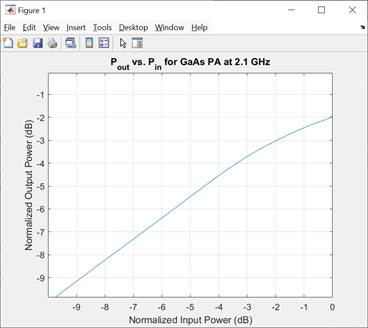
Figure 4: Power amplifier characteristics. ©2025 The MathWorks, Inc.
Channel Model
3GPP, the standardization body for 5G, offers specifications for narrowband and frequency-selective channel models tailored for 5G non-terrestrial links (3GPP TR 38.811). MATLAB integrates support for these channel models, allowing users to specify parameters related to satellite orbits, such as Doppler shifts. The 5G NTN narrowband channel model is derived from the Land Mobile Satellite (LMS) channel, incorporating satellite Doppler shifts as input to generate path gains. Meanwhile, the 5G NTN TDL channel model is based on the 5G terrestrial TDL channel. MATLAB supports all the delay profiles outlined in the 3GPP technical specifications. Additionally, users can configure custom delay profiles and satellite Doppler shifts.
Tx/Rx Processing
The blocks used in 5G NTN transmission and reception processing are identical to those used in 5G terrestrial links. MATLAB provides a functional implementation of these blocks, which can be used directly, as well as viewed and edited by users for customization. Detailed information about the functions required for 5G NTN Tx/Rx processing is readily available for those interested in exploring the implementation.
Results and Conclusion
Figure 5 presents the throughput results obtained by simulating the block diagram depicted in Figure 2. This simulation involves 1,000 frames with transmission power varying between 60 and 70 dBm, utilizing a carrier with a 30 kHz subcarrier spacing (SCS) over a 5 MHz transmission bandwidth.
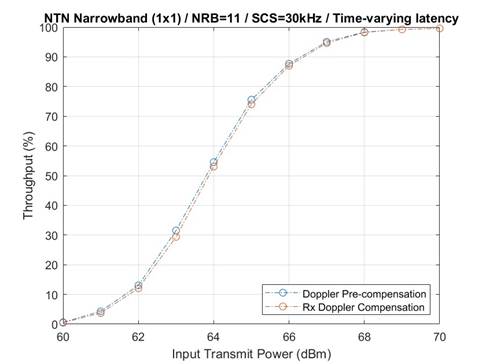
Figure 5: Plot of throughput % vs input TX power. ©2025 The MathWorks, Inc.
In summary, NTN link design involves addressing the unique challenges posed by non-terrestrial networks, such as larger propagation delays and high Doppler shifts due to the significant distances and relative motion between satellites and ground users. Key components include specialized channel models proposed by 3GPP to support NR-NTN, strategies for Doppler compensation, and additional processing requirements like hybrid automatic repeat request (HARQ) for managing long round-trip times. Power amplifier models suited for various frequencies and materials, along with digital predistortion (DPD) techniques, are also crucial for optimizing the transmitter chain. Overall, NTN link design requires a combination of advanced signal processing techniques and adaptable system configurations to ensure reliable communication.
To learn more about the topics covered in this Code & Waves blog and explore such designs, see the examples below or email vijayenk@mathworks.com for more information.
- NR NTN PDSCH Throughput (Example code): Learn how to measure the physical downlink shared channel (PDSCH) throughput of a 5G New Radio (NR) link in a non-terrestrial network (NTN) channel, as defined by the 3GPP NR standard.
- Analyze NTN Coverage and Capacity for LEO Mega-Constellation (Example code): Learn how to analyze coverage and capacity of a very low population density region for LEO mega-constellation for satellite-based NTN applications
- Iridium Satellite Spot Beam Coverage on the U.S. (Example Code): Learn how to generate and visualize Iridium satellite spot beams on the US map.
- Interference from Satellite Constellation on Communications Link (Example code): Learn how to analyze interference from a constellation of Low-Earth Orbit (LEO) satellites on a Medium-Earth Orbit (MEO) satellite downlink to a ground station.
- Satellite Communications Toolbox (Website page): Simulate, analyze, and test satellite communications systems and links.