

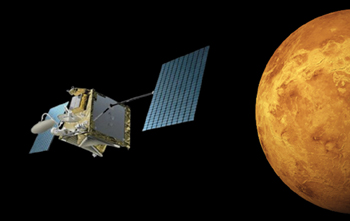
Figure 1 Artist’s rendering of the EnVision spacecraft.
When the European Space Agency’s (ESA) EnVision spacecraft, as shown in Figure 1, launches for Venus, one of its key instruments, NASA’s Venus Synthetic Aperture Radar (VenSAR), will rely on a 10 MHz oven-controlled crystal oscillator (OCXO) from Wenzel Associates as a critical frequency reference. VenSAR is scheduled to launch in November of 2031, and its mission is to generate coherent radar data for high-resolution imaging, topography and surface property analysis. The accuracy of those data products begins with frequency precision.
Synthetic aperture radar systems depend on phase-coherent signal generation over long time intervals. Any frequency instability or phase noise from the oscillator translates directly into image phase errors, degrades resolution and reduces radiometric accuracy. For a deep-space mission like EnVision, the oscillator must provide exceptional stability, ultra-low noise and consistent performance under environmental stress.
DESIGN FOR FREQUENCY INTEGRITY
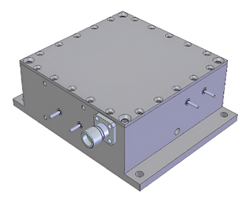
Figure 2 Artist’s rendering of the 10 MHz OCXO.
The VenSAR OCXO, as demonstrated in Figure 2, uses a quartz crystal resonator from Croven Crystals, optimized for minimal acceleration sensitivity and low aging. Featuring a stress-compensated cut (SC-cut) quartz crystal and a specialized mounting structure inside a hermetically sealed housing, the quartz crystal resonator is designed to minimize the effects of external vibration on frequency stability. The addition of a proportionally controlled oven circuit ensures the quartz crystal resonator and circuitry are maintained at a stable temperature, minimizing the effects of environmental temperature changes on frequency stability. Both the quartz crystal resonator’s low g-sensitivity design and thermal regulation are essential for achieving optimal fractional frequency stability over the mission’s demanding performance specifications.
Output signal phase noise is a key performance parameter for radar coherence. Figure 3 shows that the oscillator achieves phase noise levels of -105 dBc/Hz at 1 Hz offset and -164 dBc/Hz at 10 kHz, enabling high dynamic range and fine Doppler resolution. Achieving these noise levels requires careful management of flicker noise in sustaining amplifier circuits and control of microphonic effects within the oven cavity. The design incorporates low noise discrete transistor amplifiers, has a high-Q resonator circuit and is designed to be robust during mechanical shock.
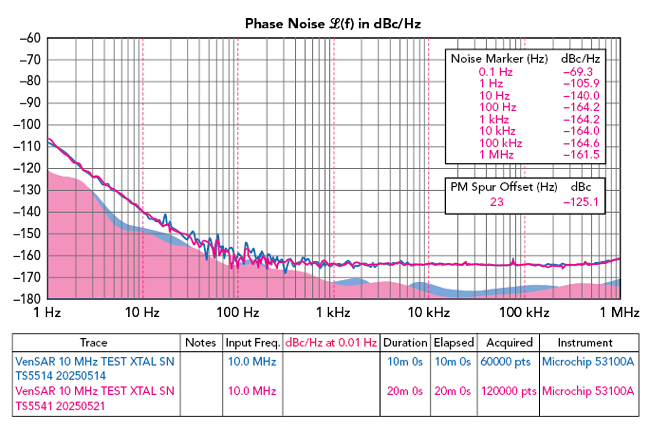
Figure 3 Phase noise plot of the 10 MHz OCXO showing –164 dBc/Hz at 10 kHz offset.
Electrical design also focuses on filtering and isolating power supply noise and output signal buffering. Each stage is optimized to reduce additive phase noise and ensure load insensitivity. Proportional heater controllers provide thermal stability. All active components are chosen based on NASA EEE-INST-002 and JPL Parts Engineering Technical Standards. They are selected based on resistance to total ionizing dose and single-event effects, ensuring predictable behavior through the mission’s radiation exposure profile.
SPACE QUALIFICATION AND ENVIRONMENTAL TESTING
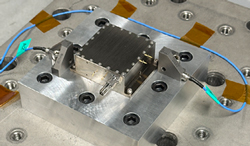
Figure 4 Preparing the device for pyroshock testing.
Qualification testing for the VenSAR OCXO follows a rigorous process derived from NASA standards for spaceflight hardware. Thermal vacuum testing verifies oven regulation across the full operating temperature range under vacuum conditions. Thermal cycling and temperature shock testing ensure startup reliability and long-term drift characteristics. Vibration and shock tests simulate launch stresses with random vibration profiles. Figure 4 shows the device set up for environmental testing.
Extended aging tests characterize frequency drift and validate long-term predictability, while burn-in and step-stress testing screen for early-life failures. Final performance verification includes phase noise measurement using cross-correlation analyzers, Allan deviation analysis and frequency-temperature coefficient testing. Each oscillator’s test data is captured and documented to provide full pedigree traceability for the mission.
CONCLUSION
The OCXO design builds on Wenzel Associates’ decades-long space flight heritage across multiple NASA programs, including Mars Curiosity and Perseverance, Europa Clipper and NISAR. Experience from these missions directly informed the design of the VenSAR oscillator. The result is a highly stable, low-drift frequency source with demonstrated reliability in long-duration missions. The VenSAR OCXO represents the intersection of precision crystal engineering, thermal control and environmental resilience. Each design decision, from crystal cut and mounting to oven temperature control and component selection, was made to ensure high frequency stability performance under the mechanical, thermal and radiation stresses of interplanetary flight.
By combining ultra-low phase noise performance with space qualification, Wenzel’s oscillator will enable NASA and ESA engineers to push radar imaging performance further than before. Once EnVision begins its journey to Venus, the oscillator’s precision 10 MHz signal will serve as the timing foundation for a mission designed to reveal a new view of our neighboring planet.
Wenzel Associates, Inc.
Austin, Texas
www.quanticwenzel.com