

In cellular uplink scenarios, particularly at cell edges where signal strength is weakest, user equipment (UE) faces a fundamental tradeoff: operate the power amplifier (PA) efficiently near saturation, introducing severe nonlinear distortions, or back off to linear regions at the cost of reduced power efficiency and shorter battery life. This challenge intensifies as modulation orders increase. While 5G New Radio (NR) currently supports up to 256-QAM in the uplink, 6G research is exploring 1024-QAM and beyond to achieve the multi-gigabit data rates envisioned for next-generation applications.
Traditional digital predistortion (DPD) addresses PA nonlinearities at the transmitter, requiring sophisticated signal processing, feedback loops and PA characterization circuits that add complexity, cost and power consumption to user devices. For resource-constrained smartphones, IoT sensors and wearables, coping with this overhead becomes particularly challenging. Digital post-distortion (DPoD) fundamentally reverses this paradigm. Rather than the transmitter compensating for its own distortions, the receiver, which is typically a base station with more computational resources, performs the compensation. This architectural shift enables the UE to operate with simpler, power-efficient transmitters while maintaining link performance. This also enables the UE to resort to higher transmit powers when necessary.
The emergence of AI-powered DPoD techniques represents a step change beyond classical signal processing approaches. While traditional DPoD methods rely on predetermined mathematical models such as polynomial functions, AI-powered implementations leverage neural networks and machine learning (ML) to optimize compensation strategies directly from observed signals. The adaptability of AI-enhanced receivers becomes advantageous as 6G systems encounter increasingly complex scenarios, including the frequency range 3 (FR3) band, massive MIMO with many antenna elements and dynamic channel conditions that defy classical modeling approaches.
DPOD FUNDAMENTALS
The Nonlinearity Challenge in Modern Uplinks
PAs exhibit nonlinear behavior characterized by amplitude-dependent gain compression (AM-AM conversion) and phase distortion (AM-PM conversion). When driven near saturation to maximize efficiency, these nonlinearities become severe, introducing in-band distortion that degrades error vector magnitude (EVM) and out-of-band spectral regrowth that violates emission masks.
For orthogonal frequency division multiplexing (OFDM) signals, high peak-to-average power ratio (PAPR) exacerbates this problem, as occasional high-amplitude peaks drive the PA into compression. DFT-spread OFDM (DFT-s-OFDM) was adopted in 5G uplink for its lower PAPR characteristics, which partially mitigates this. However, as modulation order increases to 256-QAM and beyond, even DFT-s-OFDM signals develop sufficient PAPR to cause distortion when amplifiers operate at high efficiency.
Why Receiver-Side Compensation?
DPoD relocates nonlinear compensation from the transmitter to the receiver, delivering several key advantages:
- Energy Efficiency at the UE: Removing DPD circuitry from the transmitter eliminates power-hungry feedback loops, observation receivers and real-time adaptation algorithms. These result in lower power consumption and reduced complexity, which extend battery life and ease thermal management requirements.
- Centralized Computational Resources: Base stations can leverage high performance CPUs, GPUs or dedicated AI accelerators to run sophisticated compensation algorithms without the size and power constraints faced by battery-powered UE.
- Adaptive Learning: AI-powered receivers can continuously learn from diverse user transmissions, covering varying PA characteristics, channel conditions and other impairments, to develop adaptive compensation strategies that can outperform traditional fixed-parameter approaches.
- Relaxed Transmitter Specifications: If receivers can reliably compensate for transmitter distortion, transmitter EVM requirements can be relaxed, enabling simpler, more energy-efficient PA designs that can operate closer to saturation for improved power efficiency and lower cost. On the downside, this can lead to out-of-band emissions due to spectral regrowth, therefore potentially reducing spectral efficiency.
- Introducing Additional Flexibility: Effective impairment compensation at the receiver side will facilitate more flexible UE operation and transmission signal quality. The UE can transmit uplink signals under different operating points, depending on its capabilities and the requirements of the network. In some cases, the UE can transmit very clean signals, and no receiver-side compensation is necessary. In some other cases, higher overall performance is achieved if the UE is allowed to transmit a distorted signal, which is corrected by the receiver.
TECHNICAL IMPLEMENTATION OF AI-POWERED DPOD
AI-powered DPoD solutions employ deep neural networks trained on representative data to learn how to compensate for both transmitter impairments and channel impairments. Various architectures have been explored, including Nokia Bell Labs’ HybridDeepRx, a convolutional neural network (CNN)-based receiver tailored to address nonlinear impairments.1
This receiver builds on alternating between frequency and time-domain processing, extracting the benefits of both. That is, the model performs channel compensation and symbol-to-bit demapping with the frequency-domain layers, while the time-domain layers facilitate effective mitigation of amplifier-induced distortion.
Figure 1 illustrates the model architecture, with emphasis on the physical layer processing chain. The OFDM-modulated waveform is transmitted using a nonlinear PA. This results in compression of the transmitted signal, introducing distortion. Upon reaching the receiver, the signal will also have experienced multipath fading from the wireless channel.
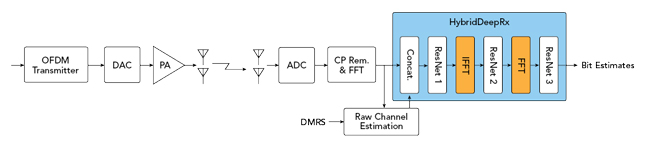
Figure 1 The HybridDeepRx AI receiver. Source: Nokia.
In the receiver, the signal is first OFDM demodulated through CP removal and fast Fourier transform (FFT), and a raw channel estimate based on the known pilot symbols is calculated. Then, the frequency-domain received signal and the raw channel estimate are concatenated and fed to the HybridDeepRx AI receiver. The model has its first ResNet section in the frequency domain, which it uses to compensate for the linear channel effects. After this, an inverse FFT (IFFT) is used to transform the ensuing latent signals to the time domain, where the model uses another set of ResNet blocks to compensate for the nonlinear distortion. Finally, another FFT is used to transform the latent signal back to the frequency domain, where a third set of ResNets is used to extract the log-likelihood ratio (LLR) estimates.
The training process of such an AI-driven receiver requires large datasets of paired transmitted bits and received signals collected across diverse channel conditions and PA operating points. The AI receiver model is trained as a whole, meaning that the only criterion is the accuracy of the output LLRs. Therefore, it is not possible to say conclusively what is done at which point of the receiver, although some rough deductions are of course possible (as done above).
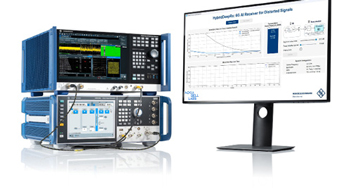
Figure 2 HIL testbed to test Nokia Bell Labs’ HybridDeepRx.
While synthetic data can be used for training such a model, hardware-in-the-loop (HIL) testbeds are essential for validating AI model performance. Nokia uses Rohde & Schwarz’s HIL testbed to validate the HybridDeepRx AI receiver.
EVALUATING AI-POWERED 5G RECEIVERS WITH HIL TESTING
To evaluate Nokia Bell Labs’ HybridDeepRx under real-world conditions to test whether the AI-based receiver compensates for channel impairments and nonlinear PA distortion in 5G uplink signals, an HIL testbed was used. Figure 2 shows the testbed, which leverages Rohde & Schwarz test and measurement solutions for signal generation, channel emulation, signal analysis and AI model inference.
An uplink scenario in which a mobile transmitter induces nonlinear distortion is evaluated by operating its PA near saturation. The HybridDeepRx AI receiver replaces the conventional OFDM receiver chain at the base station. Figure 3 provides an overview of the testbed.
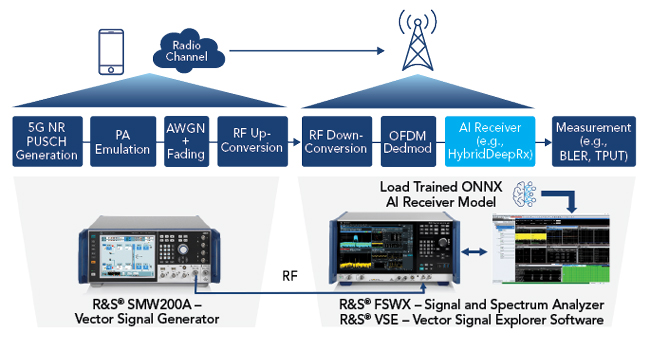
Figure 3 HIL AI Receiver testbed based on R&S SMW200A VSG, FSWX and VSE signal and spectrum analysis solutions.