

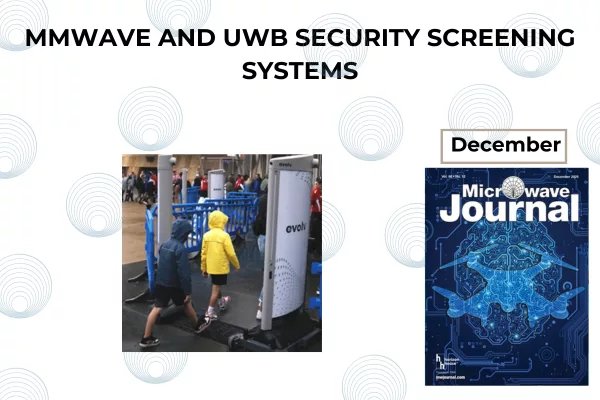
mmWave imaging has emerged over the last decade as one of the primary non-ionizing technologies for screening people at airports, transit hubs, stadiums and other high-throughput checkpoints. Unlike X-ray backscatter or traditional metal detectors, mmWave systems illuminate the subject with very low-power electromagnetic (EM) waves. These systems can detect metallic and non-metallic objects (plastics, ceramics, powders, liquids) that are worn on or concealed beneath clothing, and depending on design, can operate either as a static portal (stand-still scan) or as a walk-through (people keep moving) for a high-throughput solution.
The full-body scanner market is undergoing significant growth. In 2023, the global full-body scanner market (all technologies) was valued at approximately $179 million, with projected CAGR of approximately 16 percent to 2030.1 Focusing on mmWave specifically, one market forecast anticipates growth from approximately $450 million in 2023 to $787 million in 2030 (CAGR around 8.3 percent),2 while others suggest an overall scanner market reaching half a billion dollars by the late 2020s.3 Relative growth is strongest in Asia-Pacific and emerging economies, where airport expansion, infrastructure investment and rising security budgets create demand for modern screening systems. Meanwhile, North America and Europe continue to drive adoption in retrofit and new-terminal projects.
As scan speed and image resolution have improved over the years, mmWave security scanning systems have become the leading technology for airport security systems and are replacing X-ray systems in many airports. Newer walk-through systems now offer high-throughput solutions for airports and other venues, along with convenience for the people being scanned. To protect the privacy and comfort of the people being scanned and ensure a stress-free working environment for security staff, the new scanners take advantage of advanced AI and machine learning (ML) techniques to avoid displaying actual body images and speed up the scanning process.
WHY UWB OR MMWAVE?
In choosing the best wavelength, there is a trade-off between penetration and spatial resolution. A spatial resolution of about 2 mm is considered adequate for security applications, so E-Band (60 to 90 GHz) provides reliable object detection and adequate penetration to reach the surface of the skin according to Rohde & Schwarz,4 although some companies are using ultra-wideband (UWB) frequencies in the 3.1 to 10.6 GHz range. These systems use wavelengths short enough to provide useful spatial resolution for detecting objects on the body, but are non-ionizing (they do not remove electrons or cause DNA damage like X-rays), so they are safer than X-ray systems to use for security scanning. They are also better than metal detectors since they detect non-metallic objects and liquids. Companies design systems to regulatory exposure limits (ICNIRP, IEEE standards) and typically operate at very low power levels. The scientific literature and regulatory overviews show that properly certified mmWave screening devices operate within accepted safety margins for public use.5
AI AND ML
Modern screening systems rely heavily on AI and ML to automate threat detection, reduce false positives and simplify operator workflows. Rather than showing raw body images, algorithms generate symbolic avatars or generic outlines highlighting zones of interest. Raw imagery is typically deleted or overwritten within seconds to protect privacy. High-performing systems aim to detect very small objects (e.g., thin plastic cards, powders) while maintaining acceptable false alarm rates, while adversarial robustness (i.e., resistance to attempts to fool the system via small perturbations) is a growing concern in algorithm design. These systems generate a large amount of data, so AI and ML are needed to analyze and properly interpret the data for object detection.
COMMERCIAL SURVEY
Several companies in the industry are designing and supplying these systems to airports and other venues for security scanning, including Rohde & Schwarz, Leidos, Liberty Defense, InsTech Netherlands, Vayyar Imaging and Evolv. The following is a summary of the various systems and their key features.
Rohde & Schwarz — QPS Product Family
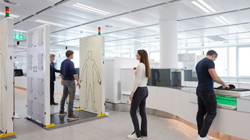
Figure 1 R&S QPS201 mmWave security scanner.
Rohde & Schwarz (R&S) offers the QPS family of mmWave personnel scanners, including static portal devices such as the QPS201, shown in Figure 1, and walk-through configurations (e.g., WALK2000) intended for airports, critical infrastructure and enterprise screening. The QPS line emphasizes very high-resolution imaging, multistatic arrays and millisecond-class acquisition times.6 R&S systems have been widely deployed in Europe and were certified by the FAA a couple of years ago so are being deployed in some U.S. airports.7 R&S has demonstrated a true walk-through concept for the future, where passengers walk down a hallway with sensors in the wall that scan them as they progress to their gate. There is no waiting in lines as it is part of the building, and anyone flagged is just stopped as they exit the hallway area.
Key specifications:
- Frequency range: 70 to 80 GHz
- Transmit power: approximately 1 mW
- Throughput: 750 to 900 people per hour
- Multistatic operation with thousands of transmitter and receiver antennas per panel (synthesized aperture)
- Data acquisition time: approximately 24 ms per panel (fast capture), enabling rapid screening
- Privacy modes: symbolic/gender-neutral avatar alerts (no photographic images stored/displayed).
Pros:
- High spatial resolution and short acquisition times — suitable for detailed localization of small threats
- Material-agnostic detection (can detect metals, plastics, ceramics and liquids) because mmWave senses EM contrast and scattering rather than electrical conductivity alone
- Regulatory compliance and certification for aviation screening and explicit attention to privacy and operator ergonomics.
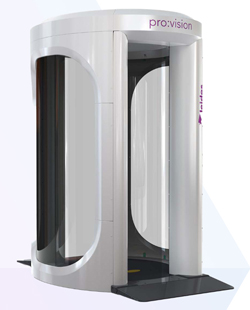
Figure 2 Leidos Pro:Vision mmWave security scanner.
Leidos — Pro:Vision Family
Leidos (which acquired the L3Harris security detection business) produces the Pro:Vision line (see Figure 2), a mmWave people scanner widely used in aviation and critical infrastructure. The Pro:Vision 3 is the current generation, using wideband mmWave antennas and deep learning algorithms for faster decisions and lower false alarm rates.8
Key specifications:
- Frequency range: 20 to 40 GHz
- Throughput: Pro:Vision 3 is specified to achieve > 400 people per hour in optimized operational modes
- Scan/decision time: Several implementations report around 4 seconds per passenger
- Wideband mmWave operation and AI/deep learning classification to reduce false positives; ECAC EU Standard 2.1 certification has been achieved.
Pros:
- Field-proven deployments and certifications (the Pro:Vision family is widely deployed and has relevant aviation certifications)
- Balanced throughput and resolution — designed for airport checkpoints where passenger flow and low false alarms are critical.