

VIRTUAL SYSTEM DESIGN IN 6G
6G represents a transformative leap in wireless, focused on sustainability, intelligence and global connectivity. Building on 5G expertise, 6G researchers are advancing enablers such as sub-THz communications, AI-native architectures and RF digital twins to improve performance and energy efficiency, targeting applications like immersive extended reality (XR) and autonomous systems. Realizing this vision requires overcoming challenges in sub-THz propagation, hardware complexity and the co-design of communication, sensing and AI, alongside the harmonization of regulations and the pursuit of sustainability imperatives. Digital twin technologies address these hurdles by enabling high-fidelity modeling, early validation and energy-aware design, ensuring that 6G evolves into a scalable, flexible and environmentally responsible connectivity platform.
MODELING AND SIMULATION OF 6G
As 6G advances from concept to realization, realistic modeling and simulation are vital for designing, validating and optimizing networks that span sub-THz frequencies, AI-native architectures, integrated sensing and non-terrestrial platforms. Traditional methods fall short of capturing nonlinearities, channel dynamics, interference and hardware impairments, making high-fidelity, cross-domain digital twins particularly useful. SystemVue, a system-level RF simulation software, provides such an environment, delivering near-circuit-level co-simulation of RF, baseband and antenna domains with hardware-in-the-loop integration to assess trade-offs, detect bottlenecks and validate reliability under real-world conditions. With advanced engines for time, frequency and phased-array analysis, integration with measurement tools and built-in libraries for algorithm testing, SystemVue bridges design and testing workflows, accelerating development, reducing risk and ensuring robust, compliant 6G system deployment.
PROMINENT 6G TECHNOLOGIES
Among the most transformative enablers of 6G are AI-native radio access networks (AI-RAN), integrated sensing and communication (ISAC), reconfigurable intelligent surfaces (RIS) and non-terrestrial networks (NTNs). AI-RAN introduces intelligence and self-optimization into the RAN, where machine learning (ML) manages spectrum, power, beamforming and mobility to enhance efficiency and quality of service in ultra-dense, heterogeneous environments. ISAC enables communication and sensing to share the same waveform and infrastructure, supporting applications such as autonomous vehicles and smart factories. RIS utilizes programmable surfaces to shape wave propagation, enhancing coverage, energy efficiency and connectivity without requiring active transmission. Complementing these terrestrial advances, NTNs, including LEO satellites, high-altitude platforms and UAVs, extend 6G services to remote and underserved regions globally. Together, these technologies form the backbone of a highly adaptive and universally accessible 6G ecosystem.
AI and ML
AI and ML will be integral to 6G RAN, enabling proactive, self-optimizing networks that manage spectrum, beamforming and modulation in real-time across ultra-dense, high frequency environments. By leveraging techniques such as reinforcement learning and federated learning, AI extends intelligence for latency-sensitive use cases, including autonomous driving and industrial automation, while also enhancing security, anomaly detection and energy efficiency. SystemVue supports this evolution by generating high-fidelity training data from realistic RF and channel models, to train AI models using TensorFlow or PyTorch frameworks and reimporting the trained models for evaluation and benchmarking. This workflow enables techniques such as adaptive beamforming, CSI feedback compression and link adaptation, accelerating the design, validation and deployment of AI-native 6G RANs.
Figure 1 depicts a ML–enhanced wireless communication system focused on channel state information feedback and channel estimation. It shows a typical transmitter-receiver chain, where the source block includes encoding, modulation and beamforming. The signal propagates through a multipath channel, reaching the receiver, which performs synchronization, demultiplexing and channel estimation. This approach integrates AI/ML-based functions at both the receiver and feedback paths; one neural network is responsible for channel estimation at the receiver, while another neural network optimizes CSI feedback to the transmitter. This AI-assisted feedback loop enables adaptive beamforming at the source, improving link reliability and spectral efficiency by leveraging learned channel characteristics.
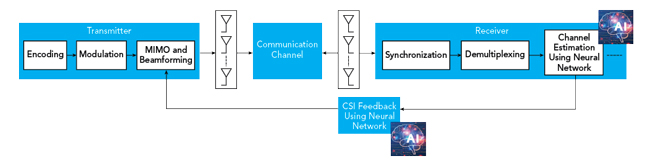
Figure 1 Example of a signal processing chain.
ISAC
ISAC is a key 6G enabler that fuses data transmission with environmental awareness, supporting applications such as autonomous driving, robotics, smart infrastructure and XR. By sharing waveforms and hardware for both communication and sensing, ISAC transforms networks into perceptive systems while introducing trade-offs between sensing accuracy and low-latency data delivery. SystemVue addresses these challenges by unifying RF, baseband and antenna modeling with impairment simulation and hardware-in-the-loop workflows, enabling realistic evaluation of algorithms, beamforming and waveform reuse. By bridging digital twin simulation with over-the-air (OTA) testing, researchers and architects can accelerate ISAC prototyping and ensure the development of scalable and commercially viable 6G deployments.
Figure 2 shows a generic transceiver signal chain for ISAC systems, annotated with critical RF impairments across both the analog and digital domains. These include phase noise, carrier frequency offset (CFO), sampling jitter, flicker noise, antenna distortion, nonlinearities (IIP2/IIP3) and I/Q mismatch, all of which degrade fidelity and sensing accuracy. Channel effects, such as multipath and full-duplex interference in monostatic scenarios, are also highlighted. These emphasize the need for realistic modeling to evaluate simultaneous communication and sensing performance.
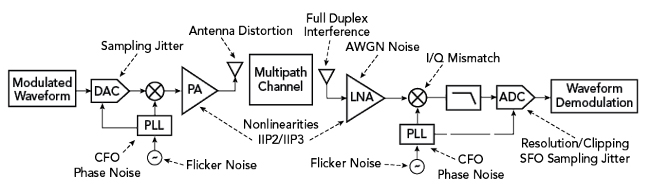
Figure 2 Modeling RF impairments in an ISAC system.
Figure 3 illustrates an example of an ISAC system that utilizes 5G New Radio (NR) waveforms for both communication and sensing functions. In this example, the 5G NR OFDM waveform is post-processed to extract relative range, Doppler and direction information of the hypothetical targets in the environment.
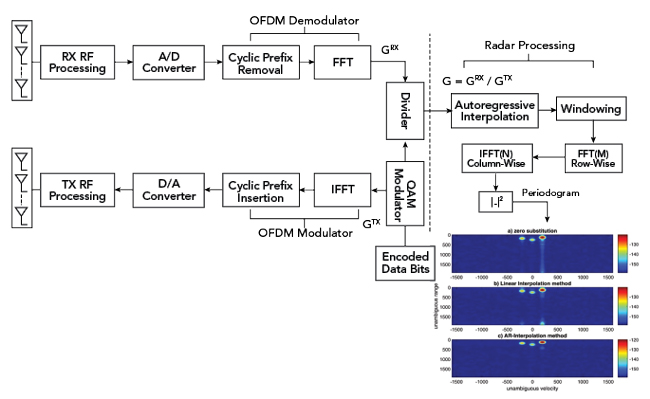
Figure 3 Example of sensing functionality by reusing 5G NR waveforms.
RIS
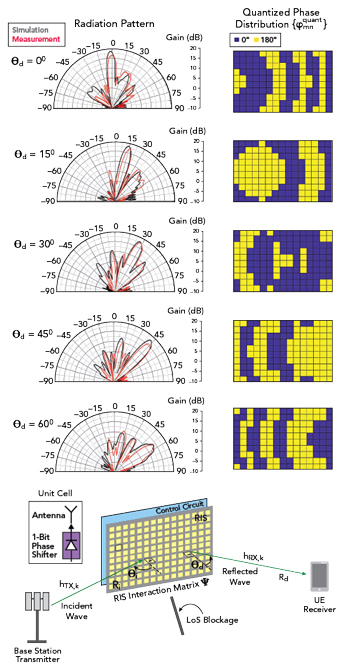
Figure 4 Characterization of RIS beamforming for various reflection angles.
RIS is a 6G innovation that enables programmable wireless environments by using passive or semi-passive elements to dynamically reflect, focus or scatter signals, improving coverage, throughput and energy efficiency while overcoming non-line-of-sight conditions and blockages. Unlike traditional fixed infrastructure, RIS introduces a software-controlled paradigm but requires accurate modeling to account for factors such as beamforming gain, phase control, element layout and mobility at high frequencies. A digital twin provides a robust environment for RIS design, supporting custom array topologies, phase quantization errors and element-level impairments, while enabling co-simulation with RF and baseband parameters. By evaluating beam steering, side lobes and system-level trade-offs, engineers can optimize RIS placement and control strategies, ensuring the practical and scalable deployment of RIS in 6G networks.
Figure 4 shows the characterization of the RIS beamforming for various reflection angles θd at 5.8 GHz, showing a comparison between computed and measured radiation patterns using one-bit phase shifters. It presents measured and simulated radiation patterns of an RIS at various reflection angles 0 ≤ θd ≤ 60 degrees, along with the corresponding one-bit quantized phase distributions. The radiation patterns compare simulation (black) with physical measurements (red), demonstrating directional beam steering through discrete phase control. The quantized phase distributions show the one-bit phase quantization pattern (values of 0 and 180 degrees), applied across the RIS elements to steer the beam. These visualizations highlight the importance of accurately modeling antenna element phase, element spacing and angular response to understand the spatial behavior and control requirements of RIS.
Integrating Terrestrial Networks and NTNs
The integration of terrestrial networks and NTNs is a key 6G advancement, combining satellites (LEO, MEO, GEO), HAPS, drones and airborne base stations with cellular infrastructure to provide global connectivity. This hybrid architecture extends reliable service to rural, open sea and disaster-hit regions where terrestrial networks are impractical, enabling applications such as global IoT, aviation and maritime communication and resilient emergency connectivity. By unifying the terrestrial and satellite domains, 6G aims to deliver persistent broadband access and support new services through scenarios ranging from transparent and regenerative satellite payloads to direct UE-to-UE relays.
Integrating NTNs introduces challenges, including long propagation delays, Doppler shifts, link intermittency and atmospheric impairments, as well as the need for seamless handovers and cross-domain resource management. A digital twin addresses these challenges by offering high-fidelity modeling of satellite payloads, gateways and user equipment under realistic conditions, incorporating impairments such as power amplifier (PA) nonlinearity, phase noise, I/Q imbalance and fading. It supports phased-array design, 3D satellite trajectory visualization and nonlinear PA modeling with digital predistortion (DPD), as well as error vector magnitude (EVM) analysis for performance validation. By bridging simulation with measured data and hardware-in-the-loop workflows, a digital twin also enables engineers to evaluate beam management and link robustness, ensuring NTN systems meet the reliability, scalability and interoperability requirements of 6G. Figure 5 illustrates an example of SystemVue’s comprehensive NTN modeling capabilities, representing both transparent and regenerative payload scenarios.
New Spectrum
The frequency range 3 (FR3) band (7.125 to 24.25 GHz), positioned between 5G’s FR1 and FR2 frequency ranges, is emerging as a vital spectrum for 6G, offering a balance of coverage, penetration and capacity. It provides broader bandwidth than FR1 while maintaining better propagation properties than FR2 and sub-THz, lending itself to applications such as ultra-reliable low-latency communication, XR and integrated sensing. However, challenges such as higher attenuation, interference and more stringent RF front-end requirements demand innovations in beamforming, antenna design and radio architecture. Teams can address these complexities by enabling high-fidelity modeling of propagation, hardware impairments and phased-array systems, while supporting waveform generation, coexistence studies and hardware-in-the-loop validation. By bridging simulation with test and measurement tools, a digital twin accelerates prototyping and ensures robust, cost-effective design for 6G systems that leverage the FR3 spectrum.
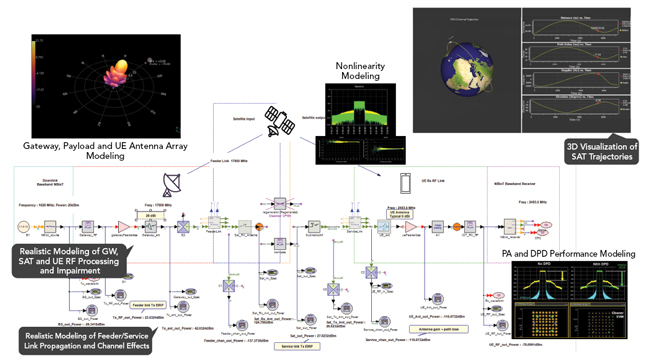
Figure 5 Example illustration of NTN link modeling with satellite trajectories.
New RF and Antenna Technologies
The evolution toward 6G is driving advances in RF and antenna technologies to support sub-THz operation, ultra-high data rates and integrated sensing. Emerging semiconductor technologies such as InP HEMTs, GaN-on-SiC, SiGe BiCMOS and CMOS-SOI enable efficient high frequency amplification, while architectures like Doherty and distributed amplifiers, as well as digitally controlled beamforming PAs, enhance efficiency and scalability in massive arrays. At the same time, advanced CMOS nodes and packaging innovations such as antenna-in-package and system on chip (SoC) integration are enabling tighter RF digital integration, reduced losses and agile beamforming for applications such as low-latency links and holographic communication. To design these systems, workflows increasingly combine circuit, electromagnetic (EM) and system-level modeling with AI/ML and digital twins.
SystemVue, integrated with EM solvers and test instruments, supports accurate modeling of RF chains, phased arrays and impairments, accelerating convergence, improving performance prediction and enabling 6G designs. Teams can accelerate 6G RF and antenna development by creating a unified RF digital twin that bridges circuit-level accuracy with system-level validation. It supports advanced transistor and amplifier technologies through integration with Keysight ADS and EM tools, such as RFPro, while enabling array-aware modeling for complex antennas and RIS, including beamforming, phase/gain quantization and coupling analysis. Figure 6 illustrates an example of this in the modeling of a hybrid beamforming transmitter. With capabilities such as DPD, phased-array calibration, AI-assisted optimization and hardware-in-the-loop workflows, teams can streamline co-design of RF front-ends and control logic. Its scalable phased-array engine simplifies massive architectures by automatically abstracting single-chain models into thousands of paths, paired with 3D beam visualization and predefined metrics for rapid insight. By combining measured data, EM models and high performance computing processing, teams can create workflows essential for designing and validating next-generation RF systems.
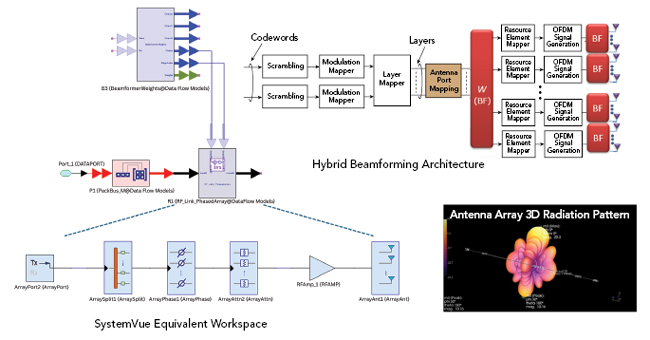
Figure 6 Virtual modeling of massive MIMO RF and antenna systems.
Full-Duplex Systems
Early progress in full-duplex and sub-band full-duplex (SBFD) schemes shows promise to increase spectral efficiency and reduce latency by enabling simultaneous transmission and reception on the same channel. While full-duplex requires extremely robust self-interference cancellation (over 100 dB), SBFD offers a practical alternative by separating uplink and downlink into different sub-bands, easing interference cancellation requirements while still supporting bidirectional or joint sensing-communication operations. SBFD becomes especially valuable in dense deployments and monostatic ISAC scenarios where transmitter leakage can block weak sensing signals. SystemVue provides an environment for modeling and validating duplexing schemes under realistic impairments, including PA nonlinearity, phase noise and I/Q imbalance, while supporting sub-band partitioning, SIC algorithm simulation and hardware-in-the-loop validation. These capabilities enable engineers to evaluate trade-offs and optimize full-duplex and SBFD designs for practical 6G deployment (see Figure 7).
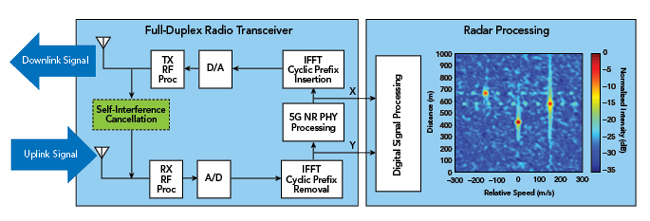
Figure 7 Full-duplex monostatic sensing at a base station.
RF Digital Twin
A digital twin is a dynamic, virtual replica of a physical system that mirrors real-world behavior using high-fidelity models informed by live or measured data, enabling predictive analysis, optimization and early fault detection. For 6G RF and antenna systems, effective digital twins must capture nonlinearities, noise, coupling and channel impairments such as Doppler and interference, while supporting co-simulation across circuit, system and propagation domains. SystemVue offers a robust environment for implementing RF digital twins, delivering near-circuit-level accuracy for signal chains, phased arrays and propagation effects. It integrates with EM tools and test instruments to ensure simulated results align with measured performance. By bridging design and hardware-in-the-loop validation, a digital twin enables engineers to accelerate prototyping, enhance energy efficiency and confidently optimize complex 6G technologies, including sub-THz operation, massive MIMO and RIS. Figure 8 provides an example of a 6G digital twin workflow, which includes the accurate modeling of beamformers, splitters, PCB trace layouts and commercial RFICs. These virtual designs are validated using measured data, such as radiation patterns, gain, EVM and noise density, ensuring that simulation results closely correlate with physical performance.
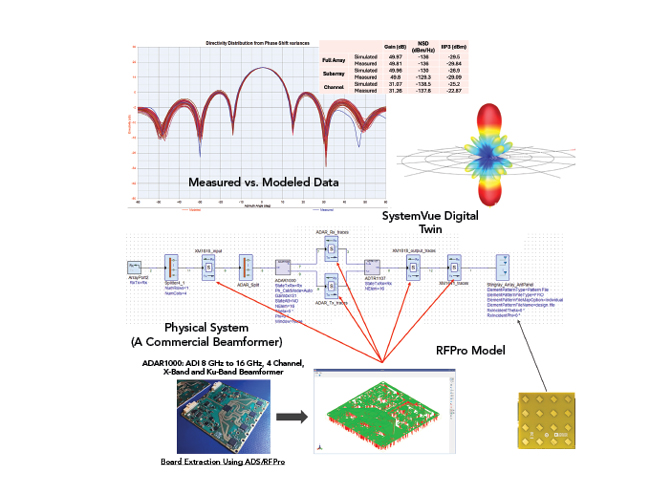
Figure 8 Example comparison of a physical circuit and its digital replica.
AI-Based PA Modeling and Linearization
Artificial neural network (ANN)-based PA modeling and DPD provide an advanced method for modeling and linearizing RF PAs in 5G/6G, surpassing traditional approaches like memory polynomials or Volterra series in handling wide bandwidths, memory effects and dynamic impairments. By training on input–output signal pairs from measured or simulated PA data, ANNs learn the inverse nonlinear behavior of the amplifier and apply real-time predistortion on FPGA or DSP hardware, compensating for gain compression, AM/AM and AM/PM distortion and environmental variations through adaptive learning. AI also helps crest factor reduction intelligently suppress peaks while preserving spectral integrity, and AI-enhanced envelope tracking (ET) improves efficiency by dynamically adjusting the PA supply voltage, with ANN models compensating for the added nonlinearities of ET-enabled PAs. A digital twin integrates these AI-based methods with co-simulation, hardware-in-the-loop validation and closed-loop training, enabling spectrally clean transmitter designs for next-generation wireless systems.
LEADING THE TRANSITION TO 6G
Through simulation, testing and collaboration with global partners and 3GPP, Keysight is helping shape 6G for commercial readiness around 2030. The transition to 6G demands holistic, end-to-end system design, where advanced simulation tools bridge the gap between concept and deployment. Keysight’s SystemVue provides a system design platform, delivering high-fidelity modeling, AI-assisted optimization and hardware-in-the-loop validation to accelerate innovation while reducing risk and cost. By supporting key 6G technologies such as ISAC, RIS, NTN and sub-THz RF front-ends, SystemVue serves as a powerful RF digital twin that captures real-world performance. With circuit-level accuracy, impairment modeling and AI/ML-driven workflows, it empowers designers to make informed trade-offs, enabling the development of scalable, reliable and sustainable 6G systems.
References
- “6G System Design: Realistic Modeling, Simulation and Verification of Next Generation Wireless Systems,” Keysight, Whitepaper, June 2025, Web: https://www.keysight.com/us/en/assets/3125-1338/white-papers/6G-System-Design.pdf.
- SystemVue System-Level Baseband and RF Modeling Product Page, Web: https://www.keysight.com/us/en/products/software/pathwave-design-software/pathwave-system-design-software.html.