


In the pursuit of higher performance and greater efficiency, modern electronic systems face an increasingly complex challenge: electromagnetic interference (EMI). As devices become more sophisticated and densely packed, the risk of EMI increases. Signal integrity, once a manageable concern, now demands innovative solutions that can keep pace with evolving technology while meeting stringent constraints on weight, flexibility and environmental resilience.
This convergence of challenges has sparked a fundamental reevaluation of EMI shielding technologies, driving engineers to seek solutions that transcend the limitations of conventional approaches while maintaining superior performance. “We are seeing electromagnetic environments that are orders of magnitude more complex than what we dealt with even a decade ago,” says Ralph Schafer, Technical Director, Defense and Aerospace Electronics at Micro-Coax. “The traditional copper braids that served us well in legacy systems simply cannot keep up with the performance demands of modern avionics while meeting our weight and flexibility requirements.” However, advancements in materials science have led to the development of high performance alternatives that are quickly reimagining the future of EMI shielding.
UNDERSTANDING TRADITIONAL METAL BRAIDS
For decades, copper and tinned copper braids have served as the backbone of EMI shielding solutions across countless applications. Their widespread adoption stems from a combination of electrical conductivity, mechanical strength and cost-effectiveness that has made them the frequent choice for engineers worldwide.
Traditional metal braids function by creating a conductive pathway that intercepts electromagnetic fields and redirects them to ground, effectively creating a Faraday cage around sensitive conductors. The interwoven structure provides multiple current paths, ensuring redundancy and maintaining shielding effectiveness even when individual strands fail. This redundancy, combined with the conductivity of copper, has made metal braids particularly effective at lower frequencies.
The manufacturing processes for copper braids are well-established and widely available, contributing to their cost-effectiveness and reliable supply chain. Standard braiding equipment can produce consistent, high-quality shields with predictable electrical and mechanical properties. Additionally, installation procedures are straightforward, requiring only basic tools and techniques.
However, the very properties that made copper braids successful in earlier generations of technology now present significant limitations in modern applications. The density of copper, approximately 8.96 grams per cubic centimeter, becomes a critical constraint when system designers face strict weight budgets. Mechanical properties present another challenge, as copper braids exhibit “mechanical memory,” a tendency to retain shape after bending that can create stress concentrations in underlying conductors. This rigidity not only restricts design flexibility but can also shorten a system’s lifespan in dynamic environments.
MODERN EMI ENVIRONMENTS
Today’s electromagnetic environment presents challenges that extend beyond the capabilities for which traditional shielding was initially designed. The proliferation of electronic systems operating at higher frequencies has created a complex interference landscape where multiple signals compete for spectrum space within increasingly compact packages. This complex electromagnetic environment leads to a host of problems, including signal degradation, data corruption and, in some cases, system failure. Moreover, the push for smaller, lighter and more powerful electronics means that devices are often packed closer together, exacerbating the potential for crosstalk and unwanted electromagnetic coupling.
High frequency applications reveal fundamental limitations in traditional metal braids. As frequency increases, the skin effect becomes more pronounced, confining current flow to the surface of conductors. The braided structure itself can create apertures that allow high frequency energy to penetrate the shield, a phenomenon known as “windowing” that becomes more problematic as operating frequencies climb into the GHz range.
Weight constraints in commercial and defense aerospace applications have intensified. “In commercial aviation, we are literally counting grams,” notes Schafer. “When you multiply a few hundred grams of weight savings per harness across an entire aircraft, you are looking at significant fuel savings over the aircraft’s operational lifetime. The environmental and economic benefits are impossible to ignore.”
WHERE TRADITIONAL SOLUTIONS FALL SHORT
Engineering analysis reveals several critical areas where traditional metal braids struggle to meet modern performance requirements. Flexibility represents the most significant limitation, particularly in applications requiring frequent movement or tight packaging constraints. Because copper is a soft metal, thicker strands are required for strength in a standard copper braid. The necessary thickness adds weight to the braid and reduces its flexibility.
Installation complexity adds another layer of difficulty. Traditional metal braids require specialized tools for cutting and termination, and their inherent stiffness can complicate routing through tight spaces or around complex geometries. The “mechanical memory” of copper braids means they retain bending stress, potentially creating strain on delicate cable assemblies.
DRIVING PROGRESS WITH NEW MATERIALS
The limitations of traditional metal braids have driven intensive research into advanced materials that can deliver superior EMI shielding while addressing weight, flexibility and environmental challenges. “The breakthrough came when we realized we did not need solid metal throughout the entire cross-section,” says Schafer. “By applying conductive coatings to high-strength polymer fibers, we could achieve the electrical performance of metals while maintaining the flexibility and weight advantages of textiles.”
Aramid fibers, particularly DuPont™ Kevlar®, have emerged as promising base materials for next-generation shielding solutions. These synthetic polymers offer exceptional strength-to-weight ratios, approximately five times stronger than steel by weight, while maintaining flexibility and resistance to environmental degradation. The fibrous structure of aramids provides an ideal substrate for metallic coatings that can deliver the conductivity required for EMI shielding.
Metal plating technologies have evolved to enable the deposition of conductive layers on polymer substrates. Silver and nickel coatings can be applied to aramid fibers through various processes, creating composite materials that combine the lightweight, flexible properties of the polymer core with the electrical conductivity of the metallic coating.
The ultra-fine filament structure achievable with advanced composite materials offers significant advantages for EMI shielding applications. Finer filaments can be packed more densely, increasing the surface area available for improving shielding effectiveness at high frequencies. The increased surface-to-volume ratio enhances the skin effect benefits while maintaining structural integrity.
ENVIRONMENTAL AND OPERATIONAL ADVANTAGES
Advanced composite shielding materials offer significant advantages in environmental resistance and operational performance. The polymer core provides inherent resistance to corrosion, eliminating many of the degradation mechanisms that affect traditional metal braids. This resistance is particularly valuable in naval applications, where salt spray and humidity create hostile environments for conventional metals.
Temperature performance represents another area where composite materials excel. While copper braids can experience significant expansion and contraction with temperature changes, composite materials maintain more stable dimensions across temperature ranges. This stability is crucial in aerospace applications where systems may experience temperature excursions from -110°C to +150°C or higher.

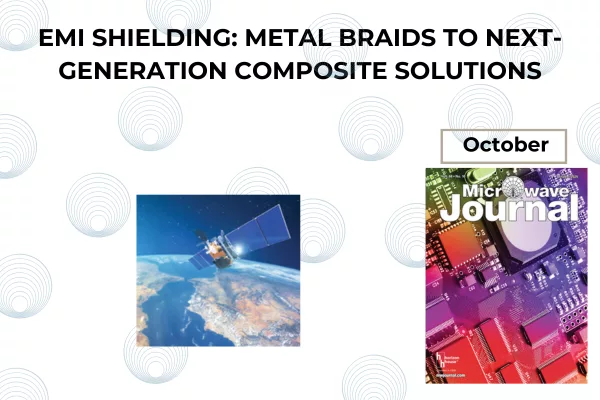
Figure 1 Artist’s rendition of a satellite.
The outgassing characteristics of advanced composite materials make them suitable for space applications (see Figure 1), where vacuum conditions can cause traditional materials to release gases that contaminate sensitive optical systems. Materials engineered to meet ASTM E-595 requirements for low outgassing can maintain their properties in the vacuum environment of space while avoiding contamination issues.
MEETING MODERN DEMANDS FOR EMI SHIELDING
Looking ahead, the evolution of EMI shielding technology appears poised to continue along multiple parallel paths. Materials science advances will yield new composite materials with even better performance characteristics. Manufacturing technology will continue to evolve, potentially enabling the production of custom-engineered shielding materials optimized for specific applications. Additive manufacturing techniques may allow for the creation of complex three-dimensional shielding structures that would be impossible to achieve using traditional braiding techniques.
The integration of smart materials and sensing capabilities into EMI shielding represents another frontier for innovation. Shielding materials that can monitor their own performance, detect damage or adapt to changing electromagnetic environments could revolutionize how we approach EMI management in critical systems.
THE FUTURE OF EMI SHIELDING
The transition from traditional metal braids to advanced composite shielding materials marks a fundamental evolution in EMI management. While copper braids remain cost-effective for legacy systems, the demanding requirements of aerospace, defense and advanced electronics necessitate materials that transcend conventional limitations.
Metal-clad aramid fiber systems like ARACON® fiber from Micro-Coax, as shown in Figure 2, deliver the electrical performance of copper with improvements in weight, flex life and environmental resistance, as demonstrated in Figure 3. These materials transform system design by eliminating the trade-offs between EMI shielding effectiveness and mechanical performance that have constrained engineers for decades.
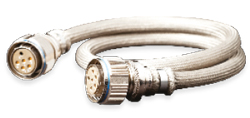
Figure 2 ARACON cable from Micro-Coax.

Figure 3 Shielding data for ARACON versus copper braids.
As electromagnetic environments increase in complexity, advanced composite shielding materials provide the performance characteristics essential for next-generation systems, enabling design innovations previously impossible with traditional approaches.
Kevlar® is a registered trademark of DuPont. DuPont™ is a trademark of DuPont.
ARACON® is a registered trademark of Amphenol CIT.