


As military and avionics systems continue to evolve, the demand for higher frequencies and greater density within smaller spaces drives a major shift in RF interconnect technology. Modern aircraft and defense systems require components that are smaller, lighter and more capable of supporting these increasingly high frequencies, all while maintaining performance in extreme environments. At the same time, avionics platforms are being pushed to the limits, with airframes now supporting not just a dozen antennas, but sometimes hundreds of antenna elements. As signal paths multiply and systems push into mmWave frequencies beyond 30 GHz, traditional connectors are no longer sufficient. They present size, weight and installation challenges in modern mission-critical environments operating in the microwave frequency range. This makes the demand for rugged, scalable interconnects urgent to support today’s high performance defense technologies.
To meet these growing demands, especially in electronic warfare, radar, surveillance and countermeasure systems, multiport connectors have emerged as a compact, lightweight and high performance alternative. These systems play a role in defense and situational awareness, where real-time data transmission, signal integrity and system reliability are non-negotiable. Multiport connectors offer improved EMI/EMC shielding, reduce installation errors and simplify maintenance, which are important factors as platforms become more modular and operate at higher frequencies.
SWAP DEMANDS OF MODERN RF SYSTEMS
Rising operating frequencies and stringent space requirements drive the ever-evolving RF interconnect requirements across mission-critical systems in avionics and space industries. These systems demand high-density, miniaturized connectors that maintain signal integrity and reliability in extreme environments. Design considerations in this evolution are size, weight and power (SWaP). RF components must meet these requirements by delivering high performance in smaller, lighter and more power-efficient formats, all while maintaining reliability in harsh, mission-critical environments.
The focus on SWaP is driven by the need to optimize today’s airframe systems. Smaller and lighter components reduce overall system weight, enabling increased payload capacity, longer mission durations and improved platform agility. These components must meet complex electrical requirements such as low signal loss and precise impedance matching, along with stringent mechanical requirements for shock, vibration and thermal cycling. Additionally, they must perform reliably in extreme environmental conditions, ranging from high-altitude temperature variations to EMI exposure.
EVOLUTION TOWARD LIGHTWEIGHT SOLUTIONS
The growing emphasis on SWaP optimization has transformed coaxial cable design, as demonstrated by Times Microwave Systems’ evolution from MilTech® to MilTech Light-Weight assemblies. This change provided weight savings without compromising signal integrity or environmental resilience and this same progression must occur with connectors. By transitioning from traditional connectors to advanced solutions, system designers can achieve the performance required for high frequency applications while maintaining reliable electrical and mechanical connections in tight spaces. This evolution demonstrates the importance of advancing connector technologies alongside the systems they support, providing the lightweight and small form factors essential to meet the high-density requirements of modern airframes and avionics systems.
LIMITATIONS OF TRADITIONAL RF CONNECTORS
Traditional RF connectors, such as threaded designs, have served reliably for decades across military and aerospace applications. Their durability and mechanical stability continue to make them a strong choice in many scenarios. However, as defense and avionics systems evolve to operate at higher frequencies while simultaneously shrinking in size, these legacy connectors are increasingly pushed beyond their original design limits.
Operating at high frequencies introduces several signal integrity challenges. Shorter wavelengths place greater demands on connector design to maintain signal integrity, demanding tight dimensional tolerances to minimize reflections and losses. Impedance mismatches become more detrimental as frequencies rise, where even minor imperfections represent a larger proportion of the signal’s wavelength. Signal attenuation, or insertion loss, also increases at higher frequencies due to the skin effect, which causes current to concentrate near the surface of the conductor. This results in higher resistance and greater energy loss along the transmission path.
Beyond electrical limitations, traditional connectors pose mechanical and integration challenges in high-density environments. Threaded coupling mechanisms, though secure, require manual engagement for each connection. In systems with dozens or even hundreds of interconnects, this can lead to longer installation times, increased maintenance complexity and a higher risk of misconnection. Additionally, the physical footprint and cumulative weight of multiple threaded connectors can become a barrier to meeting modern SWaP requirements.
As next-generation military and avionics platforms continue to increase in complexity by supporting more antennas, sensors and data paths at target frequency ranges approaching 40 GHz, the limitations of traditional RF connectors become apparent. In these environments, advanced connector technologies deliver improved electrical performance, reduced size and weight and simplified installation, making them better suited to the high frequency, high-density demands of modern systems. With applications ranging from fighter jets to unmanned aerial vehicles, these connectors enable smaller, lighter and more resilient avionics systems.
MULTIPORT CONNECTORS: KEY TO MODERN AVIONICS

Figure 1 Examples of multiport connectors.
A single multiport connector consolidates multiple connections into one unit, as exemplified in Figure 1. Multiport connectors contribute to a compact system design. Having fewer individual connectors contributes to weight savings and reduces installation complexity. Users can mate multiple cable assemblies at once instead of threading individual connectors on each cable while still maintaining key performance characteristics like vibration handling.
Other key considerations for connectors in these environments include:
- Weight: Advances in fuel efficiency rely on weight reduction and the evolution of frequency requirements is pushing the development of increasingly lightweight, small and high-precision RF technologies.
- Density: The increase of antenna arrays in military avionics necessitates a corresponding increase in electronic box deployments and interconnections, concurrent with the rise in operating frequencies and resultant reduction in wavelength to demand advanced, high-density interconnect technologies.
- Shock and vibration: Microphonic noise, arising from vibrational movement in airborne antenna connectors, can impact RF signal integrity. Achieving robust performance requires minimizing cable-connector clearances to enhance vibration resilience, with spring-loaded interfaces providing a solution to reduce noise and prevent contact plating degradation, thereby improving electrical and mechanical characteristics.
- Temperature: Temperature requirements stem from high altitudes, speeds and frequencies and make material considerations more complex.
- Maintenance and access: Aircraft exterior antennas are susceptible to damage and demand quick repairs. Unfortunately, their accessibility within avionics systems is often poor, leading to complex and lengthy maintenance.
OVERCOMING CHALLENGES WITH MULTIPORT SOLUTIONS
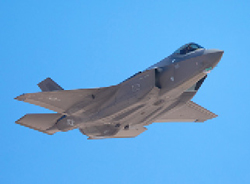
Figure 2 Example of an F-35.
To address these mounting challenges, Times Microwave Systems developed a family of multiport connector systems, replacing threaded connectors with a spring-loaded push-on connection. Multiport connectors like Times Microwave’s M8® and Mini Multiport offer a compact alternative to threaded connectors, enabling higher cable density and reducing size and weight to meet SWaP goals. Keyed configurations improve installation accuracy and minimize the risk of misconnection. Designed for high-vibration environments, they deliver performance with EMI/EMC shielding. Unlike traditional connectors, they also support coax, fiber and octo-contact options, making them a versatile solution for modern systems, such as the F-35 shown in Figure 2.
Times’ product family evolution reflects ongoing innovation in modular RF technology, with newer variants engineered to address specific application challenges while ensuring mission-critical performance in demanding environments.
THE FUTURE OF RF INTERCONNECTS
Today, tens of thousands of multiport solutions serve on mission-critical platforms, with hundreds of thousands of flight hours logged in demanding environments — from supersonic fighters to naval aircraft. These compact, rugged connectors have redefined RF interconnects by enhancing EMI shielding, simplifying installation and maximizing space efficiency.
As military and aerospace systems push for smaller, lighter and higher performing components, traditional connectors can no longer meet modern SWaP, frequency and reliability demands. Multiport connector solutions — like the M8 — have emerged as enablers of next-generation performance, offering a compact, rugged and scalable approach to RF connectivity. By simplifying installation, improving signal integrity and withstanding harsh environmental conditions, these connectors help defense and aerospace platforms maintain peak operational readiness and performance.
With over three decades of innovation, Times Microwave Systems continues to provide high frequency RF connectivity, delivering reliable, future-ready solutions that keep defense and aerospace platforms operating at peak performance.