

The rapid advancement of RF systems is being driven by the convergence of software-defined radio (SDR) and RF system-on-chip (SoC) technologies. Innovations such as AMD’s Versal RF series enable the digitization and miniaturization of RF systems, transforming radar and satellite communications (satcom). Slipstream Design has addressed key challenges in RF miniaturization and digitalization by integrating sensing and communication modes and minimizing size, weight, power and cost (SWaP-C) configurations. Slipstream Design’s ASTRO platform enhances digital beamforming and leverages advanced materials and digital techniques for optimized performance.
SDR AND SOC IN RF SYSTEM MINIATURIZATION
SDR has revolutionized RF design by shifting signal processing from analog hardware to digital software. This increases flexibility and reduces the reliance on hardware. AMD’s RFSoC technology integrates high speed data converters with programmable logic and embedded processors, which helps streamline RF system design. With AMD’s Versal RF series SoC solution, SDR enables compact, reconfigurable and efficient RF systems for radar, satcom and electronic warfare (EW) applications.

Figure 1 The ASTRO Nova direct RF processor module.
Miniaturization is critical as demand grows for space-based and airborne RF systems. Traditional designs, reliant on bulky analog components, require significant space and power. SDR and SoC integration embed processing, digital filtering and beamforming functions within a single chip. This reduces size while enhancing efficiency and adaptability. Digital RF architectures also enable software-controlled hardware reconfigurability, which is crucial for dynamic military and aerospace applications. Slipstream Design’s ASTRO platform embodies this approach, combining SDR versatility with an optimized RF front-end.
ASTRO: A TECHNICAL OVERVIEW
Built on AMD’s Gen 3 RFSoC, ASTRO is a compact, direct RF processor module optimized for accelerated digital beamforming. It is designed by radar engineers to ensure tactical superiority through rapid mode switching between radar (beamforming and steering) and communication. ASTRO features reconfigurable clocking for onboard or external RF sample clocks along with a multichannel, multimodule sync controller. It also features eight Tx (10 GSPS digital-to-analog converters) and eight Rx (5 GSPS analog-to-digital converters). Harnessing AMD’s RFSoC within an FPGA Mezzanine Card (FMC) form factor of 96 × 69 × 16.6 mm that incorporates high PCB layer counts and optimizes RF transitions achieves a low SWaP SDR platform with superior RF performance. Figure 1 shows a view of the ASTRO Nova module with some functional elements expanded for better clarity.
OVERCOMING RF FRONT-END CHALLENGES
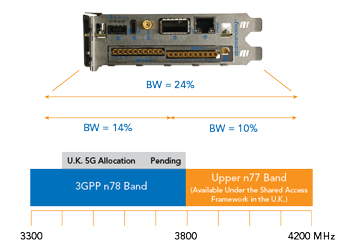
Figure 2 Wide bandwidth capability of the ASTRO Nova module.
The RF front-end, situated ahead of the SDR, has traditionally been fixed and static. However, this is at odds with the flexibility of the SDR. Advances in circuit techniques and the adoption of wideband GaN devices are helping RF front-ends unleash the power of SDR in real-world systems. Figure 2 shows the fully-assembled ASTRO Nova module and its ability to operate over the 3300 to 4200 MHz frequency range, encompassing the n78 and upper n77 bands.
Several key challenges must be addressed:
Wideband SDR versus narrowband and fixed RF: SDRs operate across wide bandwidths, while front-end components are typically optimized for specific, narrower bands. Tunable components are essential for wideband efficiency.
Dynamic impedance matching: SDRs frequently adjust frequencies and bandwidths, which requires real-time impedance tuning of power amplifiers (PAs).
Linearity versus efficiency: Maintaining efficiency when using complex modulation schemes.
Interference and filtering: Wideband SDRs are susceptible to interference, creating the need for adaptive filtering solutions.
Thermal management: SDRs and RF circuitry generate heat, demanding effective cooling strategies.
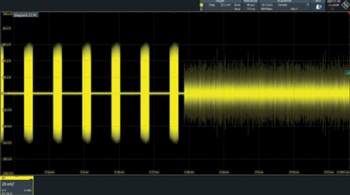
Figure 3 ASTRO Nova switching between radar and OFDM waveforms.
There is a gap between the agility of an SDR and the limitations of RF front-ends. Tunable RF filters, reconfigurable matching networks and AI-driven adaptive control are being developed to bridge this gap. GaN-based PAs using digital load modulation and digitally-controlled front-ends are being developed to improve efficiency and adaptability.
The ASTRO Nova exemplifies this innovation, leveraging GaN technologies for enhanced wideband operation. Traditionally, sensing and communications applications required separate RF hardware. Integrating SoC and digitally-controlled GaN technologies enables seamless multifunctional operation, which allows a single hardware variant to switch between 5G New Radio waveforms and radar pulse generation. As an example of this capability, Figure 3 shows the output when the ASTRO Nova switches between a pulsed radar chip generation and an orthogonal frequency-division multiplexing (OFDM) waveform generation.
THE EVOLUTION OF RF FRONT-END SUBSYSTEMS
GaN technology offers superior power density, efficiency and thermal performance compared to silicon-based alternatives. These features make the technology ideal for compact, high-power RF solutions in space and airborne applications. Digital optimization further enhances RF front-end efficiency. Real-time digital control of PAs and filters reduces manual interventions and improves system agility, crucial in satcom where remote reconfigurability is essential. Figure 4 shows the functional diagram of the ASTRO Nova.
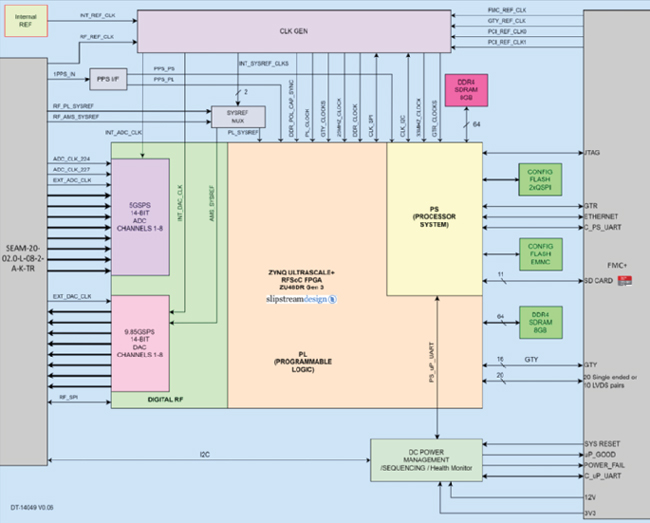
Figure 4 ASTRO Nova functional block diagram.
THE FUTURE OF NEXT-GENERATION RF SYSTEMS
The integration of SDR and SoC technologies is redefining radar, satcom and EW applications. Miniaturization, digitalization and advanced materials drive highly efficient, adaptable and cost-effective RF solutions. Fully digital RF architectures enhance system flexibility, enabling rapid prototyping, iterative improvements and seamless software updates. Combining sensing and communication functions within compact platforms will drive advancements in applications ranging from autonomous vehicles to deep-space exploration.
Slipstream Design is at the forefront of these innovations, leveraging GaN PAs and digitally optimized RF front-ends to meet evolving demands. As SDR, SoC and GaN technologies advance, they will shape the next wave of RF system innovation. These developments will enhance performance, efficiency and adaptability in an increasingly complex and interconnected world.
Slipstream Design
Shipley, U.K.
https://slipstream-design.co.uk/