


Space is big, mindbogglingly big even, but suitable orbits around Earth are in limited supply. Due to increased congestion from satellites, traffic in space is becoming an issue. Already, there are thousands of operational satellites and hundreds of millions of pieces of space debris of various sizes. Thousands more satellites are expected to add to the situation as the offer of and demand for new and improved services increases. These new services range from communications, financial transactions, urban planning and mobility to transportation, national security and environmental monitoring. Unless existing and planned traffic and debris are managed better and soon, the challenges of space situational awareness (SSA) will endanger the very use of space. The sovereignty, societies and economies of many nations rely upon this critical, space-based infrastructure. What needs to be done is clear: eliminate the creation of new debris, improve the tracking and characterization of existing active satellites and debris and remediate debris that has already been generated. To get a better understanding of this situation, this article describes the most pressing issues, challenges to be solved and recent initiatives for SSA.
INCREASINGLY CONGESTED SPACE
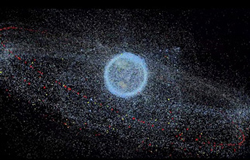
Figure 1 AI representation of space congestion. Source: Neuraspace.
There are about 13,000 satellites in orbit, 10,000 of which are active. With the announced mega constellations, experts estimate that there will be 60,000 to 100,000 active satellites in space a decade from now. Those numbers only consider satellites. The consensus is that there are 30,000 unique pieces of space debris orbiting the Earth, including satellites, which are larger than 10 cm. If the minimum size of the debris considered drops to larger than 1 cm, the number increases to 670,000. Including debris larger than 1 mm, still large enough to damage orbiting satellites, the number of pieces of debris in orbit around the Earth is estimated to be more than 170 million. Figure 1 shows an artificial intelligence (AI)-generated image that puts the number of satellites and the amount of space debris in different orbits and orbital slots into context.
These numbers are increasing every year and any one object poses the threat of a potential conjunction. In space, a “conjunction” refers to a situation where two satellites or a satellite and a piece of space debris appear to be very close to each other in space, meaning they are passing within a relatively small distance, potentially raising the risk of a collision if not properly managed. All these conjunctions carry risk with the implications for operational efforts as well as the threat of loss of service or assets.
Spacecraft fragmentation events, collision events and anti-satellite weapons (ASATs) are by far the most significant contributors to orbital space debris. While these events are localized when they occur, they do not remain stationary and they begin to affect adjacent orbital regimes as time progresses. The effects of solar activity can accentuate these challenges. An increase in solar activity decreases atmospheric density. With lower density, there is less drag on the debris and the time to re-entry increases. This effect slows the re-entry process and makes the debris situation even more acute. This increases the likelihood of a conjunction, making the problem of the debris field even more acute. According to “The Satellite Situation Report” from Space-Track,1 an estimated 22,723 conjunctions occurred from May 30, 2023 to June 30, 2023.
This concern extends beyond debris interacting with satellites. In June 2023, SpaceX filed a report with the FCC stating that they conducted more than 25,000 maneuvers of its Starlink constellation between December 1, 2022 and May 31, 2023. This equates to approximately 12 maneuvers per satellite. In addition to actions taken to avoid identified debris, these numbers include a substantial number of maneuvers for Starlink-on-Starlink conjunctions. The Starlink example is for one operator and constellation, but the number of maneuvers illustrates the increasingly important need for operator-to-operator coordination. Figure 2 shows a Neuraspace slide that summarizes some of the data, along with the challenges that describe congestion in space.

Figure 2 Space is a congested environment. Source: Neuraspace.
INCOMPLETE DATA OF OBJECTS IN SPACE
To ensure orbits are safe, it is crucial to have accurate and comprehensive data for all the objects in space. This allows objects in orbit to be monitored, mapped and cataloged. Having this data will enable the development of improved methodologies and algorithms for nowcasting and forecasting the behavior of objects in space.
These activities are underway, but many of the current solutions rely on manual processes, traditional technologies and sensors. The concern in the industry is that these algorithms will not cope with the projected 15x increase in space assets. Plans for this rapid increase in space assets must be tempered by the fact that existing data sets are incomplete and there are millions of pieces of debris smaller than 10 cm that are not being tracked but pose a threat to satellites.
The solution to this challenge is to expand the catalog of tracked objects. However, the scale and speed needed for this task require additional data sources. Even if those data sources are made available, the effort will also need to coordinate and effectively process data from large-scale networks of observation systems on the ground and in space. The evidence that this threat has risen to national and global levels is apparent simply by seeing the increasing number of space nations who are contributing to improve SSA.
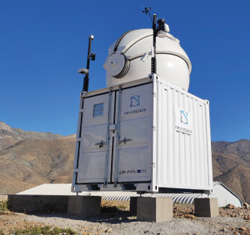
Figure 3 Neuraspace satellite tracking antenna. Source: Neuraspace.
To aid in these efforts, Neuraspace installed and activated the optical telescope in Chile, shown in Figure 3. This new telescope expands Neuraspace’s satellite tracking coverage to both hemispheres through two telescopes, in addition to data from partner networks. This new telescope can acquire more than one image per second for low orbits and track objects as small as 10 cm in diameter. The two telescopes reduce the uncertainty level for positional errors to less than 20 meters within a single orbital revolution, outperforming the 2023 ESA Space Debris Mitigation Requirement by a factor of five.
The measurement output is impressive. Both telescopes support horizon-to-horizon multi-orbit tracking, allowing rapid target switching. They produce measurements ranging from a few seconds to tens of minutes, enabling scalable data acquisition for multiple purposes such as collision avoidance, debris tracking, pattern-of-life analysis and launch and early orbit phase. This new telescope is expected to produce more than 300,000 measurements of space objects in orbits from low Earth orbit to geostationary orbit within the first three months of operations.
However, with the scope of the issue, it is unlikely that a single entity will be able to track all the objects in space. Allowing satellite operators to plan maneuvers and avoid risky conjunctions based on existing and new data from a synthesis of these diverse sources is a step toward more comprehensive conjunction screening. This will generate a vast amount of information that has to be analyzed pre-launch. The results of this analysis will be used to determine safe lift-off windows for launch vehicles to avoid collisions, the proximity of space objects to operational spacecraft, the algorithm to execute collision avoidance maneuvers and constellation management, including end-of-life disposal.
TECHNOLOGICAL ASPECTS AND METHODS OF KEEPING SPACE SUSTAINABLE
The space industry is starting to demonstrate the commercial and technological viability of space sustainability by developing systems to address active debris removal, collision avoidance, hardening and operational lifetime extensions.
Manufacturing Measures
Addressing ways to improve debris avoidance should start long before the satellite is in orbit. Building “space-hardened” satellites and equipping all satellites, including CubeSats, with propulsion systems is a measure that will help satellites avoid debris. CubeSats make up a sizable portion of the predicted increase in space assets and they have not traditionally had a means of propulsion. More focus on quality assurance and reducing the number of objects that are released as launch and early operations unfold are additional measures that could help mitigate the challenge if implemented.
Collision Avoidance
It will be impossible for humans to collect, organize and analyze the data to make decisions in real-time without relying on automation that makes use of AI and machine learning (ML) capabilities. AI and ML are powerful tools for identifying patterns where classical methods fall short. Explainable AI will enable the satellite industry to process data, predict object behavior, forecast conjunction-related parameters and support smart decision-making. Having access to the data and finding patterns can help in effectively managing collisions, improving maneuver planning, especially for swarm and constellation satellites and making space activities safer, more sustainable and more efficient. To address some of these challenges, Neuraspace is integrating the improved satellite tracking and analysis capabilities into their Space Traffic Management (STM) Platform, which incorporates AI and ML to provide services such as conjunction monitoring and collision avoidance to over 400 satellites. Figure 4 shows the output of a conjunction analysis from the STM platform. To underscore these trends, RAND, the nonprofit, nonpartisan research organization, has reported that satellite operators are starting to realize the benefits of commercial STM systems as a means of keeping their spacecraft operational while saving time and cost.2
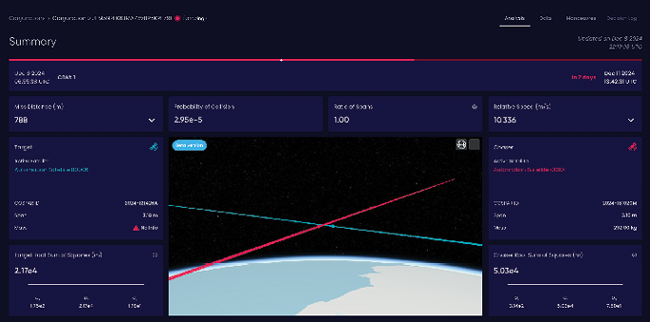
Figure 4 Conjunction details analysis display. Source: Neuraspace.
Active and Passive Debris Removal
The first two topic areas have addressed how to reduce the likelihood of generating new debris and how to avoid existing debris. However, removing defunct satellites or other larger pieces of debris that do not have de-orbiting capabilities requires active debris removal capabilities. Active debris removal means a spacecraft must be able to safely approach and then capture an orbiting object and actively deorbit the object. The industry had been conducting technology developments for active debris removal and on-orbit servicing for decades. It is only recently that developments in the field of active debris removal have begun to accelerate, with contracts placed by governments and space agencies to prove the viability of being able to remove debris.
The technologies under consideration and in various stages of development and testing for capturing space debris include robotic arms and end effectors, tethered harpoons, electrodynamic tethers, lasers, magnetism and tethered net systems. Before a capture technique can be implemented, there are a number of significant issues to solve. These issues include understanding the object to be captured and its behavior, along with the best way to approach and conduct close-proximity operations safely. For instance, the approach and close-proximity challenges may entail developing algorithms to match rotation and spin rates.
At present, Europe and Japan have been leading these efforts, with industrial players stepping up. Even more significantly, these efforts are now partially backed by venture capital funds, showing the possibility of a workable business model with these efforts. While removing all objects from orbit would be ideal, that does not seem practical with the limited capabilities and resources within the industry. However, it has been widely reported that concentrating on the 50 most statistically concerning low Earth orbit objects and planning to remove these objects at a rate of at least three per year will yield substantial benefits for the satellite industry.
End-of-Life Measures
For low Earth orbit applications, the industry is exploring and developing several passive debris removal concepts. These include using tethers or drag sails as a means of mitigating end-of-life debris. Other options include on-board de-orbiting kits that can assume control in the case where the spacecraft experiences failures that incapacitate it from de-orbiting.
Extended Lifetime
The concept of extended lifetime is simple to understand, but the implementation is more complicated. Extending the lifetime of a satellite typically involves methods like on-orbit servicing, fuel management optimization and advanced component design. On-orbit services took a first big step toward broader adoption in 2020, when Northrop Grumman Innovation Systems’ MEV-1 spacecraft successfully rendezvoused and docked with the Intelsat 901 satellite. The MEV-1 successfully re-positioned the spacecraft and it has performed station-keeping since.
ECONOMICS OF ORBIT SAFETY
As governments have realized how crucial space systems and the services they provide are for economic growth, national security and scientific research, orbital safety has evolved to become a significant economic factor. Forecasts and growth projections for the space economy vary widely, with revenue forecasts ranging from $1.8 trillion by 2030 to more than $10 trillion by the mid-2030s. Some of the forecast variability depends on what new and emerging market segments are included under the umbrella of the “space market.” Despite the variability, the revenue numbers are significant. The emergence of the “New Space” industry presents a transformative opportunity for non-space activities, unlocking potential across various sectors like agriculture, healthcare, communication and environmental management. By leveraging space innovations, industries far removed from traditional aerospace applications can achieve breakthroughs in efficiency, sustainability and global impact that will foster economic growth and address some of the world’s most pressing challenges. Companies need a coherent space strategy for their continued competitiveness.
This boost to the space economy is reflected in each segment of the space market: manufacturing, launch, operations and services. The emergence of the New Space segment, with its increased exposure to non-space business needs and drivers, increases the pressure for disruptive innovation and increased profitability. Fortune Business Insights projects the global SSA market to grow from $1.97 billion in 2023 to $3.01 billion by 2032.3 According to ResearchandMarkets, the space debris removal market is expected to see growth from $282 million in 2023 to reach $1.77 billion in 2030.4 Analysys Mason estimates the cumulative revenue from satellite refueling will exceed $6 billion between 2023 and 2033.5 Zion Market Research estimates that the global space logistics market size will grow from $5.12 billion in 2023 to reach $21.14 billion by 2032.6 Global space defense and security investments will also see a continued growth trend over the coming decade.
The numbers are impressive, but there are challenges to making these forecasts a reality. This growth of the space safety, security and sustainability market must be driven by companies worldwide, realizing that only by supporting the development of a commercial space safety ecosystem and market can the full innovation potential be unleashed. To take full effect, all these existing and planned initiatives require some overarching governance.
NATIONAL AND INTERNATIONAL REGULATION AND PUBLIC SECTOR FOUNDATIONAL SERVICES
Space sustainability is a sine qua non. It is the responsibility of governments to understand the urgent need to propose and implement regulations into national and international policies and laws. Regulation will play a positive role in fostering a market for space domain awareness (SDA) by establishing clear standards, encouraging data-sharing and setting industry benchmarks for accuracy and reliability.
Recognizing these issues, the last couple of years have seen some new developments. In 2022, the FCC adopted new rules changing the maximum time limit for de-orbiting defunct low Earth orbit satellites from 25 years to five years after their end of mission. The consequences of this ruling became apparent in 2023 when the FCC issued the first fine ever for space debris. U.S. satellite operator Dish had to pay $150,000 for failure to move one of its satellites into a safe orbit. As a direct result, the company’s share price dropped almost four percent that day, reducing the company’s $3 billion valuation by $100 million.
Also in 2023, the U.S. Senate Committee on Commerce, Science and Transportation passed the Orbital Sustainability Act. The same year, ESA published its non-binding Zero Debris Charter. The charter emphasizes the importance of debris tracking and particularly mentions the need for “access to timely and accurate data on space objects down to a size of 5 cm or smaller in low Earth orbit.”
Public sector SDA services like the U.S. Space Force’s Traffic Coordination System for Space and the European Union’s Space Surveillance and Tracking provide foundational data and essential safety services that commercial providers can enhance to offer tailored solutions to government and commercial end-users alike. Space agencies like NASA and ESA have recognized the increasing danger posed by the growing population of objects in space and the inadequacy of legacy systems and are looking for service providers. Regulatory frameworks will further incentivize commercial SDA services. Well-defined regulations will reduce uncertainties, enabling a robust commercial SDA ecosystem.
FINAL COMMENTS AND OUTLOOK
The satellite market is proving to be one of the more dynamic opportunities for hardware and services. The market opportunity is significant, with new mega constellations promising to enable and enhance a full range of services to improve communication, transportation, security, sensing and connectivity applications. Despite the vastness of space, it is becoming increasingly congested with satellites and orbital debris and the rapid expansion of satellite launches will only exacerbate this challenge. This article has discussed some of the issues and challenges surrounding SSA topics, along with some of the solutions that are being developed and implemented. The growing number of players will have profound implications for the future SSA market and the broader space industry. With all the opportunities and challenges, the commercial market of space safety and sustainability is wide open for business.
References
- “The Satellite Situation Report” Space-Track, Web: www.space-track.org.
- B. McClintock, D. C. Ligor, D. McCormick, M. Herron, K. Jukneviciute, T. Van Bibber, K. Feistel, A. Rao, A. Rao, T. Grosso, et al., “The Time for International Space Traffic Management Is Now,” RAND, June 5, 2023, Web: rand.org/pubs/research_briefs/RBA1949-1.html.
- “Space Situational Awareness (SSA) Market Size, Share & Industry Analysis,” Fortune Business Insights, March 2025, Web: https://www.fortunebusinessinsights.com/space-situational-awareness-ssa-market-105446.
- “Space Debris Removal Market Size, Share & Forecast to 2030,” ResearchandMarkets, March 2025, Web: https://www.researchandmarkets.com/report/space-debris-removal.
- D. Kasaboski, “Refuelling Providers Need Strategies to Match Changing Demand for In-orbit Satellite Services,” Analysys Mason, April 2024, Web: analysysmason.com/contentassets/9e0735b31acb4233950b2a5c6e8fdbf5/analysys_mason_refuelling_strategy_change_apr2024_nsi011.pdf.
- “Space Logistics Market Size, Share, Demand, Growth Analysis 2024-2032,” Zion Market Research, March 2024, Web: https://www.zionmarketresearch.com/report/space-logistics-market.