


According to MarketsandMarkets,1 the test and measurement (T&M) equipment market is projected to reach $47.01 billion by 2029, increasing from $38.91 billion in 2024, at a compound annual growth rate (CAGR) of 3.9 percent. T&M equipment are instruments and devices used to analyze, evaluate and verify the performance and quality of mechanical and electronic applications. This equipment is used in multiple industries, including automotive, aerospace, defense, IT, telecommunication, education, government, semiconductors, industrial and healthcare.
In MarketsandMarkets’ analysis, the T&M equipment market is segmented by product type, service type, vertical and region. The product type segment is further classified as general-purpose test equipment and mechanical test equipment. The service type business segment is sub-segmented as calibration services, repair/aftersales services and others. The vertical type is sub-segmented into automotive and transportation; aerospace and defense; IT and telecommunications; education and government; electronics and semiconductor; and industrial and healthcare. The healthcare industry is likely to witness the fastest growth from 2024 to 2029 due to the increasing demand for patient monitoring and personal emergency reporting services, as well as the demand for advanced medical devices. The Asia-Pacific region is projected to witness the highest growth rate during the forecast period due to rising manufacturing activity in developing nations. Many companies are establishing their production plants and research and development facilities in Asian countries due to favorable government policies.
Stringent government regulations for product safety and environmental protection drive the T&M equipment market. Consumer demand for reliable, high-quality products is surging as risks to human life and the consequences of environmental damage increase. Organizations worldwide are focused on implementing government guidelines in their testing services to address product safety and quality concerns. For instance, in the automotive industry, the government has enforced stringent regulatory restraints regarding CO2 emissions from OEMs, creating opportunities for the various market players that offer T&M equipment.
The integration of Al and machine learning (ML) with T&M equipment redefines data analysis, tests and maintenance, which leads to increased effectiveness and efficiency of T&M operations. AI and ML enhance data analysis capabilities by enabling accurate and fast interpretation of complex data sets. Through advanced algorithms, these technologies can identify patterns and anomalies that traditional methods might miss, improving decision-making and providing more precise results. Predictive maintenance powered by AI and ML offers a view of possible equipment failures before they occur, minimizing down time and cutting costs for maintenance.
The integration of Gen Al and AI in T&M equipment has transformed the industry by increasing the efficiency of measurement and testing solutions. Self-healing automation is designed to automatically detect problems in the form of test failure or inconsistency. This allows the AI-powered testing tools to make corrections, reduce errors and make the software testing process more resilient. Defect analysis and scheduling tools can analyze the data gathered, assess the important issues that need attention and schedule the necessary repairs according to their severity, need and priority. These tools also predict possible defects and provide test cases to be executed based on patterns and historical databases.
NEW REVENUE POCKETS FOR PLAYERS IN THE T&M EQUIPMENT MARKET
The T&M equipment market segments into general-purpose test equipment and mechanical test equipment categories. Of these two business segments, general-purpose test equipment is expected to hold a larger market share. The general-purpose test equipment includes equipment like oscilloscopes, signal generators, multimeters, logic analyzers, spectrum analyzers, BERT solutions, network analyzers, power meters, electronic counters, modular instruments, automated test equipment and power supplies. General-purpose test equipment measures electronic parameters, including voltage, frequency, power, etc. As the demand rises for small, flexible and efficient T&M equipment, companies are focusing on developing equipment that can have multiple functionalities. Advancements in T&M technology have introduced equipment that provides high bandwidth, accuracy and resolution when compared to conventional equipment that has been used for testing. This equipment is used in different applications such as IT and telecommunications, healthcare, automotive and industrial applications.
Figure 1 captures the breadth of the applications, architectures and ecosystem that will be important for the wireless segment of the T&M market. In particular, Figure 1 shows the significant drivers for 4G wireless and how 5G will enable new sources for T&M requirements. It also indicates architectures in the outer rings, along with different end users who are participating in those architectures. The final ring gives examples of applications that will be important to the end user and how they translate into an architecture. This straightforward slice shows how broad and interconnected the T&M market will become.
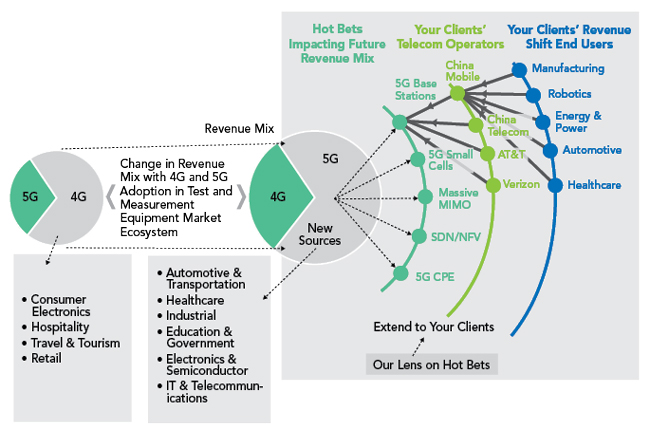
Figure 1 Wireless market segment evolution, applications and ecosystem. Source: Secondary research, interviews with experts and MarketsandMarkets analysis.
The T&M equipment used in the industrial vertical of the market is essential across various stages of the product lifecycle, including design, manufacturing and maintenance. This includes a wide range of products such as radar systems, solar inverters, industrial motors and drives, wind turbines, HVAC systems and many others. With the rising adoption of renewable energy applications, like wind and solar power, T&M solutions are required to validate performance and compliance. In addition, industry 4.0, including automation and IoT integration, has increased the need for advanced monitoring and predictive maintenance equipment. These factors, combined with increasing investment in infrastructure development and the rising need for quality assurance, present enormous growth prospects for this industry.
THE T&M EQUIPMENT MARKET ECOSYSTEM
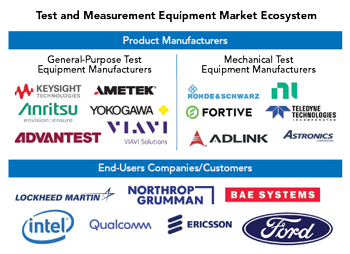
Figure 2 Representative snapshot of the test and measurement ecosystem. Source: MarketsandMarkets analysis.
The T&M equipment market ecosystem is broad. It includes all the manufacturers, stakeholders and end-user companies of T&M equipment, with driving forces on quality assurance, performance optimization and compliance in a wide variety of applications. In MarketsandMarkets analysis, product manufacturers are further categorized into general-purpose and mechanical test equipment segments. General-purpose test equipment suppliers include companies like Keysight Technologies, Advantest, AMETEK, Anritsu and VIAVI Solutions. The mechanical test equipment manufacturers include companies like Rohde & Schwarz, NI, Fortive, Teledyne Technologies and Astronics Corporation. These companies supply a broad spectrum of end-user companies worldwide, including Lockheed Martin, Northrop Grumman, BAE Systems, Intel Corporation, Qualcomm and Ford Motor Company, among many others. This ecosystem, with a partial snapshot shown in Figure 2, illustrates how T&M solutions act as a foundation for ensuring precision, reliability and innovation across industries.
CONCLUSION
The T&M equipment market is poised for steady growth. This growth will be driven by technological advancement, stringent regulatory requirements and the integration of AI and ML. Quality and regulatory compliance have become key priority areas for all industries, resulting in increased demand for high-end testing solutions and big opportunities emerging for market players globally.
Reference
- “Test and Measurement Equipment Market Size, Share & Growth Analysis,” MarketsandMarkets, August 2024, Web: www.marketsandmarkets.com/Market-Reports/test-measurement-equipment-market-116452716.html.