We use cookies to provide you with a better experience. By continuing to browse the site you are agreeing to our use of cookies in accordance with our Privacy Policy.
Tiny RF chip antennas are no longer relegated to PCB “keep out” area, allowing product designers to further miniaturize wireless biosensors and medical wearables.
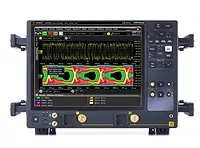
Keysight has announced the new Infiniium UXR series, the only oscilloscopes to support terabit research with real-time bandwidth up to 110 GHz industry-leading sample rate (256 GSa/s) and signal integrity (lowest noise and jitter).
As a pioneer and innovator for smart stadium solutions, NXP Semiconductors N.V. announced that with the use of its MIFARE products, it brings secure, contactless ticketing to the ongoing 2018 FIFA World Cup Russia™ matches including the final game.
Akoustis Technologies announced its first production order for initial quantities of a 3.8 GHz BAW filter. The order, from a “well-established military OEM,” is the company's first BAW filter design win above 3 GHz.
People with diabetes will be able to monitor their blood sugar without drawing blood, using a radar sensor now being developed at the University of Waterloo.
Nanotron Technologies GmbH and DecaWave announce that they have signed an IP License and Co-operation Agreement, which will enable the development of next-generation micro-location technologies.
The FCC has adopted a Notice of Proposed Rulemaking (NPRM) proposing flexible use for 500 MHz of mid-band spectrum between 3.7 and 4.2 GHz. Seeking to allocate spectrum for new wireless uses while treating existing users fairly, the FCC asks Fixed Satellite Service (FSS) earth stations operating in the band to certify the accuracy of their existing registration and license information, part of the commission's effort to understand how the band is being used.








 RSS
RSS