We use cookies to provide you with a better experience. By continuing to browse the site you are agreeing to our use of cookies in accordance with our Privacy Policy.
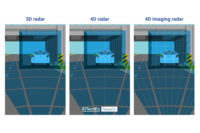
IDTechEx's research conducted in "Automotive Radar 2024-2044: Forecasts, Technologies, Applications" shows that, on average, 70 percent of new cars shipped in 2022 had a front-facing radar, while 30 percent had side radars.
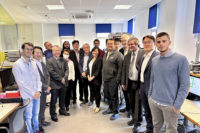
Through the project leadership of Keysight Technologies, 6G-SANDBOX project signed an MoU with the Industrial Technology Research Institute (ITRI) to foster collaboration between Europe and Taiwanese companies for 6G research.
One-in-five 5G smartphone users seeking differentiated 5G service experiences, such as quality of service, for demanding applications are willing to pay CSPs a premium of up to 11 percent to enjoy the value-added connectivity, new research from Ericsson ConsumerLab reveals.
Keysight Technologies, Inc. is enabling the University of Stuttgart to conduct foundational research essential to development of new ICs for 6G technology with the new Keysight 6G Vector Component Analysis (VCA) solution.
As we enter a new age for electronics powered by 5G and eventually 6G, MIT and Ericsson are collaborating on two research projects that seek to help build a new network infrastructure needed to empower the truly revolutionary use cases the next generation of mobile networks will bring.
Teaming up with industry titans including Samsung, NVIDIA, and more, researchers at The University of Texas at Austin are launching 6G@UT, a new research center to lay the groundwork for 6G, the next generation of wireless technology.
Raytheon Company’s Mark Russell, vice president of engineering, technology and mission assurance, has been elected to the National Academy of Engineering (NAE). He was selected for his leadership in developing radar systems that enhance national security and safety.
The IEEE Antennas and Propagation Society (AP-S) awards several (~4 or 5) travel grants ($1,500 each) annually to help graduate students attend the annual IEEE International Symposium on Antennas and Propagation.