We use cookies to provide you with a better experience. By continuing to browse the site you are agreeing to our use of cookies in accordance with our Privacy Policy.
DARPA’s new Ouija program aims to use sensors on low-orbiting satellites to provide new insights into HF radio wave propagation in the ionosphere, which spans the upper edges of the Earth’s atmosphere to the lower regions of space.
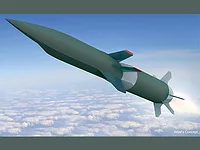
DARPA and its U.S. Air Force partner recently completed a free flight test of the Lockheed Martin version of the Hypersonic Air-breathing Weapon Concept (HAWC).
After the successful completion of Phase 1, DARPA has provided BAE Systems’ FAST Labs a $5 million contract for Phase 2 of the Technologies for Mixed-mode Ultra Scaled Integrated Circuits (T-MUSIC) program.
Epirus, Inc. has been selected for DARPA’s WARDEN RANGER project along with the Georgia Tech Research Corporation on up to three project phases to deliver software for rapid computation of electromagnetic propagation effects.
BAE Systems has been awarded multiple development contracts from the DARPA to advance quantum technology and revolutionize RF sensing by breaking constraints to antenna designs that have persisted for more than a century.
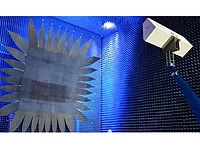
DARPA announced that a first-of-its-kind sensor system developed under the Arrays at Commercial Timescales – Integration and Validation (ACT-IV) program has transitioned to the Air Force Research Laboratory for continued advancement and experimentation.
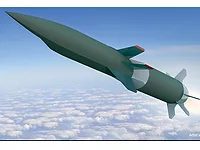
DARPA and the U.S. Air Force (USAF) announced successful completion of captive carry tests of two variants of the Hypersonic Air-breathing Weapon Concept (HAWC) and are ready to proceed to first free-flight testing within the calendar year.
In the new agreement, AccelerComm will provide access to its physical layer product portfolio to maximize spectral efficiency of satellite, cellular and other communications networks to DARPA’s researchers under the DARPA Toolbox initiative.